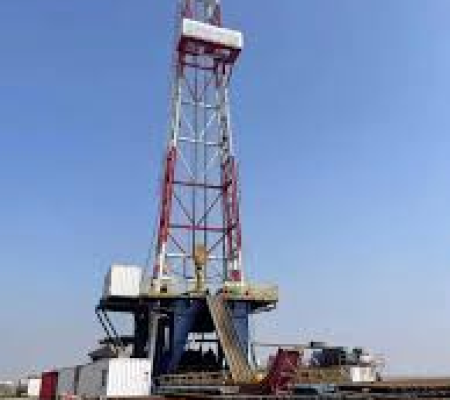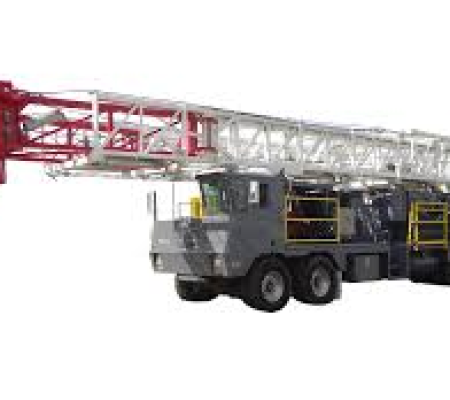
In oil drilling operations, winches, as one of the core pieces of equipment, bear the critical task of lifting and lowering heavy objects such as drill strings and casing. However, the phenomenon of uneven wire rope arrangement on the winch drums is common, not only affecting operational efficiency but also potentially causing equipment malfunctions or even safety accidents. The following analysis systematically examines the root causes of this problem and corresponding solutions.

Equipment Installation and Structural Defects: The ‘Inherent Hidden Danger’ of Uneven Rope Arrangement
The primary cause of uneven winch rope arrangement often stems from oversights during equipment installation. Improper winch layout is a common problem—when the angle of the hoisting wire rope exceeds the design standard, the winding trajectory of the wire rope on the drum will deviate, resulting in a skewed arrangement. For example, if the axes of the winch and the sheave are not strictly aligned, the wire rope will gradually deviate from its normal position during winding due to uneven stress, eventually forming a tangled rope. This situation is particularly common in field operations, where site conditions limit the ability to achieve an ideal installation, creating potential hazards for subsequent rope arrangement problems.
Furthermore, insufficient lubrication or jamming of the sheave (guide wheel) can exacerbate rope tangling. The sheave’s function is to guide the wire rope smoothly to the drum. If its bearings lack lubrication or are jammed due to rust, the wire rope will not be able to slide freely during winding and will be ‘dragged’ to the wrong position. A case from an oil field shows that rope tangling caused by insufficient lubrication of the sheave led to a wire rope breakage accident, resulting in direct economic losses exceeding one million yuan. As a key component of the winch system, the sheave’s operating condition directly affects the winding quality of the wire rope and must be regularly maintained.
Failure or removal of the rope aligning device is another major hidden danger. Modern winches are usually equipped with automatic rope aligners or limiters, which use mechanical or hydraulic structures to forcibly guide the wire rope into a neat arrangement. If these devices fail due to improper maintenance or human removal, the wire rope will lose its ‘restraint,’ eventually forming an overlapping and crisscrossing mess on the drum. In some older equipment or temporary operation scenarios, rope aligning devices are often neglected to simplify operation or reduce costs, leading to frequent rope tangling problems.
Improper Operation and Maintenance: The ‘Acquired Factor’ of Human Error
Besides equipment problems, negligence in operation and maintenance is also a significant cause of uneven wire rope arrangement. Improper operation manifests as excessively abrupt starting or braking, frequent sudden stops, etc. For example, engaging or disengaging the clutch at high throttle or sudden braking can cause severe vibrations, leading to the wire rope jumping out of its groove or becoming loose, resulting in rope tangling. Statistics from a drilling team show that rope tangling accidents caused by improper operation account for as much as 60%. The skill level and operating habits of operators directly affect the winch’s operating condition, and their awareness of standardized operation must be improved through training.
Deterioration of the wire rope’s condition is equally important. Wire ropes used for a long time will have uneven diameters due to wear, broken wires, or deformation. If not replaced in time, the difference in winding speed between new and old ropes will lead to misalignment. Furthermore, if new wire ropes are put into use without fully releasing stress, internal kinks may also cause uneven rope arrangement. As the ‘lifeline’ of the winch system, the quality of the wire rope directly affects operational safety and efficiency, and a strict inspection and replacement system must be established.
Lack of maintenance manifests in insufficient upkeep of critical components. For example, failure to promptly repair worn rope grooves in the drums can lead to insufficient wire rope embedding depth, making it prone to slippage and misalignment during winding. Loose or misaligned rope stabilizers (such as rail-type or wire rope stabilizers) can also weaken their stabilizing effect on the fast rope, causing rope misalignment. Maintenance is fundamental to ensuring the long-term stable operation of equipment, and a detailed maintenance plan must be developed and strictly implemented.
Solution: A Full-Chain Management Approach from Prevention to Remediation
To address the problem of uneven rope alignment, a full-chain management system of ‘prevention-monitoring-remediation’ needs to be established. At the prevention level, strict control over equipment installation quality is crucial, ensuring that the winch and sheave axes are aligned and the deflection angle meets design standards; regular lubrication of the sheave bearings is necessary to maintain flexible rotation; and the removal or idling of rope alignment devices is strictly prohibited, with regular checks of their functional integrity. These preventative measures can reduce the occurrence of rope alignment problems at their source.
At the operational level, it is necessary to strengthen operator training, standardize start-up and braking procedures, and avoid sudden stops and brakes; establish a regular wire rope inspection system, and immediately replace wire ropes with excessive wear or a breakage rate of 7%; before new wire ropes are put into use, internal stress must be released through a pre-stretching process to ensure tight winding. Standardized operation and scientific maintenance are key to ensuring the normal operation of the winch.
At the management level, once rope tangling is detected, the machine should be stopped immediately for handling. Minor rope tangling can be restored by manually adjusting the wire rope position; severe tangling requires cutting off the damaged section and rearranging the rope, and replacing the drum or rope groove if necessary. In addition, an intelligent rope rearranging system can be introduced, which uses sensors to monitor the wire rope position in real time and automatically adjusts the rope rearranging speed to eliminate rope tangling problems at the source. The application of intelligent technology provides a new solution for winch rope rearranging management, helping to improve operational efficiency and safety.