In the grand arena of oil and natural gas exploration and development, drilling equipment, as a core tool, directly determines the efficiency, cost, and safety of drilling operations. A set of drilling equipment meeting stringent acceptance standards is the key to enabling efficient and stable drilling operations; conversely, if the acceptance process is not rigorous, allowing potentially problematic equipment to be put into use can lead to a series of serious problems, such as hindered drilling progress, frequent equipment failures, and even safety accidents. Therefore, clearly defining drilling equipment acceptance standards is crucial.

Appearance and integrity inspection is the foundation of the acceptance process. Upon arrival at the site, the drilling equipment must first undergo a thorough examination of its appearance. The surface of the equipment should be smooth and free of obvious scratches, dents, deformation, or other damage. The coating should be uniform and firm, without peeling or flaking; this not only affects the equipment’s aesthetics but also its corrosion resistance. Each component of the equipment must be checked individually to ensure completeness and nothing is missing. Simultaneously, check the connections of components, such as bolts and nuts, to ensure they are properly tightened without any looseness, guaranteeing the structural stability of the equipment. In addition, equipment markings and nameplates should be clear and complete, including important information such as equipment model, specifications, manufacturer, and manufacturing date, facilitating subsequent management and maintenance.
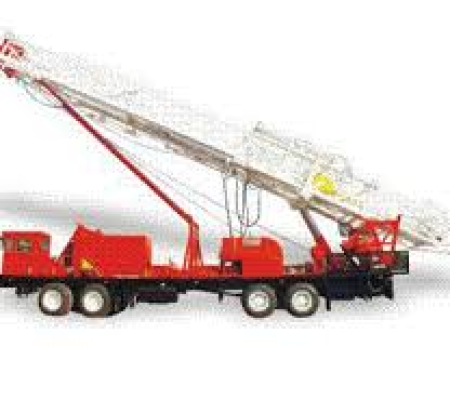
Performance parameter acceptance is a core focus. Different types of drilling equipment have their own key performance parameters. Taking the drilling rig as an example, its lifting capacity is one of the important indicators. It must be tested strictly according to design requirements to ensure that it can smoothly and reliably lift and lower drill strings under specified loads. The rotation speed and torque of the rotary system also need precise acceptance. Different drilling conditions have different requirements for speed and torque; only equipment that meets design standards can adapt to diverse operating environments. For drilling pumps, flow rate and pressure are key performance parameters. They must be tested using professional testing equipment under simulated actual working conditions to ensure that the pump can stably deliver mud and provide sufficient power support for drilling operations.
Safety device acceptance is crucial. The drilling environment is complex and contains many potential hazards; therefore, equipment must be equipped with comprehensive safety devices. For example, the drilling rig should have an overload protection device that automatically cuts off power when the lifting load exceeds the rated value, preventing equipment damage and accidents. Anti-collision crane devices effectively prevent collisions between the traveling crane and the main crane, ensuring the safety of operators. Simultaneously, the equipment’s electrical system must possess robust grounding and leakage protection functions to prevent electric shock accidents. During acceptance testing, each of these safety devices must be tested individually to ensure their sensitivity, reliability, and accurate operation.
Operational stability acceptance is crucial for long-term operation. After completing the above acceptance procedures, the equipment should undergo a trial run for a period. During this trial run, closely observe the equipment’s operating status, checking for abnormal vibrations, noise, overheating, or other phenomena. All components of the equipment should operate smoothly and without jamming or malfunction. Simultaneously, record all parameters of the equipment during the trial run, compare them with design parameters, and evaluate whether the equipment’s operating efficiency meets the expected targets.Strictly adhering to drilling equipment acceptance standards is a responsible commitment to the energy extraction industry and the safety of operators. Only through comprehensive, meticulous, and rigorous acceptance testing, ensuring that every piece of drilling equipment meets standard requirements, can a solid guarantee be provided for efficient and safe drilling operations, promoting the sustainable and stable development of the energy industry.