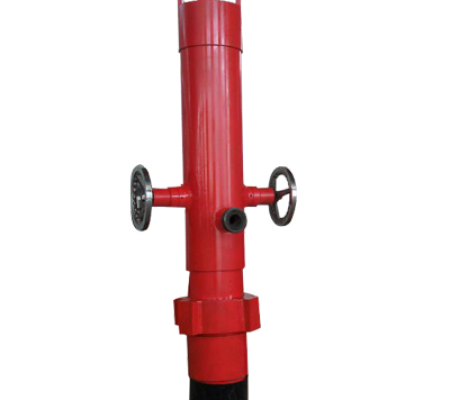
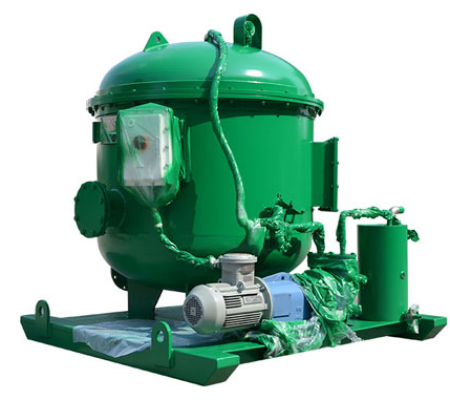
In oil and gas drilling operations, blowouts are like a Damocles’ sword hanging over the surface, causing not only equipment damage and personnel casualties but also potentially severe environmental pollution. Surface-mounted blowout preventer (BOP) control systems, as core equipment for well control, construct a reliable safety barrier for drilling operations through intelligent and modular design. Their working principle integrates hydraulic drive, intelligent monitoring, and remote control technologies, forming a highly efficient and precise well control solution.

The core power of the surface-mounted BOP control system comes from a hydraulic energy storage unit. This unit consists of a high-pressure accumulator group, filled with nitrogen as an elastic medium, which compresses and stores hydraulic oil via an electric or pneumatic pump. Taking a certain type of system as an example, its accumulator group contains multiple 40-liter capacity gas cylinders, with a pre-charge nitrogen pressure of 900-1100 PSI, and the oil storage pressure can be stabilized at 21 MPa. When the wellhead pressure is abnormal, the system can release high-pressure hydraulic oil within 3 seconds, driving the BOP gate to close rapidly. This design avoids the energy consumption of continuous operation of traditional pump sets and ensures the reliability of emergency response through redundant configuration—even if a single accumulator fails, the remaining units can still complete at least two full-gate closure operations.
The “brain” of the control system consists of an intelligent control panel and a distributed sensor network. The control panel integrates a PLC logic controller and an HMI human-machine interface, collecting more than 20 parameters in real time, including wellhead pressure, accumulator pressure, and hydraulic oil temperature. When the well pressure exceeds a safety threshold (e.g., exceeding 80% of the casing’s internal pressure resistance), the system immediately triggers a three-level response mechanism: a primary warning alerts operators with audible and visual alarms; a secondary response automatically activates the pressure-reducing valve to balance the pressure; and the final protection directly drives the blowout preventer to close. Actual test data from a deep-sea drilling platform shows that the entire process from pressure anomaly detection to full gate closure takes only 2.8 seconds, a 60% improvement in efficiency compared to traditional mechanical control.
Remote control and redundant design are another major technological highlight of this system. Through remote control terminals deployed at key nodes of the drilling rig, operators can simultaneously monitor the wellhead status from multiple locations, including the driller’s cabin and emergency command center. Each control terminal is equipped with an independent pneumatic valve assembly and hydraulic manifold, forming a physically isolated redundant channel. Taking one type of system as an example, it adopts a “dual-pump, dual-pipe” architecture: the main pump group is responsible for daily hydraulic supply, and the backup pump group automatically switches in case of main pump failure; the hydraulic pipeline adopts a dual-circuit design, so a single-circuit leak does not affect the overall system function. This design withstood the test in a 2024 offshore drilling platform operation—when the main hydraulic pipeline was damaged by a collision, the backup system completed pressure compensation within 0.3 seconds, successfully averting a potential blowout.
Modular and adaptive technologies give the system stronger environmental adaptability. For different geological conditions, the system can quickly replace actuator modules such as annular blowout preventers and gate blowout preventers. For example, in high-pressure gas well operations, ultra-high-pressure gate valves with a pressure resistance of 140MPa can be installed; in directional well operations, rotary blowout preventers (BOPs) are configured to adapt to the dynamic sealing requirements of the drill string. One type of system even integrates intelligent pressure regulation, enabling remote adjustment of the annular BOP control pressure (adjustable from 10-15MPa) via an electronic pressure reducing valve, allowing the equipment to precisely match diverse operational scenarios from shallow loose formations to deep dense rock formations.
From onshore oilfields to deep-sea drilling platforms, surface-mounted BOP control systems are reshaping well control safety standards through technological innovation. Their rapid response hydraulic energy storage, precise early warning from intelligent monitoring, convenient and safe remote control, and flexible modular design collectively build a safety defense line covering the entire drilling lifecycle. With the deep integration of the Internet of Things (IoT) and digital twin technologies, future BOP control systems will achieve a leap from “passive defense” to “active prediction,” identifying blowout risks in advance by analyzing formation pressure data and drilling fluid performance parameters in real time, providing a more intelligent and reliable well control solution for oil and gas exploration and development. In this battle against underground pressure, technological innovation remains the core key to safeguarding security.