In the fields of energy exploration, geological survey, and engineering construction, drilling equipment, as core equipment, is always a focus of attention for purchasers due to its price fluctuations. A complete drilling system encompasses five core modules: a rotary system, a power system, a circulation system, a hoisting system, and a control system. Prices range from tens of thousands to hundreds of millions of yuan, depending on the equipment type, technical parameters, and configuration requirements. This article, based on the latest market data from 2025, provides an in-depth analysis of the price composition and key selection points for drilling equipment in different scenarios.

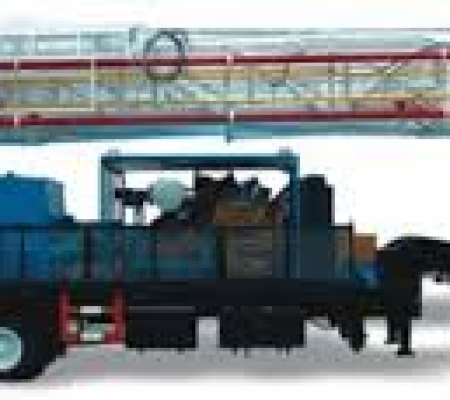
Taking the geological exploration field as an example, small portable drilling equipment has become the first choice for shallow sampling or household water wells due to its high flexibility and low cost. For instance, the pneumatic drilling rig launched by Shandong Hengwang Group, equipped with a tracked chassis and dual-use water and air capabilities, can drill to a depth of 320 meters and is priced at approximately 9,500 yuan; while the horizontal water well drilling rig from Jining Honglei Mining Equipment Co., Ltd., using electrical control technology, can achieve a depth of 150 meters and is priced at around 17,000 yuan. These types of equipment typically integrate basic components such as drill pipes and mud pumps, making them suitable for scenarios with limited budgets and low requirements for drilling depth.
For complex geological conditions or deep drilling needs, medium-sized fully hydraulic drilling equipment offers significant cost-effectiveness advantages. For example, the Zhigao ZGSJ300 water well drilling rig features a modular design, supports operations up to 300 meters deep, and is equipped with a high-torque power head and intelligent control system, with a market price of approximately 200,000 to 300,000 yuan. The XCMG XSL5/260 water well drilling rig, by optimizing hydraulic transmission efficiency, reduces drilling costs by 15%, with a price range of 250,000 yuan. This type of equipment is commonly used in farmland irrigation and mine drainage projects; its price includes a complete set of accessories such as drill pipes, drill tools, and mud circulation systems, and on-site installation and commissioning services are provided.
For the development of deep resources such as oil and natural gas, the investment cost of large-scale intelligent drilling platforms increases exponentially. A 2025 procurement project for an intelligent drilling and production equipment laboratory by Northeast Petroleum University shows that a complete platform, including a top drive unit, an automated drill pipe handling system, and real-time monitoring instruments, has a budget of 34.19 million yuan. This type of equipment not only needs to meet the requirements of drilling at depths of tens of thousands of meters, but also needs to integrate downhole tools resistant to high temperatures and pressures, such as screw drills, shock absorbers, and directional drilling systems; the price of a single core component exceeds one million yuan. Furthermore, offshore drilling platforms, involving floating structures, dynamic positioning systems, and living quarters, often have a total cost exceeding 100 million yuan.
Key factors influencing the price of drilling equipment include technical specifications, brand premium, and after-sales service. For example, roller cone bits, due to their adaptability and long lifespan, generally range in price from 5,000 to 20,000 yuan; while diamond bits, although priced as high as 50,000 to 100,000 yuan per bit, can shorten the construction period by more than 30% due to their high rock-breaking efficiency. In terms of brands, international giants like Schlumberger and Baker Hughes command a 20% to 30% premium due to their technological advantages; domestic manufacturers such as Shandong Hengwang and XCMG have reduced prices by 15% to 20% through large-scale production. After-sales service is also a key cost item, with some suppliers offering “five-year full warranty + 24-hour response” services, with annual fees accounting for 5% to 8% of the total equipment price.
When purchasing drilling equipment, it is necessary to comprehensively consider the operating scenario, budget constraints, and long-term benefits. Shallow exploration projects can prioritize cost-effective domestic equipment, further reducing costs through leasing; deep resource development requires investment in high-end equipment, using technological advantages to offset the high initial costs. It is worth noting that in 2025, the market saw the emergence of integrated “equipment + service” solutions, with suppliers customizing packages based on drilling depth and geological conditions. For example, in the 820-meter horizontal directional drilling project in Qiemo, Xinjiang, by leasing the ROCK1000 drilling rig and supporting drilling tools, the total cost within a three-month period was controlled within 140,000 yuan, saving 60% compared to direct purchase. This model is becoming the mainstream choice for small and medium-sized engineering enterprises.
From portable pneumatic drilling rigs to intelligent deep-sea platforms, the pricing system of drilling equipment reflects the deep interaction between technological iteration and market demand. For purchasers, clearly defining operational objectives, comparing technical parameters, and assessing the total life-cycle cost are key to avoiding the “low-price trap” and “over-configuration.” With the localization rate of domestically produced core components exceeding 85% and the penetration of the sharing economy model, the price threshold for drilling equipment is expected to further decrease in the future, injecting stronger momentum into energy development and infrastructure construction.