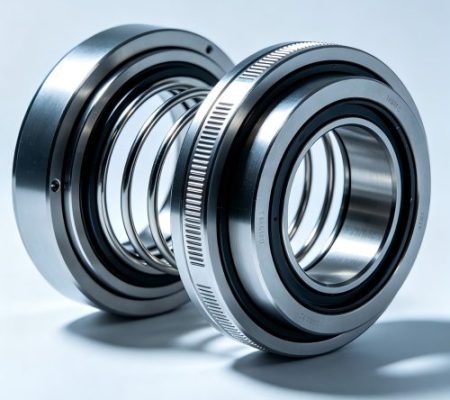

In the operating system of a dryer, the mechanical seal plays a crucial role in isolating the medium, preventing leakage, and ensuring stable equipment operation. Because dryers typically operate in high-temperature, high-humidity, or dusty conditions, their complex operating environment places high demands on the installation quality of the mechanical seal. The mechanical seal itself has a precise structure; any small deviation during installation can be amplified after the equipment is running, leading to leakage, abnormal wear, or even seal failure.
Preparation and Condition Confirmation Before Installation
Before installing the dryer mechanical seal, a comprehensive check of relevant conditions is essential. First, it should be confirmed that the mechanical seal model and specifications are completely compatible with the dryer shaft diameter and installation cavity dimensions to avoid installation difficulties or operational failures due to dimensional deviations. Second, the integrity of all seal components needs to be checked, ensuring that the surfaces of the dynamic ring, stationary ring, elastic elements, and auxiliary seals are free from dents, cracks, or contamination. The installation environment should also be kept clean to prevent dust or impurities from entering the seal face. In addition, the coaxiality, radial runout, and surface roughness of the dryer shaft should be confirmed to ensure a smooth, burr-free shaft surface, creating a good foundation for stable operation of the seal.
Key Installation Steps
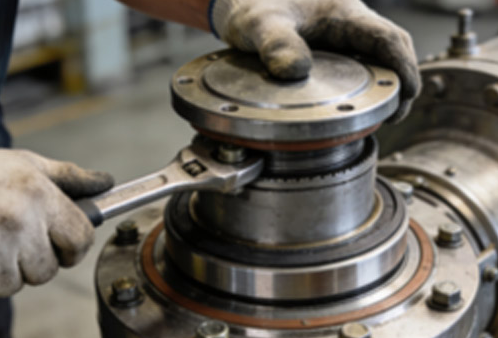
During the mechanical seal installation, the process should strictly follow the sequence from inside to outside and from static to dynamic. First, install the stationary ring assembly, ensuring it fits flush with the sealing cavity, avoiding tilting or localized stress. Then install the dynamic ring and elastic element, allowing it to compensate freely in the axial direction. Avoid forcefully striking or twisting the seal during installation to prevent hidden damage to the sealing face. Tighten each connection point gradually according to design requirements to ensure even stress distribution. The entire installation process should be carried out gently and with standardized movements to ensure the sealing structure is in its ideal initial working state.
Key Points for Seal Installation
The sealing face is the core component of the mechanical seal, and its installation quality directly determines the sealing effect. During installation, avoid direct contact with the face with your fingers to prevent contamination or scratches. If necessary, a simple cleaning solution can be used, ensuring the face is dry and free of foreign matter. Auxiliary seals such as O-rings, bellows, or rubber parts should be installed in the correct orientation and properly lubricated to prevent twisting or tearing during assembly. After installation, check that all auxiliary seals are in their natural state to avoid stress concentration.
Post-Installation Inspection and Commissioning Requirements
After the mechanical seal is installed, a comprehensive inspection and commissioning must be performed. First, manually rotate the shaft to confirm that it rotates freely without jamming or abnormal friction noise. Then check that the assembly clearance of the sealing parts meets the design requirements to ensure that the elastic compensation function is normal. During commissioning, the medium should be introduced gradually to avoid sudden high-load operation that could impact the sealing face. For equipment like dryers, temperature rise changes should also be monitored to ensure that the mechanical seal maintains a stable operating state during the heating process. Proper inspection and commissioning can effectively reduce the probability of initial failures.
Since dryers often operate in high-temperature, dusty, and humid environments, special attention must be paid to dust prevention and heat dissipation during mechanical seal installation. During installation, ensure the sealing cavity is clean and sealed, and take protective measures as necessary to prevent dust from entering the sealing face. Simultaneously, cooling or flushing structures should be appropriately designed to ensure effective protection of the sealing face under high-temperature conditions. Furthermore, the effects of thermal expansion and contraction caused by frequent equipment start-ups and shutdowns must be considered to ensure the mechanical seal has sufficient axial compensation space.
The installation of a dryer’s mechanical seal is a highly specialized technical task, encompassing multiple stages including pre-installation preparation, assembly, commissioning and inspection, and adaptation to operating conditions. A standardized installation process not only ensures the initial sealing performance of the mechanical seal but also significantly improves its operational stability under complex conditions. By strictly controlling installation accuracy, protecting the sealing face, properly handling auxiliary seals, and conducting thorough commissioning, leakage risks and abnormal wear can be effectively reduced. For equipment like dryers operating in harsh environments, scientific installation of the mechanical seal is a crucial prerequisite for ensuring safe, continuous, and efficient operation. Only by laying a solid foundation during the installation phase can the mechanical seal fully leverage its design advantages during subsequent operation, providing a reliable guarantee for the long-term stable operation of the dryer.