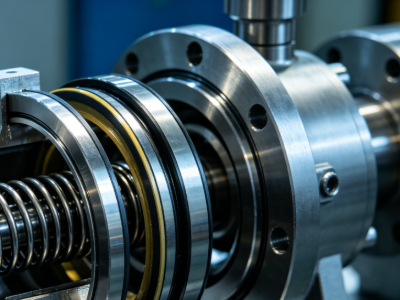
In the petrochemical industry, the safety and stability of equipment operation are paramount, and the sealing system is one of the core components ensuring reliable equipment operation. With continuous technological advancements, pumped dry gas seals have gradually replaced traditional sealing methods, becoming a widely used and important solution in modern petrochemical equipment. Pumped dry gas seals utilize gas as the sealing medium, forming a stable gas film between the sealing surfaces, thus achieving contactless operation—an advanced sealing technology. This technology not only improves equipment operating efficiency but also significantly reduces maintenance costs and environmental risks. In the high-temperature, high-pressure, flammable, and explosive petrochemical environments, traditional sealing methods such as packing seals or wet mechanical seals often suffer from high leakage risks and severe wear. Pumped dry gas seals, with their optimized structure and advanced working principle, can maintain stable operation under harsh conditions, making them an essential component of critical equipment such as compressors and centrifugal pumps.
Advantages of Pumped Dry Gas Seals
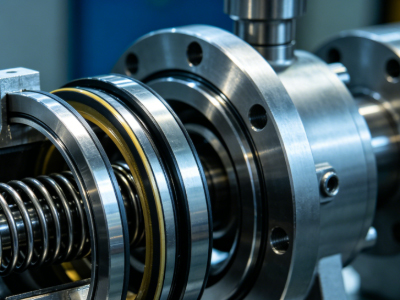
One of the core advantages of pumped dry gas seals lies in their extremely high operational stability. By forming a stable gas film between the sealing end faces, the dynamic and static rings are in a non-contact state, fundamentally reducing friction and wear. This contactless operation not only reduces mechanical wear but also avoids the heat accumulation problems caused by contact in traditional seals. Furthermore, the pumping structure actively regulates gas flow, maintaining appropriate pressure within the sealing cavity to ensure the sealing effect is unaffected by fluctuations in external operating conditions. Even under load changes or frequent start-stop cycles, it maintains a good sealing state. This stability directly reduces the probability of sudden equipment failures and improves the continuity and reliability of the overall production system.
What are the application scenarios for pumped dry gas seals?
Pumped dry gas seals are widely used in industrial scenarios with high requirements for sealing reliability and safety, especially in petrochemical, natural gas processing, oil refining units, and chemical compressor systems. In these environments, equipment typically operates under high pressure, high speed, or flammable and explosive media conditions, such as centrifugal compressors, reciprocating compressors, dry gas boosters, and large pumps. Pumped dry gas seals achieve contactless sealing through a stable gas film, effectively preventing media leakage and mechanical wear, making them particularly suitable for conveying hazardous gases such as natural gas, hydrogen, and ethylene. Furthermore, this sealing technology is frequently used in critical rotating equipment of LNG (liquefied natural gas) plants, refining and chemical complexes, and large energy transmission pipelines to ensure continuous operation and safe production. Due to its low leakage, long lifespan, and simple maintenance, pumped dry gas seals are increasingly being applied in modern industrial sectors with high environmental protection requirements to reduce volatile organic compound (VOC) emissions and improve the overall green operation level of the system.
How does it differ from traditional sealing technologies?
Comparing pumped dry gas seals with traditional packing seals or liquid-lubricated mechanical seals reveals even more significant advantages. Traditional seals rely on contact surfaces to achieve a sealing effect, inevitably leading to wear, which not only affects sealing performance but also causes frequent maintenance issues. Pumped dry gas seals, however, fundamentally change the sealing method by isolating the contact surface with a gas film, making equipment operation much easier. Regarding leakage control, traditional seals often exhibit minute or even significant leakage, while dry gas seals can control leakage to extremely low levels, greatly improving safety. From an operating cost perspective, traditional seals require regular packing replacement or lubrication replenishment, while dry gas seals reduce these consumptions, making them more economical in the long run. Overall, pumped dry gas seals not only outperform traditional solutions in performance but also offer significant advantages in safety, environmental protection, and economic benefits, making them an important direction for upgrading modern petrochemical equipment.
Frequently Asked Questions
Many users raise questions when choosing a sealing method. Here are some typical questions:
Q: Are pumped dry gas seals suitable for all equipment?
A: Not all equipment requires them, but dry gas seals are more suitable and offer more significant advantages for high-speed, high-pressure, or hazardous media equipment.
Q: Is the initial investment high?
A: Yes, the initial cost is slightly higher than traditional seals, but due to their longer lifespan and less maintenance, the overall cost is lower in the long run.
Q: Is a special gas source required?
A: A stable clean gas source (such as nitrogen) is usually required to ensure stable formation of the sealing gas film.
Q: Is maintenance complex?
A: While the structure is relatively sophisticated, daily maintenance is actually simpler due to reduced wear and frequent replacements.These Q&As demonstrate that although pumped dry gas seals have certain requirements for operating conditions, their overall performance is still superior to traditional sealing methods.
Pumped dry gas seals exhibit significant advantages in petrochemical equipment due to their contactless operation, low leakage, and high stability. They not only improve equipment operating efficiency but also reduce maintenance costs, while demonstrating outstanding performance in environmental protection and safety. For modern petrochemical enterprises, choosing the appropriate sealing technology is not only related to the equipment itself but also directly affects production safety and economic benefits.