In the development of oil and gas resources, the wellhead area is a crucial node connecting underground reservoirs and surface production systems. The stability of any operational stage directly affects overall production efficiency and safety levels. Wellhead tools, as fundamental equipment in wellhead operations, are widely used in installation, disassembly, control, and maintenance, playing a vital role in drilling, well completion, and subsequent production. Wellhead tools require high strength and reliability, and must adapt to frequent use under complex operating conditions. Their performance directly affects the continuity and safety of oil and gas development operations, thus holding an irreplaceable position in the entire industry chain.
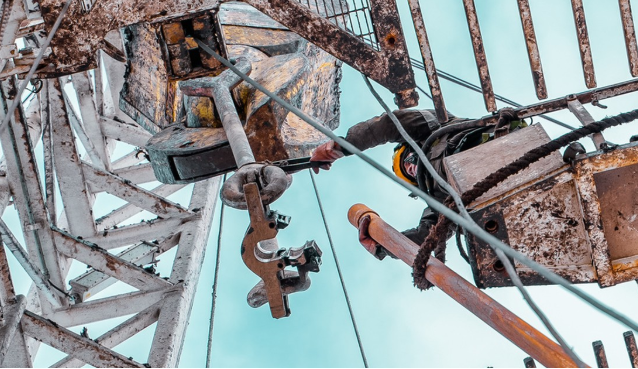
Ensuring Wellhead Operation Safety and Reducing Risks
Wellhead operation environments are typically characterized by high pressure and complex fluid conditions, making safety control particularly important.
- Wellhead tools provide stable support during installation and operation, preventing equipment slippage or misoperation that could lead to safety issues.
- Through auxiliary sealing and control functions, they reduce the risk of oil and gas leakage, improving on-site operational safety.
This safety assurance capability is a crucial foundation for the smooth progress of oil and gas development.
Improving operational efficiency and optimizing construction processes
Oil and gas development operations are fast-paced, requiring high tool efficiency.
- A wellhead tool with a reasonable design can accelerate equipment installation and disassembly, reducing non-productive time.
- A standardized structure facilitates smoother coordination between different equipment, improving overall construction efficiency.
This efficiency improvement helps reduce project operating costs.
Enhancing equipment adaptability to cope with complex working conditions
Different oil and gas fields have significantly different environments, requiring varying tool performance.
- Wellhead tools are made of high-strength materials, adaptable to high-temperature, high-pressure, and corrosive environments.
- They have multi-specification adaptability, meeting the needs of different well types and operating conditions.
This adaptability ensures stable operation of equipment in various environments.
Supporting system collaborative operation and improving overall stability
Oil and gas development is a system engineering project involving the collaborative operation of multiple equipment.
- Wellhead tools can be used in conjunction with wellhead equipment, tubing, and control systems to achieve a unified operational process.
- Through structural compatibility design, the overall connection stability and operational reliability of the system are improved.
This collaborative capability enhances the stability of the overall production system.
In actual oil and gas development, wellhead tools are not only auxiliary equipment but also a crucial component ensuring the stable operation of the entire production system. From safety control and efficiency improvement to adaptation to complex environments and system coordination, their role permeates the entire operational process. As oil and gas development continues to advance towards deeper, higher-pressure, and more complex formations, the requirements for wellhead tool performance are constantly increasing. Their fundamental and critical role in the industry will become even more prominent, making them a vital support for ensuring efficient and safe production.