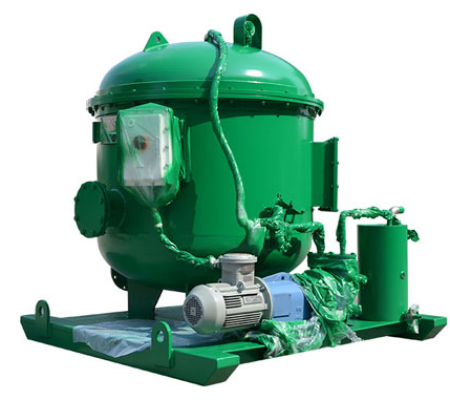
Desanding agents play a crucial role in separating solid particles and improving circulation efficiency in mud purification and solids control systems. Malfunctions during operation not only affect the desanding effect but can also lead to instability in the entire system. Common problems typically involve abnormal pressure, blockages, wear, and decreased operating efficiency, requiring diagnosis and handling based on equipment condition and on-site working conditions.

Pump Failure Leading to Unstable Operation
The pump is the core power source of the desanding agent system. Abnormalities in the pump directly affect the overall operating status. After prolonged use, impeller wear, bearing aging, or seal damage can all lead to unstable output, manifesting as pressure fluctuations or insufficient flow. If significant noise, increased vibration, or fluctuating pressure occurs during operation, the pump structure needs to be thoroughly inspected. In some cases, a decrease in motor power may also occur, preventing the system from maintaining normal operating pressure and thus affecting the desanding effect.
Pipeline Blockage or Leakage Problems
During long-term operation, the delivery pipeline is susceptible to blockages caused by solid particles in the mud. If not cleaned promptly, these blockages can form, obstructing fluid flow. Meanwhile, poor sealing at pipe joints or connections can also lead to leaks, causing a drop in system pressure and affecting overall efficiency.
- Deposits inside the pipe affect flow velocity.
- Loose joints cause pressure leakage.
- Local blockage leads to uneven flow.
- Long-term wear causes pipe wall damage.
- Sealing failure affects system stability.
These problems usually require section-by-section inspection of the pipeline to accurately locate the fault.
Filter Clogging Affects Separation Effect
Sand removal cleaning agents are usually equipped with filters or separation devices to intercept solid particles. If the filter is not cleaned for a long time, a large amount of sand and impurities will gradually accumulate inside, reducing the flow area, increasing system resistance, and ultimately affecting the overall circulation efficiency. Filter clogging not only reduces sand removal capacity but may also cause abnormal pressure fluctuations. In this case, it is necessary to clean or replace the filter screen regularly to ensure continuous and stable system operation.
Abnormal Pressure Leads to Decreased System Efficiency
Abnormal pressure is one of the common problems with sand removal cleaning agents, which may manifest as excessively low pressure or excessive pressure fluctuations. Low pressure is usually related to decreased pump performance, pipeline blockage, or improper parameter settings, while pressure fluctuations may be related to uneven system load or changes in fluid state. When pressure cannot be maintained stably, solid separation efficiency will decrease significantly, and sludge purification effect will also be affected. Therefore, a comprehensive investigation combining equipment and operating conditions is necessary.
Equipment Wear and Aging Affect Long-Term Operation
During long-term use, various components of the sand removal cleaning agent will gradually show wear or aging, such as pump impeller wear, pipeline inner wall corrosion, or seal failure. Although these problems may not be obvious initially, they will gradually lead to decreased efficiency and even frequent failures as usage time increases. Especially under high load or continuous operation environments, the wear rate will be faster. Therefore, regular maintenance and inspection are necessary, and key vulnerable parts should be replaced in a timely manner to extend the overall service life of the equipment.