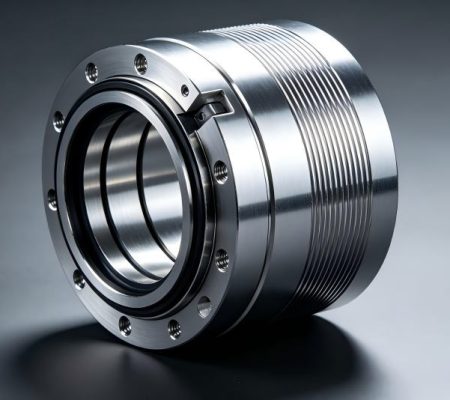
Mechanical seals used in high-speed rotating equipment refer to dynamic sealing devices applied to high-speed shaft systems (such as high-speed centrifugal pumps, high-speed compressors, and turbine equipment). Compared with conventional low- and medium-speed equipment, mechanical seals under high-speed conditions face higher linear velocity, stronger centrifugal force, and more complex thermal management challenges.In mechanical seals, one of the key parameters is the end-face linear velocity (usually related to shaft diameter and rotational speed). As speed increases, the heat generated by end-face friction rises exponentially, while the liquid film is more easily sheared and damaged. If the design is unreasonable or the selection is improper, problems such as overheating, unstable fluid film, dry running, and even rapid burn-out may occur.
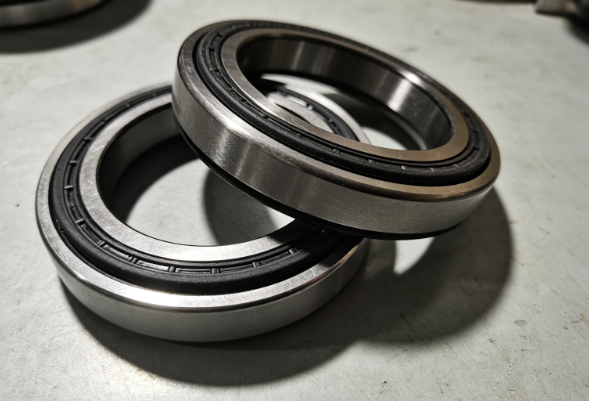
Therefore, high-speed rotating equipment is not suitable for ordinary single-spring or standard mechanical seal structures. Instead, specially designed structures for high linear velocity conditions are required, such as cartridge mechanical seals, metal bellows mechanical seals, or balanced double mechanical seals. The common characteristics of these structures are: reduced end-face load, improved thermal stability, and enhanced liquid film retention capability.
Mechanical Seal Selection and Application Steps for High-Speed Equipment
Operating Condition Parameter Confirmation Stage
Before selection, key parameters such as rotational speed, shaft diameter, medium properties, pressure, and temperature must be clearly defined. High-speed equipment typically has high speed and high linear velocity, so seal structures unsuitable for high PV values (pressure × velocity) must be excluded first. It is also necessary to confirm whether there are risks of cavitation, dry running, or frequent start-stop conditions, as these will affect seal selection.
Preliminary Seal Structure Selection Stage
Under high-speed conditions, the following structures are generally preferred:
Balanced mechanical seals: reduce end-face specific pressure and friction heat
Cartridge mechanical seals: improve installation accuracy and reduce human error
Metal bellows seals: avoid instability caused by spring centrifugal force
Through structural screening, the selection can be narrowed from a “usable range” to a “stable operating range”.
Auxiliary System Design Stage
High-speed mechanical seals cannot operate independently without auxiliary systems, such as flushing systems (API Plan), cooling systems, or external circulation systems. The flushing path must be designed according to medium characteristics to ensure continuous supply of clean, low-temperature lubricating fluid to the seal faces. Otherwise, thermal runaway is highly likely under high-speed conditions.
Installation and Alignment Control Stage
High-speed equipment is extremely sensitive to installation accuracy. Shaft concentricity errors, radial runout, or axial movement will be amplified under high-speed operation. Therefore, high-precision alignment tools must be used, and compression settings must be strictly controlled to avoid overheating caused by overload.
Core Design of High-Speed Mechanical Seals
The mechanical seal of high-speed rotating equipment essentially maintains a stable fluid film under conditions of “extremely high linear velocity + extremely thin lubrication film.” Therefore, the design focus is on thermal control, load control, and dynamic stability.
End-Face Specific Pressure Control and Balanced Structure Design
In high-speed conditions, friction heat on the seal face is the main cause of failure. Therefore, end-face specific pressure must be reduced through balanced design. Balanced mechanical seals reduce the compressive force generated by fluid pressure on the sealing faces by adjusting the force-area ratio, thereby reducing friction heat generation. Compared with unbalanced structures, balanced seals are more capable of maintaining a stable fluid film in high-speed equipment.
Material Thermal Stability and PV Resistance
High-speed operation means high PV values (pressure × velocity), which imposes strict requirements on material thermal performance. Ordinary carbon graphite is prone to thermal cracking at high speeds, while hard alloys may suffer fatigue damage under impact conditions. Therefore, in high-speed equipment, silicon carbide–to–silicon carbide combinations or specially reinforced graphite materials are usually preferred to improve thermal shock resistance and heat conduction efficiency.
Advantages of Metal Bellows Structures
Under high-speed rotation, traditional spring structures may become unstable due to centrifugal force, affecting end-face specific pressure. Metal bellows mechanical seals do not rely on spring structures, resulting in more uniform force distribution and better suitability for high-speed conditions. This structure also reduces the number of components and improves dynamic response capability, so it is widely used in high-speed compressors and high-speed pumps.
Thermal Management and Flushing System Design
Failures in high-speed mechanical seals are often thermal rather than mechanical in nature. The flushing system is responsible for continuously removing friction heat and maintaining fluid film stability. If flushing is insufficient, the seal face temperature will rise rapidly, leading to vaporization. Once the fluid film breaks down, dry friction occurs. Therefore, appropriate flushing schemes must be selected according to operating conditions, such as external clean fluid circulation or multi-point flushing structures, to ensure continuous heat removal.
Frequently Asked Questions
Q: Do high-speed equipment always require double mechanical seals?
Not necessarily. The use of double seals depends on the medium, pressure, and safety requirements. If the medium is hazardous or volatile, double seals are safer. However, some high-speed pumps with clean media can also operate stably using single balanced mechanical seals.
Q: Why do high-speed mechanical seals generate heat more easily?
Because higher rotational speed results in higher linear velocity at the sealing faces, which increases friction heat generation. At the same time, the fluid film is more easily sheared and damaged.
Q: Can ordinary mechanical seals be used in high-speed equipment?
They may work for short periods, but long-term operation carries high risk, including fluid film instability, dry running, or rapid wear. Therefore, it is not recommended.
The requirement for mechanical seals in high-speed rotating equipment can be summarized in one sentence: they must “rotate fast while remaining stable.” The higher the speed, the more intense the friction at the seal face and the greater the heat generated. If not controlled in time, this can easily lead to fluid film rupture, excessive temperature rise, or even dry running damage.Therefore, high-speed equipment should not use ordinary mechanical seals arbitrarily. Instead, balanced, cartridge-type, or metal bellows structures should be selected, combined with a complete flushing and cooling system. Simply put: the structure must reduce pressure, the material must withstand heat, and the system must dissipate heat. If the selection is correct, installation is proper, and flushing is stable, high-speed mechanical seals can operate reliably for a long time. However, if any link is neglected, overheating, leakage, or damage may occur in a very short time.