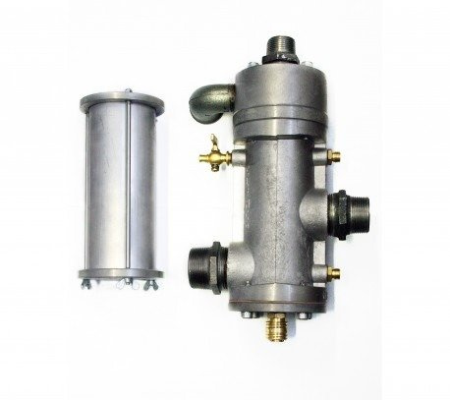
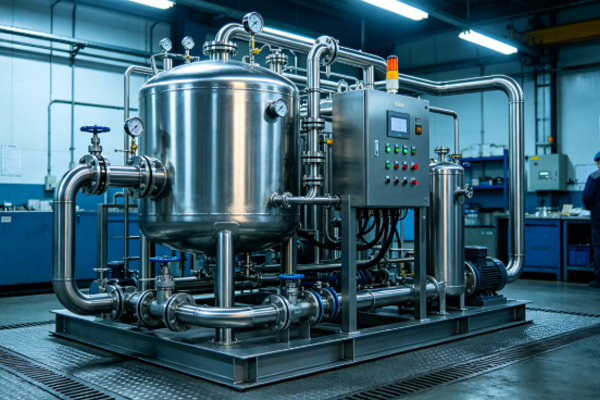
Vacuum degassers play a crucial role in drilling mud treatment, industrial liquid purification, and circulating system operation. Their main function is to rapidly separate gases from liquids, reducing the impact of gas intrusion on equipment and processes. Insufficient degassing efficiency not only affects mud performance but can also lead to unstable pressure in the circulating system. Therefore, in actual operation, it is necessary to improve the overall degassing effect through equipment adjustment, process optimization, and maintenance management.
Maintaining a Stable Vacuum Degree Improves Degassing Capacity
Vacuum degree is one of the core indicators for the operation of vacuum degassers. If the vacuum pressure is insufficient, gases in the liquid cannot be released quickly, leading to a decrease in degassing efficiency. During operation, the equipment needs to maintain a stable negative pressure environment to allow bubbles to separate quickly and be discharged from the system. Under high-load conditions, if the vacuum pump performance deteriorates or there are air leaks in the pipeline, the stability of the negative pressure will be affected. Therefore, regularly checking the sealing status of the vacuum system and ensuring the normal operation of the vacuum pump can effectively improve the equipment’s degassing efficiency.
Proper Liquid Flow Rate Control Facilitates Gas Separation
The flow rate of the liquid entering the vacuum degasser directly affects the gas separation effect.
- Excessive flow rate can lead to insufficient degassing.
- Excessive flow rate shortens the residence time.
- Stable liquid inlet promotes uniform separation.
- Properly controlling the circulation speed ensures greater stability.
- Avoiding instantaneous impacts on the vacuum environment.
Optimizing the liquid flow rate allows bubbles more space to release within the equipment, thus improving the degassing effect.
Optimizing the Internal Structure of the Equipment Improves Operating Efficiency
The internal structural design of the vacuum degasser directly affects its gas-liquid separation capacity. For example, insufficient separation chamber space or an unreasonable flow guide structure will reduce bubble buoyancy. Some equipment, by adding centrifugal structures or flow guide plates, can create a more stable dispersion of the liquid, thereby increasing the gas release rate. Simultaneously, blockages in the internal exhaust channels will also affect the overall operating effect. Therefore, during long-term use, it is necessary to regularly check the internal structural condition of the equipment and keep the channels unobstructed.
Stable Mud Properties Reduce Gas Intrusion
Drilling mud treatment processes are influenced by the properties of the mud itself, affecting the performance of the vacuum degasser. High mud viscosity can trap air bubbles, increasing degassing difficulty.
- Maintain stable mud density
- Adjust viscosity to improve flowability
- Reduce foam generation to minimize interference
- Maintain uniform circulation
- Prevent impurity buildup from affecting separation.
The more stable the mud, the easier it is for the vacuum degasser to achieve rapid degassing during operation.
Regular Maintenance Maintains Equipment Stability
After prolonged operation, some components of the vacuum degasser, such as the vacuum pump, filtration system, and sealing structures, are prone to wear or blockage. Inadequate maintenance can lead to a decrease in vacuum, affecting degassing efficiency. Regular maintenance includes checking the pump’s operating status and cleaning internal deposits to prevent impurities from affecting circulation efficiency. Aging seals should also be replaced promptly to prevent leaks that could affect stable equipment operation. VI. Adjusting Operating Parameters Determines Overall Degassing Performance
Vacuum degassers require different operating parameters under different working conditions.
For example, changes in temperature, pressure, and circulation speed all affect gas separation efficiency. In high-temperature environments, gas release rates are typically faster, while pressure changes affect vacuum stability. Therefore, in practical applications, operating parameters need to be adjusted promptly based on liquid properties and on-site conditions to ensure the equipment maintains high operating efficiency. By rationally controlling operating conditions, the overall degassing capacity of the vacuum degasser can be effectively improved, and system operational fluctuations can be reduced.