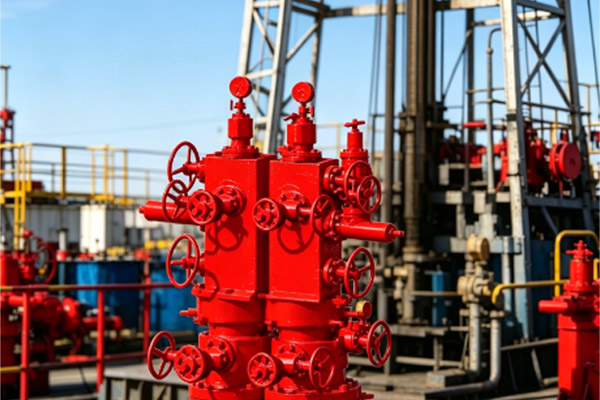
In oil and gas extraction and downhole engineering operations, wellhead equipment, as a critical node connecting the formation and surface control systems, directly determines the safety boundary and operational efficiency of the entire production system through its pressure management capabilities. Faced with high pressure, multiphase flow, and complex geological conditions, traditional control methods are insufficient to fully meet stable operation requirements, necessitating systematic optimization across multiple levels, including structural design, control logic, and operation and maintenance. Adopting modern wellhead equipment engineering concepts can significantly improve the accuracy and response speed of pressure regulation, thereby reducing risks and enhancing overall operational reliability.
Strengthening the sealing system to ensure stable high-pressure environment adaptability
In high-pressure oil and gas environments, the sealing structure is the first line of defense for wellhead equipment pressure control; its performance directly affects leakage risk and system stability. Optimizing the sealing design can significantly improve the equipment’s safety performance under extreme operating conditions.
- High-pressure and corrosion-resistant composite sealing materials are selected to improve long-term service stability.
- A multi-stage and redundant sealing structure design enhances leakage resistance.
Through dual optimization of the sealing system’s structure and materials, the impact of high-pressure fluctuations can be effectively mitigated, ensuring the wellhead equipment remains stable during long-term operation and creating a safer foundation for subsequent pressure regulation.
A real-time pressure monitoring and intelligent feedback mechanism is established
In modern wellhead pressure management systems, dynamic monitoring capability is the core element for achieving precise control, providing real-time data support for adjustment decisions. Introducing an intelligent monitoring system significantly improves response efficiency.
- High-precision pressure sensors are configured for continuous data acquisition and status awareness.
- Automatic feedback control logic is established for rapid correction of pressure anomalies.
Through deep integration of monitoring and feedback systems, wellhead equipment can quickly adjust to instantaneous pressure changes, reducing human intervention delays and improving overall control accuracy and operational safety.
Optimizing Throttling and Valve Control to Enhance Pressure Regulation Stability
Throttle devices and valve systems play a core regulatory role in wellhead pressure management. Their operational status directly affects the pressure fluctuations and system stability as fluid passes through the wellhead, making optimization of them of significant engineering importance. Improving the internal structure design of the throttle channel allows for a more uniform energy release path during fluid flow, effectively reducing local turbulence and pressure surges, thus improving the smoothness of overall regulation. Simultaneously, enhancing the response speed and control precision of valve actuators, enabling rapid opening adjustments based on pressure changes, also helps reduce the impact of instantaneous shocks on the equipment. In actual operation, this optimization reduces the impact of pressure fluctuations on the wellhead equipment and improves the system’s continuous operation capability under complex conditions, making the pressure regulation process more stable, controllable, and adaptable, thereby providing a more reliable guarantee for safe production.
Improving Modular Structure and Maintenance System to Reduce Operational Risks
During long-term wellhead operation, equipment maintenance efficiency and structural maintainability directly affect the stable performance of the pressure management system. Modular design becomes an important direction for improving operational efficiency.
- The modular component structure design facilitates rapid maintenance and component replacement.
- Standardized maintenance procedures improve troubleshooting and handling efficiency.
Through modular structure and optimized maintenance systems, downtime and human error are effectively reduced, ensuring wellhead equipment remains in good condition during long-term operation, thereby further enhancing the reliability and sustainability of overall pressure management.
In the wellhead pressure management system, the various technical aspects are not independent but interconnected and work together as a whole. From the fundamental protection of the sealing structure to the dynamic perception of real-time monitoring, to the process adjustment of throttling control and the long-term support of the maintenance system, each aspect affects the final pressure stability. Systematic upgrades and optimizations of wellhead equipment not only improve the accuracy of pressure control but also enhance the equipment’s adaptability to complex operating conditions, making the entire oil and gas production process safer, more efficient, and more sustainable.