
In downhole drilling, cementing, and oil and gas extraction operations, the cement head, as a crucial device connecting the casing and cement slurry delivery system, undertakes the critical tasks of pressure stabilization, grouting, and ensuring cementing quality. Understanding its structural features and maintenance procedures not only helps improve construction efficiency but also effectively reduces equipment failure rates, ensuring the smooth progress of downhole projects.
Structural Composition of the Cement Head
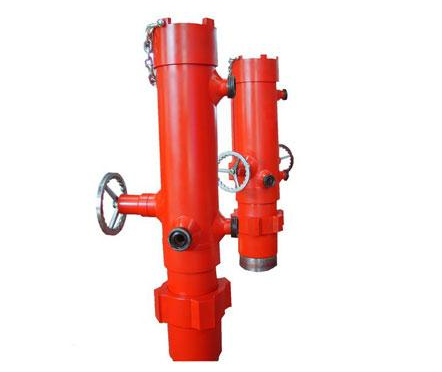
The overall structure of the cement head consists of an upper connector, a lower connector, a ball seat, a ball launching device, a pressure gauge interface, and a quick-connect mechanism. It features robust connections, strong sealing, and stable pressure resistance. The upper and lower connectors are the main pressure-bearing components, responsible for connecting to the casing and cement pipeline. They are often made of alloy steel to improve compressive strength and corrosion resistance. The internal ball seat and ball launching device are used to push the rubber plug, ensuring that the cement slurry is sequentially advanced within the casing, achieving segmented cementing. The device is usually equipped with a pressure gauge interface externally for monitoring grouting pressure and timely adjustment of construction parameters. Furthermore, cement heads generally employ a quick-connect design, resulting in higher installation and disassembly efficiency, making them suitable for complex well site environments with tight deadlines. Their compact overall structure and high safety make them an indispensable key piece of equipment in downhole cementing operations.
Core Performance and Structural Advantages of Cement Heads
The most prominent advantages of cement heads lie in their reliable sealing performance and pressure-bearing capacity, enabling stable operation under high pressure, high temperature, and corrosive media conditions. The internal one-way valve structure effectively prevents cement slurry backflow, avoiding the risk of cementing failure. In addition, their precise ball-launching mechanism accurately deploys rubber balls according to construction requirements, resulting in more uniform cement slurry propulsion and improved cementing quality. The quick-connect structure allows for compatibility with various casing sizes, enhancing operational flexibility. Some cement heads are also equipped with dual-chamber or triple-chamber structures, enabling multi-stage grouting tasks to be completed simultaneously, significantly improving efficiency. The entire device utilizes high-strength steel and surface treatment technology, giving it strong wear resistance and corrosion resistance, meeting the needs of long-term downhole operations. These characteristics enable cement heads to remain stable and reliable during high-intensity cementing operations, providing crucial support for downhole engineering.
Routine Maintenance and Standardized Procedures for Cement Heads
To ensure the safe and smooth operation of cementing operations, the maintenance procedures for cement heads must be followed in a standardized manner. First, a comprehensive inspection must be conducted before each use, focusing on whether the joint threads are worn, whether the sealing rings are aged, and whether there is scale or foreign matter in the internal pipes, to prevent leaks or blockages during operation. During use, pressure gauge data should be continuously monitored. If abnormal pressure fluctuations are detected, the machine must be stopped immediately for inspection to prevent equipment damage. After operation, the cement head must be thoroughly cleaned, especially the balling chamber and internal channels, to ensure that no residual cement slurry has solidified. Sealing rings, valve bodies, and other vulnerable parts should be replaced regularly to maintain good sealing. In addition, rust-preventive oil should be applied to metal surfaces, and storage should be avoided in humid environments. Following standardized maintenance procedures not only extends the service life of the equipment but also reduces the failure rate, improving the overall safety and efficiency of downhole cementing operations.