As a critical sealing component in pumps, agitators, and reactors, the reliability of mechanical seals directly affects equipment safety and production stability. Seal wear can lead to leaks, equipment downtime, or even environmental accidents, making it essential to understand the causes of wear and the methods for detecting it.
Why Do Mechanical Seals Wear?
What Is Wear?
Mechanical seal wear refers to the gradual material loss or performance degradation of seal faces or auxiliary sealing components during operation due to friction, corrosion, or chemical reactions. Common manifestations include scratches on the seal faces, hardening of elastomers, thermal cracks, or leakage. Wear not only reduces sealing performance but also shortens equipment service life, increases maintenance costs, and raises production risks.
Main Types of Wear
Mechanical seal wear can be classified into the following categories:
Frictional wear: Physical abrasion of seal faces caused by shaft rotation or liquid shear
Corrosive wear: Gradual deterioration of seal material due to chemical activity of the medium
Thermal wear: Microstructural changes, cracking, or deformation of seal faces due to frictional heat
Particle wear: Scratches caused by solid particles embedded in the medium impacting the seal faces or elastomers
Each type of wear affects sealing performance differently, so multiple factors must be considered during design and maintenance.
How to Detect Mechanical Seal Wear?
Preparations for Wear Detection
Before detection, the equipment should be stopped and secured. Typical tools include thickness gauges, vernier calipers for inner and outer diameters, pressure and temperature sensors, and seal face inspection devices. Observing leakage, vibration, or abnormal temperature can provide an initial assessment of seal condition and guide precise detection.
Steps for Detecting Mechanical Seal Wear
Mechanical seal wear detection generally involves the following steps:
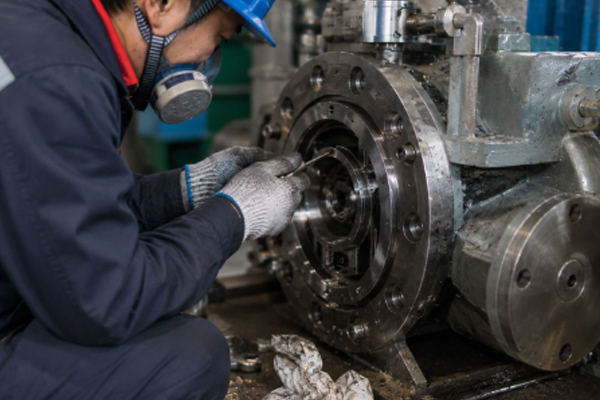
Visual Inspection: Open the seal chamber and check seal faces for scratches, cracks, or burn marks; examine elastomers for hardening, cracking, or deformation.
Dimensional Measurement: Use calipers or micrometers to measure seal face thickness, face gap, and elastomer dimensions to determine whether they exceed design tolerances.
Operational Monitoring: Monitor pressure, temperature, vibration, and leakage to identify performance decline caused by wear.
Chemical Analysis: If necessary, analyze barrier fluid or process media for metal or material particles to determine wear type and severity.
Standardized procedures allow for accurate assessment of the causes and extent of seal wear, informing maintenance or replacement decisions.
How to Prevent Mechanical Seal Wear?
Reducing Frictional Wear
Frictional wear is the most common type. Reducing it focuses on maintaining face lubrication and pressure balance. Measures include:
- Installing an appropriate barrier fluid system to ensure seal face lubrication
- Maintaining coaxial alignment of seal faces to reduce eccentricity and vibration
- Adjusting pressure and rotational speed to keep frictional loads within design limits
- Regularly inspecting and replacing worn parts to prevent excessive cumulative wear
These actions significantly reduce the likelihood of frictional wear and extend seal life.
Protecting Against Corrosive Wear
Corrosive wear is usually caused by the chemical activity of the medium. Prevention strategies include:
Selecting corrosion-resistant seal materials such as silicon carbide, ceramics, or fluororubber
Using buffer or barrier fluids to isolate the medium from seal faces
Controlling the pH and temperature of the medium to reduce corrosion rate
Regularly cleaning the seal chamber to prevent formation of corrosive deposits
Proper protection effectively reduces corrosive wear and improves equipment safety.
Controlling Thermal Wear
Thermal wear results from frictional heat and thermal expansion of seal faces. Control measures include:
- Ensuring barrier fluid or cooling water systems operate properly
- Using thermal expansion compensation designs to reduce pressure fluctuations on seal faces
- Controlling rotational speed and pressure variations to avoid overload
- Regularly monitoring face temperature and adjusting cooling measures as needed
Proper thermal management ensures stable operation of mechanical seals even in high-temperature environments.
Frequently Asked Questions
Q: How often should mechanical seals be inspected for wear?
A: Generally, inspections are recommended every 500–1000 hours of operation or based on operational complexity. For hazardous media or high-pressure conditions, inspection intervals should be shorter.
Q: Can severely worn seals continue to be used?
A: No. Excessive wear may cause leaks, equipment downtime, or safety accidents. Timely replacement or repair is necessary.
Q: Must wear detection be performed with the equipment stopped?
A: Most inspections require shutdown for precise evaluation, but some operational monitoring (temperature, vibration, leakage) can be done online to predict wear trends.
Mechanical seal wear is inevitable during equipment operation, but scientific analysis and proper detection can effectively extend seal life and reduce maintenance costs. Frictional, corrosive, thermal, and particle wear are the main types, each of which can be controlled through lubrication, barrier fluid management, material selection, and cooling measures. Regular inspections include visual and dimensional checks, online monitoring, and chemical analysis, forming a comprehensive wear management system.