
In pump systems, although mechanical seals are small components, they directly determine the overall energy consumption, leakage control capabilities, and long-term operational stability. Compared to traditional packing seals that rely on compression to generate frictional resistance, mechanical seals achieve dynamic sealing through the precise fit of the dynamic and static ring faces under extremely thin liquid film lubrication, significantly reducing shaft power loss and mechanical wear. Therefore, in modern industrial pump systems, mechanical seals are not only a key structure for preventing leakage but also a core technology for improving pump efficiency and reliability. Proper selection, precision manufacturing, and standardized installation and maintenance enable pumps to achieve more stable and longer-term continuous operation with lower energy consumption, playing a vital role in fields such as chemical, petroleum, power, and water treatment.
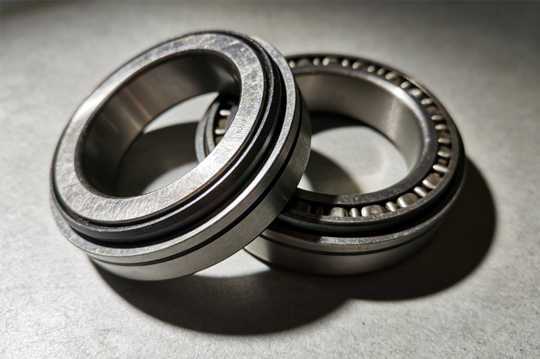
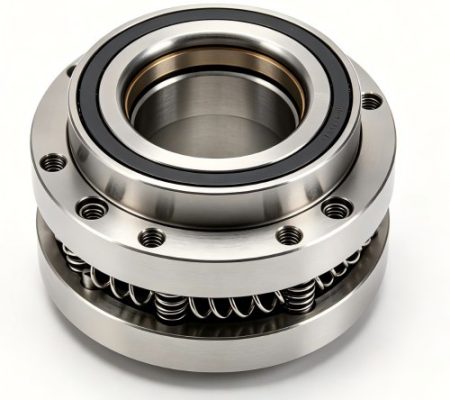
What is a mechanical seal and its function? A mechanical seal is a sealing device that prevents fluid leakage by using one or more pairs of precision end faces to achieve a seal under the action of spring force and medium pressure. It typically consists of a dynamic ring, a static ring, an elastic element, an auxiliary sealing ring, and a transmission mechanism, and is installed between the pump shaft and the pump casing. Compared to traditional packing seals, mechanical seals achieve sealing through “end-face contact” rather than relying on packing to press against the shaft surface, resulting in less friction and less leakage. During pump operation, the mechanical seal plays three main roles: first, preventing media leakage and ensuring the safety and environmental friendliness of the conveying system; second, reducing frictional losses between the shaft and the seal, thereby reducing energy consumption and improving overall pump efficiency; and third, stabilizing pump operation and preventing pressure drops or equipment damage due to leakage. The essence of a mechanical seal is a “controlled friction pair.” By maintaining an extremely thin liquid film on the precision-machined end face, solid contact is replaced by liquid lubrication, achieving a balance between sealing and lubrication. If designed or selected properly, mechanical seals can significantly reduce shaft power loss and extend pump life.
Why does it improve pump efficiency and reliability?
The core reason mechanical seals improve pump efficiency is their reduction of mechanical friction losses. Traditional packing seals require direct contact between the packing and the shaft to achieve a seal, which generates continuous friction, increasing energy consumption and causing shaft wear. Mechanical seals employ a micro-gap lubrication structure on the end face, significantly reducing frictional resistance and thus improving pump transmission efficiency. In terms of reliability, mechanical seals maintain extremely low leakage levels through stable end face pressure control, preventing media contamination of bearings or the external environment. Furthermore, due to their high degree of structural standardization, their operating status is more controllable and less susceptible to operator adjustments, resulting in stronger overall stability. In addition, under high pressure, high temperature, or corrosive media conditions, mechanical seals can further enhance reliability through material optimization and auxiliary flushing systems, enabling long-term stable pump operation without frequent downtime for maintenance.
How to install?
Preparation before installation:
The preparation work before installing a mechanical seal directly determines its subsequent operating performance. First, the pump shaft, sealing cavity, and installation location must be cleaned to ensure no oil, particles, or rust residue remains, otherwise it will affect the end face fit accuracy. Second, it is necessary to check whether the radial runout and axial movement of the shaft are within the allowable range, as any deviation will lead to uneven stress on the sealing end face, thus reducing seal life. At the same time, it is also necessary to verify whether the mechanical seal model matches the operating conditions, including pressure rating, temperature range, and media characteristics.
Installation and Commissioning Procedure:
During installation, the mechanical seal must be installed strictly according to the assembly sequence. First, fix the stationary ring in the sealing cavity, ensuring accurate positioning. Next, install the rotating ring and shaft sleeve, keeping the end faces clean to prevent particles from entering the sealing surface. During assembly, control the compression amount to ensure the elastic element is in a proper pre-tightened state; excessive tightness increases frictional heat, while excessive looseness leads to leakage. During the commissioning phase, perform a short-run test run to observe for any abnormal vibrations or leaks. Simultaneously, gradually increase the pressure and temperature to allow a stable liquid film to form on the sealing end face. If conditions permit, adjust the flushing system to maintain a clean and cooled state within the sealing cavity.
Operation and Maintenance Procedure:
During long-term operation, the maintenance of the mechanical seal is equally important. First, regularly check for changes in leakage; if an abnormal increase is detected, immediately stop the machine for inspection. Second, monitor the flushing system for unobstructed flow, as the flushing fluid not only cools but also removes particulate impurities. Furthermore, monitor pump shaft vibration, as vibration directly affects the stability of the sealing end face. If an abnormal increase in sealing temperature is detected, it is also necessary to determine if there is dry friction or insufficient lubrication. How to ensure technical details are handled well?
Sealing end face design and control:
The true performance ceiling of a mechanical seal is determined by the design and machining quality of the end faces of the rotating and stationary rings. The end faces not only require extremely high flatness but also stable micro-roughness control, generally needing to achieve sub-micron or even nano-level polishing effects. This is because in actual operation, a “non-contact seal” is achieved between the two end faces through an extremely thin liquid film (typically only 2–5 microns). Once scratches, ripples, or localized deformation occur on the end faces, the stability of the liquid film will be compromised, leading to leakage or even dry friction failure.
Cooling and flushing scheme:
The flushing and cooling system is a “protective barrier” for the long-term stable operation of the mechanical seal. Its core function is to control the temperature of the sealing end faces, improve lubrication conditions, and remove wear particles. If the flushing design is unreasonable, even if the mechanical seal itself has high precision, it may fail prematurely due to heat accumulation or impurity intrusion.
Common Flushing Methods:
· External Flushing (Plan 32) Continuous entry of external cleaning fluid into the sealing cavity effectively isolates particles and corrosive substances in the medium. Suitable for media containing impurities or prone to crystallization.
· Self-Flushing (Plan 11) Utilizes the pump’s own fluid for circulating cooling. Simple in structure but requires high media cleanliness.
· Circulating Flushing System (e.g., Plan 52/53) Typically used for double-end mechanical seals. Forms an independent circulation loop through the isolation fluid, providing not only cooling but also a stable lubrication environment. Suitable for hazardous or volatile media.
Coaxiality and Assembly Accuracy Control
Mechanical seals are highly sensitive to installation accuracy, with the most critical indicator being the coaxiality of the pump shaft and the sealing cavity. If the shaft system has eccentricity or radial runout, it will directly lead to uneven stress on the dynamic and static ring end faces, causing excessive local pressure, resulting in uneven wear, overheating, or even end face cracking. During assembly, a dial indicator is usually used to check the shaft runout to ensure that the radial runout is controlled within the allowable range (generally 0.05mm or even lower, depending on the equipment level). Meanwhile, the clearance between the bushing and the sealing cavity must be strictly controlled to avoid imbalance of force on the sealing elastic element due to assembly deviations.
Frequently Asked Questions
Q: Does mechanical seal leakage necessarily mean failure?
Not necessarily. Slight “lubricating leakage” is normal and is used to form a liquid film. If there is continuous dripping or jetting leakage, it indicates end face wear or improper installation, requiring inspection.
Mechanical seals may seem like a small component on a pump, but their impact on the entire system is significant. They act like the pump’s “joint seal,” ensuring both watertightness and smooth shaft rotation. Proper selection and installation can make pump operation more energy-efficient and stable, and reduce maintenance frequency. Many pumps are inefficient not necessarily due to motor problems, but may be caused by excessive seal friction or leakage. Mechanical seals, through precise end face contact, transform “hard friction” into “liquid lubricated friction,” thereby reducing energy waste. Furthermore, in long-term operation, mechanical seals can reduce shaft wear and leakage risks, allowing the equipment to maintain a stable state for longer periods.