In oil drilling operations, drilling fluid is like the ‘blood’ of the drilling project; its performance directly affects drilling efficiency, quality, and safety. pH value, as a key performance indicator of drilling fluid, has a significant impact on its rheology, filtration, inhibition properties, and wellbore stability. Accurately testing the pH value of drilling fluid allows for timely understanding of its performance status, providing a basis for subsequent adjustments and optimizations, thereby ensuring the smooth progress of drilling operations. So, how exactly should the pH value of drilling fluid be tested?
Choosing the Appropriate Testing Tool
pH Test Strips
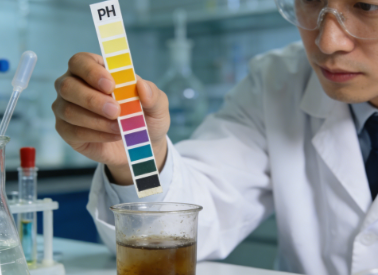
pH test strips are a simple and quick testing tool widely used in drilling sites. They come in various types depending on the pH range, with common types including wide-range pH test strips and precision pH test strips. Wide-range pH test strips offer a broad measurement range, typically covering pH values from 1 to 14, allowing for quick determination of the approximate acidity or alkalinity of drilling fluids. Precision pH test strips, on the other hand, provide more accurate readings over a narrower pH range. For example, there are precision pH test strips with a measurement range of 7.0 to 9.0 and an accuracy of 0.2 or 0.5, suitable for testing scenarios requiring high pH accuracy. To use pH test strips, simply take a small piece, immerse it briefly in the drilling fluid, and then compare it with a standard colorimetric card to determine the pH value of the drilling fluid.
pH Meter
A pH meter is an electronic instrument that provides accurate pH measurements. It consists of two parts: electrodes and an instrument. The electrodes are the key components for sensing the acidity or alkalinity of the drilling fluid, typically using a combination of glass electrodes and a reference electrode. The instrument converts the electrical signal sensed by the electrodes into a pH value and displays it. pH meters offer advantages such as high measurement accuracy and intuitive readings, meeting the needs for precise pH detection in drilling fluids. However, pH meters are relatively expensive and require regular calibration and maintenance to ensure measurement accuracy.
Preparations Before Standardized Testing
Sample Collection
Collecting representative drilling fluid samples is fundamental for accurate pH measurement. When collecting samples, clean, dry containers should be used to avoid contamination from impurities within the container. Samples should be collected from different locations within the drilling fluid circulation system, such as the drilling fluid pool, drilling fluid pump outlet, and drilling fluid return pipeline. These samples should then be thoroughly mixed to obtain a sample that reflects the actual condition of the entire drilling fluid system.
Instrument Calibration (for pH Meters)
If a pH meter is used for testing, it must be calibrated before use. Calibration typically employs a two-point calibration method, using two standard buffer solutions with known pH values (generally pH 4.00 and 9.18) to calibrate the pH meter. The electrodes are sequentially immersed in these two standard buffer solutions, and the pH meter’s calibration knob is adjusted until the displayed pH value matches the actual pH value of the standard buffer solution. Calibration can eliminate zero-point drift and slope error of the electrodes, improving measurement accuracy.
Implementation of Testing Procedures
pH Test Paper Testing Procedure
After thoroughly mixing the collected drilling fluid sample, take a selected pH test paper and use a clean glass rod or bamboo stick to apply a small amount of drilling fluid gently onto the paper. Do not immerse the test paper directly into the drilling fluid to avoid contaminating the fluid and affecting the test results. After application, wait a moment for the test paper to fully change color. Then compare the test paper with a standard color chart to find the closest color patch. The pH value corresponding to this patch is the approximate pH value of the drilling fluid.
pH Meter Testing Procedure
Rinse the calibrated pH meter electrode with distilled water and blot dry the surface with filter paper. Then slowly insert the electrode into the drilling fluid sample, ensuring the electrode is completely submerged and the glass bulb does not contact the container wall or bottom. Gently stir the drilling fluid sample to ensure even distribution around the electrode. Once the pH meter reading stabilizes, record the displayed pH value. During the test, avoid impacts or vibrations to the electrode to prevent affecting the measurement results.
Post-Test Processing
Instrument Cleaning and Maintenance (for pH Meters)
After testing, promptly remove the pH meter electrode from the drilling fluid, rinse it thoroughly with distilled water, and then blot dry with filter paper. If stubborn impurities adhere to the electrode surface, use a suitable cleaning solution, ensuring the solution’s composition does not damage the electrode. After cleaning, immerse the electrode in electrode preservative solution to maintain its activity and stability. Simultaneously, wipe the pH meter’s instrument section clean and store it in a dry, well-ventilated place.
Data Recording and Analysis
Accurately record the obtained drilling fluid pH value, noting the test time, location, and other information. Analyze the test data to determine if the drilling fluid pH value is within the appropriate range. If the pH value deviates from the normal range, further analysis of the cause is needed, and corresponding adjustment measures should be taken, such as adding acid or alkali to adjust the drilling fluid pH value to ensure the stability of the drilling fluid performance.
Accurately measuring the pH value of drilling fluid is an indispensable and crucial part of drilling operations. By selecting appropriate testing tools, standardizing pre-test preparation, correctly implementing the testing operation, and properly handling post-testing procedures, we can obtain accurate and reliable drilling fluid pH value data. This data not only helps us to promptly grasp the performance status of the drilling fluid, but also provides a scientific basis for adjusting and optimizing the performance of the drilling fluid, thereby ensuring the efficient and safe conduct of drilling operations.