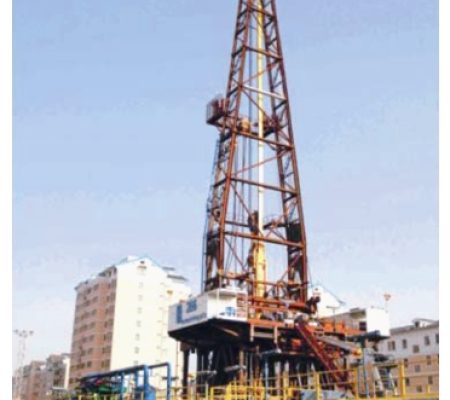
In downhole oil drilling operations, high-frequency vibration is a common and complex operating condition, particularly in deep wells, directional wells, and horizontal sections. High-frequency vibration not only affects the stability of drilling parameters but also places higher demands on stabilizer performance within the bottom hole assembly. Systematic evaluation of stabilizer behavior under high-frequency vibration helps optimize drill string design, extend tool service life, and reduce downhole operational risks.
Formation Mechanisms of High-Frequency Vibration in Downhole Drilling
Downhole high-frequency vibration results from multiple interacting factors, including uneven bit-rock interaction, variations in drill string stiffness, wellbore trajectory fluctuations, and formation heterogeneity. Vibration modes include axial, lateral, and torsional vibration, with some components occurring at relatively high frequencies that impose continuous dynamic loads on stabilizers.
In complex well sections, frequent contact between the drill string and the wellbore transfers and amplifies vibration energy, placing stabilizers under sustained dynamic loading conditions.
Load Characteristics of Stabilizers Under High-Frequency Vibration
Stabilizers control drill string movement through constrained contact with the wellbore. Under high-frequency vibration, stabilizer blades experience periodic impact loads and alternating stresses that differ significantly from conventional operating conditions.
- Rapid load fluctuations at blade-to-wellbore contact points
- High-frequency micro-slip and localized wear
- Alternating bending stresses within the stabilizer body
- Repeated load transfer at threaded connections
These characteristics form the basis for stabilizer performance evaluation in vibration-intensive environments.
Impact of High-Frequency Vibration on Structural Stability
Structural stability directly determines stabilizer service behavior in sustained vibration conditions. Insufficient rigidity can lead to micro-deformation, disrupting contact balance and amplifying vibration. Well-designed stabilizers limit vibration transmission paths through structural stiffness, improving overall load distribution within the drill string.
Blade-to-body connection design, machining precision, and stress concentration control all influence stabilizer stability under vibration.
Key Evaluation Criteria for Blade Wear Resistance
High-frequency vibration accelerates blade wear, particularly in abrasive formations. Performance evaluation should focus on blade materials and wear-resistant coatings under vibration conditions.
- Early coating spallation or cracking
- Irregular wear band formation on blade surfaces
- Concentrated wear at specific contact zones
- Noticeably accelerated wear progression
Stabilizers with inadequate wear resistance often experience significantly reduced service life in vibration-intensive wells.
Stabilizer Capability in Controlling Vibration Transmission
Stabilizers function not only as load-bearing components but also as regulators of vibration transmission paths. Properly placed stabilizers modify drill string-to-wellbore contact behavior, reducing upward transmission of vibration energy.
Spiral stabilizers, through rolling contact characteristics, help disperse impact forces and mitigate vibration intensity, making them particularly valuable in directional and horizontal sections.
Influence of Installation Position on Performance Evaluation
Stabilizer position within the bottom hole assembly directly affects performance under high-frequency vibration. Near-bit stabilizers are closer to vibration sources and require higher structural strength and wear resistance. Mid-string stabilizers primarily control drill string posture and influence overall vibration amplitude.
- Stabilizer spacing affects vibration attenuation
- Improper placement may induce localized resonance
- Drill string stiffness variation influences vibration propagation
Performance evaluation must account for actual installation configuration.
Use of Downhole Data in Performance Assessment
Stabilizer performance under high-frequency vibration can be indirectly evaluated through downhole measurement data. Vibration amplitude, frequency response, torque fluctuations, and rate of penetration stability provide insight into stabilizer operating conditions. Comparing data across different well sections and stabilizer configurations helps identify performance differences.
Long-term data accumulation supports development of stabilizer performance evaluation models tailored to vibration-intensive environments, guiding future selection and optimization.
Practical Significance of Performance Evaluation in Vibration-Intensive Environments
Systematic performance evaluation of stabilizers under high-frequency vibration helps identify structural weaknesses and refine material and design choices. Through appropriate selection and placement, vibration-induced wear and fatigue damage can be reduced, improving bottom hole assembly stability and providing reliable technical support for safe and efficient downhole oil drilling operations.