In the complex working conditions of oil and gas extraction, drilling pumps, as core equipment, directly impact operational efficiency and personnel safety through their safe operation. As the “last line of defense” for drilling pumps, the performance and reliability of safety valves are paramount. Pneumatic calibration technology, with its precision, efficiency, and safety, has become a key means of ensuring the stable function of safety valves. This article will delve into the core principles, technical points, and industry practices of pneumatic calibration of drilling pump safety valves, providing technical support for oil and gas extraction safety.
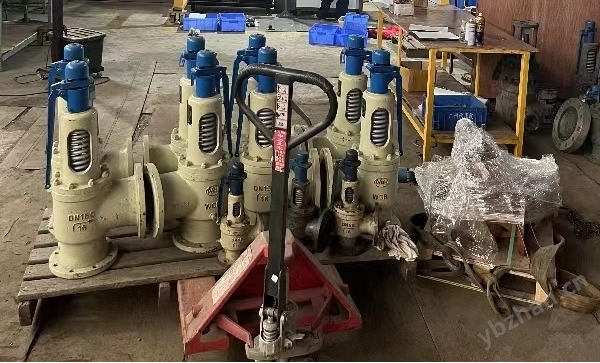
Calibration Principle: A Precision Game of Pressure and Mechanism
The core function of a safety valve is to set the opening pressure using the preload of a spring or counterweight. When the system pressure exceeds a threshold, the medium force overcomes the preload, pushing the valve disc open to release excess pressure. After the pressure recedes, the valve disc automatically reseated, restoring a seal. Pneumatic calibration technology simulates actual working conditions, using compressed air or nitrogen as the medium to accurately test the safety valve in ambient or high-temperature environments. Its core parameters include set pressure (opening pressure), reseating pressure (closing pressure), sealing performance, and opening/closing pressure difference. The accuracy of these parameters directly determines the safety valve’s response sensitivity and discharge efficiency. For example, in deep well drilling, the bottom hole pressure may exceed 100 MPa. If the safety valve’s set pressure deviation exceeds ±3%, it may cause premature valve opening, leading to unplanned shutdowns, or delayed opening, causing equipment damage. Pneumatic calibration, through staged pressurization (pressurization rate ≤0.01 MPa/s) and pressure holding (for more than 3 minutes), can accurately measure the set pressure deviation, ensuring compliance with GB/T 12243 standard requirements.
Technical Key Points: Full-Process Control from Equipment Selection to Operating Procedures
Equipment selection is the foundation of calibration accuracy. The pneumatic calibration bench must be equipped with a high-precision pressure gauge (accuracy class ≥1.0), an air storage tank (volume ≥1m³), and an automatic recording device to achieve real-time acquisition and storage of pressure data. For high-temperature conditions (e.g., wellhead temperature >150℃), high-temperature resistant sealing materials (e.g., metal bellows) and heat-insulating jackets must be used to prevent spring performance degradation due to thermal deformation.
Operating procedures are the core of calibration safety. Before calibration, the safety valve must undergo a visual inspection (no cracks in the valve body, no scratches on the sealing surface), disassembly and cleaning (removal of oil and residual media), and component measurement (spring free length deviation ≤5%). During calibration, operators must wear protective equipment (such as shockproof masks and noise-canceling earplugs) and follow the “pressure increase then pressure decrease” sequence: first, slowly increase the pressure to 90% of the set pressure, then increase it to the opening pressure at a rate ≤0.01MPa/s, recording the pressure at the moment the valve disc opens; then decrease the pressure to 80% of the set pressure and observe the valve disc reseating; finally, conduct a sealing test (bubble method or pressure drop method) at 90% of the set pressure.
Industry Practice: A Dual Breakthrough from Technological Optimization to Intelligent Upgrading
In the oil and gas extraction field, pneumatic calibration technology has been upgraded from single-parameter testing to full-performance evaluation. For example, Halliburton’s SP series of inelastic component-free downhole safety valves, through metal-to-metal baffle sealing technology and an isolated fluid flow tube design, extend the calibration cycle from 6 months to 12 months compared to traditional products, while maintaining a zero-failure record even under 137.9 MPa high pressure. Domestic companies like Baiqin Energy Technology, through their patented dual-piston structure technology, reduce the hydraulic pressure required to open the safety valve by 30%, significantly reducing media loss during the calibration process.
Intelligentization is the future direction of pneumatic calibration technology. Baker Hughes’ intelligent safety valve system integrates pressure sensors and wireless communication modules, enabling real-time monitoring of valve disc position, spring status, and sealing performance, and generating calibration reports through a cloud platform for “predictive maintenance.” The online calibration device developed by Shengli Drilling and Production Institute in China, utilizing an auxiliary opening mechanism and pressure pulse technology, can complete the set pressure test without disassembling the safety valve, reducing calibration time from 4 hours to 1 hour and significantly improving operational efficiency.
Pneumatic calibration technology for drilling pump safety valves is a crucial link in the oil and gas extraction safety system. From precise equipment selection and matching to strict adherence to operating procedures and deep integration of intelligent technologies, every technological breakthrough is strengthening the industry’s safety defenses. In the future, with the development of deep-water, ultra-deep-water, and high-temperature, high-pressure oil and gas fields, pneumatic calibration technology will evolve towards higher precision, higher efficiency, and higher intelligence, providing more reliable technical support for global energy security.