In oil and gas drilling and heavy industrial hoisting operations, the safety and stability of the hoisting system directly affect equipment operating efficiency and on-site personnel safety. As a key load-bearing component in the hoisting structure, the elevator connection is primarily used to connect the lifting clamps and the hoisting equipment, playing a crucial role in load transfer and structural support during heavy equipment hoisting. Especially in the hoisting environment of large-tonnage equipment, higher requirements are placed on the strength, stability, and impact resistance of the connecting components. Its outstanding performance in load-bearing capacity, structural reliability, and adaptability to complex working conditions makes it of significant application value in heavy equipment hoisting.
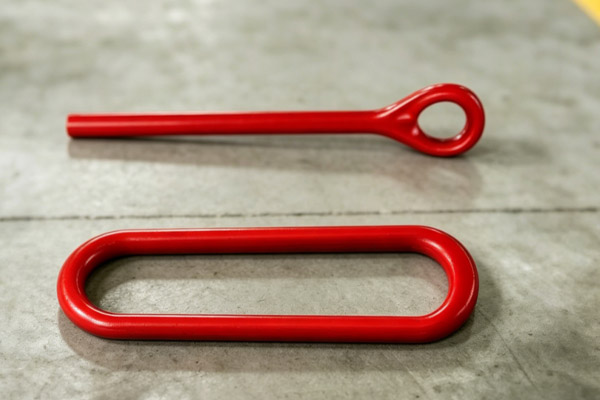
Stable Load-Bearing Structure, Improved Hoisting Safety
Heavy equipment hoisting requires extremely high load-bearing capacity.
- The elevator connection adopts a high-strength structural design, capable of withstanding the continuous load of large-tonnage equipment.
- The uniform stress distribution design reduces local stress concentration, improving overall safety.
- A stable structure also reduces fatigue damage caused by long-term high-load use.
This load-bearing capacity is a crucial foundation for safe hoisting.
Optimized Force Transfer, Reduced Hoisting Impact
Impact loads during hoisting can easily affect equipment stability.
- Elevator connections enable smooth load transfer, reducing the impact of instantaneous shocks.
- Structural rigidity design reduces swaying and tilting during lifting.
- Stable load distribution also improves the controllability and safety of equipment operation.
This optimized load distribution contributes to improved lifting stability.
Improved connection precision enhances system coordination efficiency
Heavy lifting requires the coordinated operation of multiple devices.
- Standardized connection structures allow for more precise matching between the elevator, lifting clamps, and hoisting equipment.
- Good fit reduces installation errors and improves on-site operational efficiency.
- System coordination enhances the continuity of the overall lifting process.
This precision advantage improves operational efficiency.
Adapting to complex working conditions ensures continuous stable operation
Industrial lifting environments are typically complex.
- Elevator connections utilize high-strength, wear-resistant materials, enabling them to withstand high-frequency, heavy-load operations.
- They maintain stable performance even under high temperature, high pressure, and harsh environments.
- Good impact resistance extends equipment lifespan and reduces maintenance frequency.
This adaptability ensures long-term operational stability.
In modern heavy lifting engineering, elevator connections are not merely simple connecting components, but crucial structures ensuring the safety and efficiency of the lifting system. From load-bearing capacity and stress optimization to system coordination and adaptability to operating conditions, their role is integral throughout the entire lifting process. Through proper selection and standardized use, lifting safety and operational efficiency can be effectively improved, providing reliable support for industrial lifting and oil and gas engineering projects.