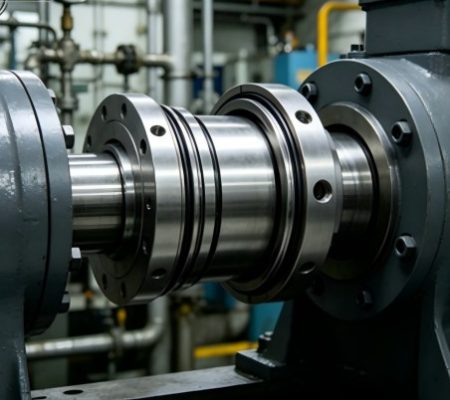
In various types of rotating equipment such as pumps, mixers, and compressors, the shaft must pass through the equipment casing to transmit power. Naturally, there is a gap between the shaft and the casing. Without effective sealing measures, liquids, gases, or vapors inside the equipment can leak outward through this axial gap, resulting not only in medium loss but also in environmental pollution, equipment damage, and even safety accidents.Mechanical seals were developed as an efficient dynamic sealing technology to address this challenge.
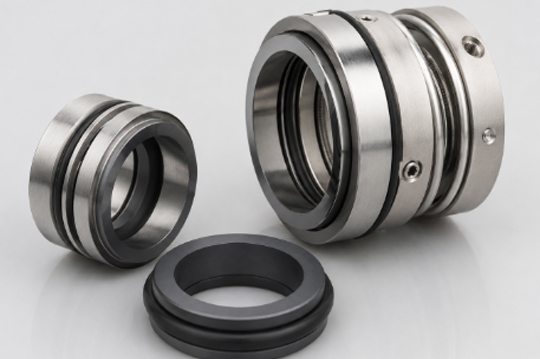
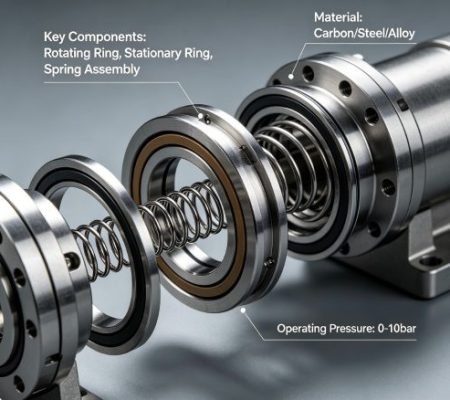
They create a precision contact interface between the rotating ring and stationary ring and rely on an extremely thin liquid film to maintain the sealing condition, thereby providing continuous and stable leakage prevention during equipment operation. Compared with traditional packing seals, the greatest advantage of mechanical seals is their extremely low leakage rate. They can keep medium leakage within a very small range while ensuring normal equipment operation. Especially when handling toxic, flammable, explosive, or corrosive media, mechanical seals are not only sealing components but also an important part of the overall production safety system.
How Do Mechanical Seals Ensure Leakage Prevention and Safety?
Establishing the sealing interface:
After installation, the rotating ring and stationary ring remain tightly in contact under the combined action of spring force and medium pressure. This creates the first sealing barrier during equipment operation.Although a micron-level liquid film exists between the sealing faces, it does not cause significant leakage. Instead, it provides lubrication and heat dissipation, enabling the seal to operate reliably for long periods. Unlike traditional packing seals that prevent leakage through compression, mechanical seals control the medium flow path through precision sealing faces, resulting in superior leakage control capability.
Continuous leakage control during operation:
Once the equipment starts operating, the pump shaft drives the rotating ring while the stationary ring remains fixed.Under high-speed rotation, the medium forms a stable liquid film between the sealing faces.At this point, the mechanical seal enters a dynamic equilibrium state:
- The liquid film provides lubrication
- The sealing faces provide sealing
- The spring compensates for wear
- The secondary sealing rings provide static sealing
These components work together to keep leakage consistently within the designed range.
Providing protection under abnormal operating conditions:
Mechanical seals maintain a certain degree of self-compensation capability under pressure fluctuations, temperature changes, or short-term load variations.The spring mechanism automatically adjusts the contact condition as the sealing faces wear. Some advanced sealing systems are also equipped with flushing systems, cooling systems, or barrier fluid systems. Even when operating conditions change, these systems help maintain sealing stability.
Core Advantages of Mechanical Seals in Leakage Prevention and Safety
One of the primary values of mechanical seals in industrial equipment is preventing medium leakage. For rotating equipment such as pumps and mixers, the transported media are often corrosive, flammable, or hazardous. Once leakage occurs, it may affect equipment safety and production stability.Compared with traditional sealing methods, mechanical seals can control leakage more effectively, improve equipment reliability, and reduce maintenance requirements.
Significantly reducing the risk of medium leakage
Traditional packing seals generally require a certain amount of leakage for lubrication. Mechanical seals, however, use precision sealing faces to reduce leakage to an extremely low level.
This is particularly important for media such as:
- Chemical raw materials
- Petroleum products
- Organic solvents
- Acid and alkaline liquids
Volatile liquidsWhen the medium itself is hazardous, reducing leakage becomes the greatest form of safety protection. Many modern factories regard mechanical seals as essential safety equipment rather than simply sealing components.
Reduce safety hazards caused by the leakage of flammable and explosive substances
In the petrochemical industry, many substances are flammable.
Examples include:
- Gasoline
- Benzene products
- Methanol
- Ethanol
Liquefied hydrocarbonsIf continuous leakage occurs, a flammable gas concentration zone may form around the equipment, creating fire or explosion risks.Mechanical seals significantly reduce the probability of such leakage, helping control hazards at their source. As a result, mechanical seals have become standard equipment in many hazardous chemical transportation systems.
Preventing toxic media from harming personnel health
Some industrial media may not be flammable but can be highly toxic.
Examples include:
- Ammonia-based media
- Chloride-containing media
- Certain pharmaceutical intermediates
Chemical reaction liquidsIf these substances leak into the workplace, they can directly threaten the health of operating personnel.By reducing the likelihood of external leakage, mechanical seals help minimize occupational exposure risks.
Reducing environmental pollution risks
Environmental protection requirements have become increasingly stringent in recent years.Companies must not only maintain production efficiency but also control pollutant emissions.
Long-term equipment leakage may:
- Contaminate floors
- Pollute water sources
- Pollute the air
- Increase waste treatment costs
Mechanical seals effectively reduce medium discharge into the environment, helping companies comply with environmental regulations. For this reason, many environmental compliance inspections pay close attention to whether critical equipment uses mechanical seal systems.
Improving continuous equipment operation capability
Safety is not only about preventing accidents. For industrial enterprises, stable operation is also an important aspect of safety.
Leakage often leads to:
- Maintenance shutdowns
- Equipment damage
- Production line interruptions
Product lossBy maintaining stable leakage control over long periods, mechanical seals reduce unplanned downtime and improve equipment reliability. This is one of the main reasons many companies choose to upgrade to mechanical sealing systems.
Frequently Asked Questions (FAQ)
Q: Can mechanical seals truly achieve zero leakage?
Strictly speaking, mechanical seals are classified as ultra-low leakage seals rather than absolute zero-leakage seals. During normal operation, a micron-level liquid film exists between the sealing faces, so a very small amount of medium exchange theoretically occurs. However, this leakage is usually far lower than that of traditional sealing methods and has minimal impact on production or the environment.
Q: Can mechanical seals be used for hazardous chemical transportation?
Yes. In fact, they are one of the most common solutions currently available. For high-risk media, double mechanical seals, barrier fluid systems, or cartridge seal designs can be used to further enhance safety levels.
Q: Will mechanical seal failure immediately cause major leakage?
Not necessarily. In many cases, the early stage of mechanical seal wear first appears as a slight increase in leakage. With a regular inspection program in place, problems can usually be detected early and maintenance can be scheduled before serious leakage incidents occur.
The role of mechanical seals in leakage prevention and safety is similar to that of a “safety gate” in industrial equipment. Liquids and gases inside equipment naturally seek the easiest path to escape, and the point where the shaft passes through the casing is one of the most common leakage locations. Through the high-precision structure of the rotating ring and stationary ring, mechanical seals restrict this leakage path to an extremely small range, ensuring safe equipment operation.For ordinary media, mechanical seals reduce waste and lower maintenance costs. For flammable, explosive, toxic, or corrosive media, mechanical seals serve as a critical safety protection measure. They not only protect the equipment itself but also safeguard on-site personnel and the surrounding environment.