
In the field of petroleum engineering, a Christmas tree and a BOP are two wellhead devices with distinctly different functions, serving different stages of oil and gas extraction. Although both bear the core responsibility of controlling wellhead fluids, their design positioning, structural composition, and operational logic differ fundamentally.
Functional Positioning
The Christmas tree, as the ‘production center’ of an oil and gas well, has the core function of controlling the oil and gas production process stably and continuously. It controls the flow rate of oil, gas, and water by adjusting valve openings, maintaining wellhead pressure balance, and preventing formation fluid backflow or equipment overpressure. Simultaneously, the Christmas tree integrates monitoring equipment such as pressure gauges and temperature sensors to collect wellhead data in real time, providing a basis for production decisions. For example, in flowing wells, the Christmas tree controls the production rate through nozzle throttling; in mechanically pumped wells, its valve system works with the pumping unit to achieve intermittent production.
The BOP, on the other hand, is designed specifically for emergency well control. Its core function is to quickly seal the wellhead during drilling, workover, and other operations to prevent high-pressure oil and gas from gushing out and causing a blowout. For example, when encountering high-pressure formations or experiencing wellbore pressure imbalances, the blowout preventer (BOP) must complete the well-sealing action within seconds, cutting off the fluid passage. Its design emphasizes rapid response and high-pressure sealing capabilities. For instance, a gate-type BOP can close via hydraulically driven gates, while an annular BOP utilizes a rubber core to wrap around the drill string for dynamic sealing.
Structural Composition
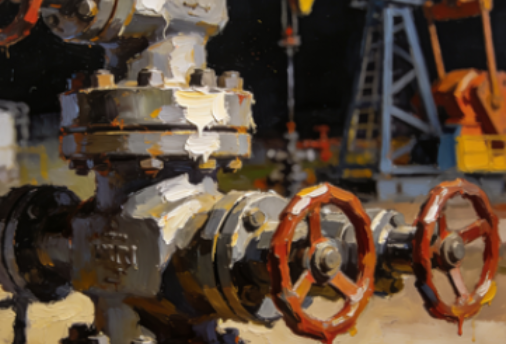
The Christmas tree’s structure exhibits modularity and integration. Its main body consists of a main valve, wing valves, safety valves, nozzles, and fittings, forming a multi-level control network. For example, the main valve controls the total flow rate, the wing valves regulate branch flow rates, the safety valves set pressure thresholds, and the nozzles achieve fine-tuned flow rate by changing different orifice diameters. Furthermore, the top of the Christmas tree is equipped with a Christmas tree cap, providing an operating interface for wireline and coiled tubing operations; the bottom connects to the casing head via a tubing head, forming a sealed wellhead structure.
The BOP’s structure focuses on high-pressure sealing and rapid response. Typical combinations include gate blowout preventers (BOPs) and annular blowout preventers (BOPs): gate BOPs achieve full or partial sealing of the wellhead through hydraulically driven gate closure; annular BOPs utilize the elastic deformation of a rubber core to seal the annular space even when drill strings are present in the well. For example, in deep well drilling, a combination of ‘gate BOP + annular BOP + universal BOP’ is often used to cope with different sizes of drill strings and open well conditions. Side ports are provided on the side of the casing for drilling fluid circulation and choke/kill operations.
Application Scenarios
The Christmas tree is a permanent device in the production stage of oil and gas wells. Whether in onshore or deep-sea wells, the Christmas tree needs to be installed at the wellhead for extended periods, enduring formation fluid pressure, temperature changes, and mechanical loads. For example, high-pressure, high-temperature (HPHT) Christmas trees use corrosion-resistant alloys and special sealing materials, allowing stable operation at 150°C and 105MPa; wet Christmas trees are remotely operated and adapted to extreme deep-sea environments.
Blowout preventers (BOPs) are temporary devices used during drilling and workover operations. Their installation period typically only covers the drilling or workover phase, and they must be removed after the operation is completed. For example, during drilling, the BOP assembly is installed on the casing head as the core of the well control system; during workover, the BOP is used to prevent blowouts caused by abnormal well pressure. Their design emphasizes reusability and quick assembly/disassembly; for example, the annular BOP core needs to be replaced periodically to maintain its sealing performance.
Safety Risks
Using BOPs as a substitute for Christmas trees will lead to both functional deficiencies and structural failures. BOPs lack the flow regulation, pressure monitoring, and daily operation interfaces of Christmas trees, making precise control of the production process impossible. For example, their gate design is for short-term emergency closure; long-term use can lead to aging of the sealing core and gate jamming; the annular BOP core is prone to creep under continuous high pressure, causing leakage. Furthermore, BOPs do not integrate safety valves, pressure gauges, or other monitoring equipment, making it impossible to detect wellhead anomalies in a timely manner, potentially delaying emergency response.
Conversely, if well control during drilling operations relies solely on the Christmas tree, the lack of a blowout preventer’s (BOP) rapid shut-off capability makes it impossible to handle sudden well kicks. For example, the Christmas tree valves open and close slowly, making it difficult to quickly cut off fluid flow in the early stages of a blowout, potentially escalating the accident.
The Christmas tree and the BOP are like the ‘production steward’ and ’emergency guardian’ of oil and gas wells, complementing each other in terms of function, structure, application scenarios, and safety risks. The Christmas tree ensures production efficiency through precise control, while the BOP protects operational safety with rapid response. Understanding the fundamental differences between the two is not only a technological foundation for petroleum engineering but also crucial for ensuring the safe and efficient operation of oil and gas development.