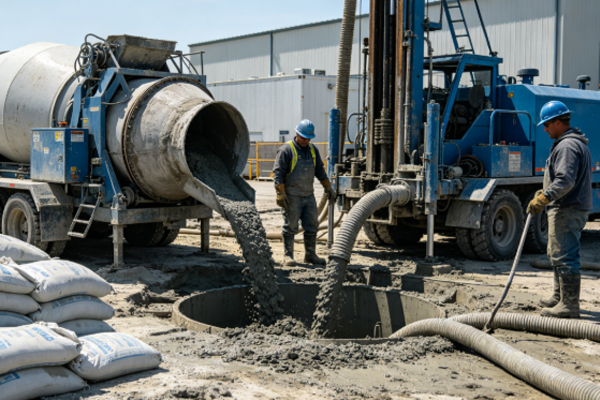
Cement plug construction is a critical step in oil and gas well operations, primarily serving to achieve downhole sealing, isolation, and pressure control. Improper control during construction can easily lead to sealing failure, crossflow, or downhole accidents. Therefore, strict control of the construction process is essential in practice. Proper construction management not only improves sealing quality but also reduces the risks of subsequent operations.
Confirmation of the Downhole Environment Before Construction
Before cement plug construction begins, a comprehensive inspection of the downhole environment is necessary, including well depth, well diameter, wellbore condition, and pressure. Construction personnel typically use downhole data to determine if the target well section is suitable for sealing operations and develop a corresponding construction plan based on formation conditions.
Severe leakage, wellbore collapse, or unstable circulation in the well will affect the distribution of cement slurry. Therefore, before formal construction, it is necessary to ensure that the wellbore conditions meet the operational requirements and to check the circulation system and well control equipment status in advance to avoid abnormalities during construction.
Cement Slurry Performance Requires Proper Control
The quality of cement slurry directly affects the sealing effect and curing stability.
- Insufficient fluidity easily leads to voids.
- Too short a setting time affects the construction rhythm.
- Insufficient strength reduces the sealing capacity.
- Unstable mix proportions easily affect the curing effect.
- Temperature changes affect cement performance.
During construction, cement slurry parameters usually need to be adjusted according to downhole temperature and pressure conditions to ensure a stable sealing layer is formed in the target well section.
The Well Circulation and Washing Process Cannot Be Ignored
The cleanliness of the downhole affects the bonding effect between the cement slurry and the well wall. If a large amount of drill cuttings or mud filter cake remains in the well, it can easily lead to poor cement plug adhesion, thereby reducing the sealing quality.
Before construction, thorough well circulation and washing are generally required to remove as much impurity as possible from the bottom of the well and keep the wellbore clean and stable. During circulation, it is also necessary to observe the sand return and pump pressure changes to confirm that the downhole flow is normal. The cleaner the well wall, the easier it is for the subsequent cement slurry to form a stable sealing layer.
Stable Construction Parameters Required
During cement plug construction, pumping pressure, flow rate, and construction speed must remain stable. Large fluctuations in these parameters can easily lead to uneven cement slurry distribution and even downhole disturbances.
- Excessive flow rate increases downhole impact.
- Pressure changes can affect the plugging position.
- Excessive pumping speed may create voids.
- Unstable circulation reduces slurry return.
- Abnormal parameters may lead to sealing failure.
Stable control of construction parameters can improve the overall quality of cement plug formation and reduce the risk of subsequent repair operations.
Curing and Testing Stages are Equally Important
After cement plug injection, sufficient time is required for curing. If the next step of construction is carried out before the required strength is reached, it may lead to damage or failure of the sealing layer. Different well conditions have different curing time requirements; therefore, the waiting time should usually be reasonably arranged based on temperature and pressure conditions.
After curing, pressure testing or downhole testing is also required to confirm whether the cement plug meets the design requirements. Testing can promptly identify sealing defects or positional deviations, thereby addressing potential problems in advance and improving the safety and stability of subsequent construction.