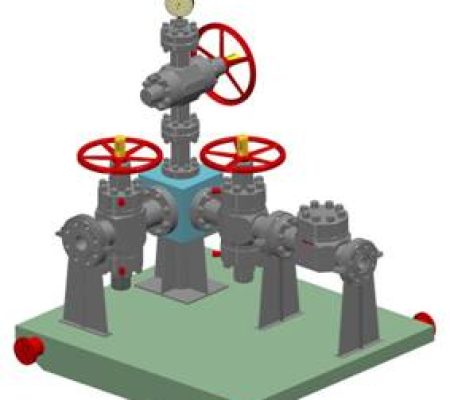
With the growing application of CO₂ flooding and CO₂ sequestration technologies in oil and gas field development, CO₂ injection wells have become a typical type of special-service well. Compared with conventional water injection or production wells, CO₂ injection wells present distinct challenges in terms of corrosion mechanisms, pressure conditions, and sealing stability. These factors place more stringent and specialized requirements on wellhead tools. Understanding these requirements is essential to ensuring long-term wellhead safety and operational reliability.
Characteristics of the CO₂ Injection Environment and Its Impact on Wellhead Tools
In CO₂ injection wells, carbon dioxide exists in high-pressure gaseous or supercritical states and readily reacts with water to form a carbonic acid environment. Although carbonic acid is not a strong acid, under high-pressure and high-temperature conditions it can continuously attack metal surfaces, leading to uniform corrosion, pitting corrosion, and crevice corrosion. If small amounts of hydrogen sulfide or oxygen are present, the corrosion rate can increase significantly.
In addition, CO₂ injection wells are typically designed for long-term continuous operation. Wellhead tools are exposed to constant mechanical stress and corrosive media over extended periods, increasing the likelihood of stress corrosion cracking. As a result, wellhead tools must meet not only short-term strength requirements but also long-term corrosion resistance and structural stability expectations.
Material Requirements for Wellhead Tools in CO₂ Injection Wells
From a material selection perspective, conventional carbon steel wellhead tools generally struggle to meet the service life requirements of CO₂ injection environments. In practice, alloy steels with enhanced CO₂ corrosion resistance, such as chromium-containing or low-alloy corrosion-resistant steels, are commonly preferred. Chromium promotes the formation of a relatively stable passive film on metal surfaces, effectively reducing carbonic acid corrosion rates.
In zones with higher corrosion risk, stainless steels or nickel-based alloys are often used for critical pressure-bearing and sealing components. These materials exhibit superior chemical stability in high-pressure CO₂ and water-containing environments, significantly reducing the probability of premature failure.
Special Sealing Requirements in CO₂ Injection Wellhead Systems
CO₂ molecules are small and highly penetrative, posing greater challenges to sealing systems compared with conventional media. Metal-to-metal sealing surfaces in wellhead tools must achieve higher machining precision and superior surface finishes to prevent gas leakage caused by micro-defects.
The selection of non-metallic sealing elements is equally critical. Certain elastomeric materials may swell, embrittle, or degrade when exposed to CO₂, compromising sealing performance. Therefore, wellhead tools used in CO₂ injection wells typically incorporate sealing materials that have been verified for compatibility with CO₂ environments, ensuring long-term sealing reliability.
Corrosion Resistance Rating Analysis for CO₂ Injection Wellhead Tools
In CO₂ injection wells, corrosion resistance ratings for wellhead tools are no longer defined solely by coating thickness. Instead, they are evaluated through a comprehensive assessment of material corrosion resistance, structural design, and service environment. In general, corrosion resistance levels can be categorized into basic protection, enhanced protection, and high-corrosion-resistance grades.
Basic protection is suitable for low-water-content and low-corrosion-risk conditions and relies primarily on the inherent corrosion resistance of the base material. Enhanced protection involves additional corrosion-resistant coatings or localized protective measures at critical areas. Under conditions of high CO₂ partial pressure and high water content, a high-corrosion-resistance grade is required, typically involving the extensive use of corrosion-resistant alloys to ensure adequate safety margins throughout the full service life of the wellhead system.
Conclusion
The requirements placed on wellhead tools in CO₂ injection wells have evolved from simple pressure containment and connection functions to comprehensive demands for corrosion resistance, sealing integrity, and long-term reliability. Through appropriate material selection, structural optimization, and accurate corrosion resistance grading, wellhead tools can maintain stable performance in CO₂ injection environments, providing reliable support for safe oil and gas development and carbon management operations.