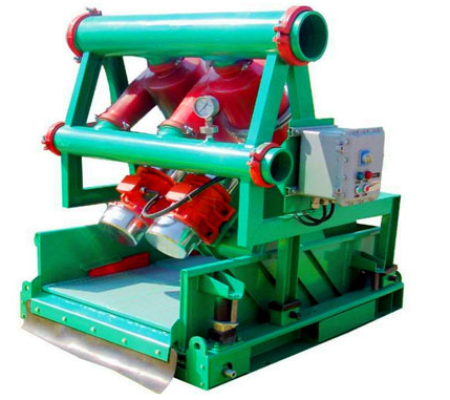
In complex engineering processes such as oil drilling and downhole operations, the solids control system is a core component for maintaining drilling fluid performance and ensuring downhole safety. Its core function is to separate harmful solid phases (such as rock cuttings, inferior soil, and sand particles) from the drilling fluid using physical and chemical methods, while retaining useful solid phases (such as bentonite and barite powder). If solids control is poor, the solids content in the drilling fluid will exceed the standard, triggering a series of chain reactions, from equipment damage to downhole accidents, seriously threatening operational safety and efficiency.
Solids Overload Directly Leads to Increased Equipment Damage
Solid particles in drilling fluid have strong abrasive properties. When the solids control system fails, leading to excessive solids content, equipment in the circulation system such as sand pumps, drill bits, and drilling tools will experience abnormal wear. For example, sand pumps that need to pump drilling fluid with excessive sand content for extended periods are prone to shaft end seal failure due to particle intrusion, and the clearance between the impeller and the liner will also widen due to sand erosion, leading to decreased pump efficiency or even jamming. When a drill bit cuts through formations, if the solid content in the drilling fluid is too high, cuttings cannot be removed in time, leading to a ‘repeated breakage’ phenomenon, accelerating drill bit wear, and shortening its service life. Statistics show that for every 1% increase in solid content, drill bit life can be shortened by 20%-30%, increasing the replacement cost of a single well by tens of thousands of yuan.
Solid Overload Damages Drilling Fluid Performance Stability
Key performance indicators of drilling fluid, such as rheology, filtration loss, and proppant carrying capacity, are closely related to solid content. Poor solids control can lead to the following problems:
Density and Viscosity Imbalance:Excessive solid content increases drilling fluid density, increasing bottomhole pressure and reducing mechanical drilling rate. Simultaneously, abnormally high viscosity and shear stress lead to poor fluidity, easily forming a ‘mud-covered bit’ phenomenon, further hindering drilling.
Uncontrolled Filtration Loss:Solid overload causes the mud cake to thicken and become loose, increasing filtration loss, leading to wellbore expansion, narrowing, and even spalling. For example, in a drilling operation at an oilfield, a malfunction in the solids control equipment led to excessive solids content, causing the filtration loss to surge from the normal value of 8 mL/30 min to 25 mL/30 min, resulting in wellbore collapse. The incident took 72 hours to handle, with direct economic losses exceeding one million yuan.
Chemical Contamination Risk: The solids may carry clay minerals, chemical impurities, etc., which can react with drilling fluid additives, leading to performance degradation. For example, clay minerals such as kaolin swell upon contact with water, clogging drilling fluid circulation channels and affecting proppant carrying capacity.
Solids Overload Threatens Wellbore Stability
Wellbore stability is a prerequisite for drilling safety, and poor solids control is a significant contributing factor to wellbore instability. Specifically: Decreased Mud Cake Quality: Solids overload causes the mud cake to thicken and increase permeability, failing to effectively seal formation fluids and easily leading to lost circulation or well kick. For example, in a deep well drilling operation, due to insufficient solids control system capacity, the mud cake thickness increased from 1mm to 5mm, resulting in excessive filtration loss and bottom hole pressure imbalance, leading to severe well leakage. Over 200 cubic meters of drilling fluid were lost during the cleanup process.
Abnormal Formation Pressure: Solid accumulation can alter the pressure distribution within the wellbore, inducing formation fluid intrusion. For example, in high-pressure oil and gas reservoir drilling, if poor solids control prevents the drilling fluid density from effectively balancing formation pressure, a blowout may occur.
Reservoir Damage: Loose mud cake can clog oil reservoir pores, reducing permeability. Experimental data shows that for every 5% increase in solids content, reservoir permeability can decrease by 30%-50%, severely impacting subsequent oil production efficiency.
Solids Overload Constrains Drilling Efficiency and Cost
The negative impact of poor solids control on drilling efficiency manifests in multiple aspects: Difficulty in tripping in and out of the well: Thick and loose mud cake increases the friction coefficient, causing obstruction and sticking during tripping in and out of the well. For example, in a certain well drilling operation, solids overload caused the mud cake friction coefficient to increase from 0.2 to 0.5, extending tripping time by 40% and increasing the single-well operation cycle by 3 days.
Reduced cuttings carrying efficiency: Solids overload reduces the drilling fluid’s sand-carrying capacity, causing cuttings to accumulate at the bottom of the well, forming a ‘cuttings bed’ that hinders drill bit advancement. Removing the cuttings bed requires frequent drilling shutdowns for circulation, increasing non-productive time.
Frequent drilling fluid treatment: Poor solids control necessitates adjusting drilling fluid properties by adding diluents and viscosifiers, or repeated treatment using equipment such as centrifuges and vibrating screens, increasing material costs and extending operation time. Statistics show that drilling fluid treatment costs due to poor solids control can account for 10%-15% of the total cost of a single well.
Poor Solids Control Leads to Significant Safety Hazards
The ultimate risk of poor solids control is causing downhole accidents. Typical examples include:
Uncontrolled Blowout:Solids overload causes the drilling fluid density to be unable to balance the formation pressure. If well control equipment such as blowout preventers (BOPs) fails, a blowout may occur. For example, in one well, a solids control system malfunction resulted in drilling fluid density below the formation pressure. After a blowout, the BOP was not closed in time, and the ejected material came into contact with the high-temperature components of the workover rig, causing a fire and resulting in significant casualties and property damage.
Stuck Pipe Accidents:Cuttings beds or mud-covered drill bits caused by solids overload can lead to stuck pipe. For example, in a horizontal well drilling, poor solids control caused cuttings to accumulate in the horizontal section, causing the drill bit to become stuck. The process required cutting the drill pipe, resulting in losses exceeding one million yuan.
Environmental Pollution:Poor solids control can lead to drilling fluid leaks. The chemical additives and heavy metals contained in the drilling fluid can pollute soil and water sources. For example, in one well, corrosion and perforation of the solids control tank caused drilling fluid leakage, polluting surrounding farmland and rivers, leading to environmental lawsuits.
The harm caused by poor solids control is far more than a problem in a single aspect; it is a systemic risk that permeates drilling fluid performance, equipment lifespan, wellbore stability, operational efficiency, and safety. From microscopic drill bit wear to macroscopic blowout accidents, from increased single-well costs to regional environmental pollution, the reliability of the solids control system directly determines the success or failure of downhole operations.