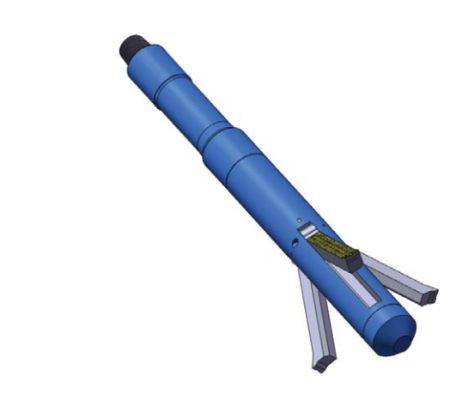
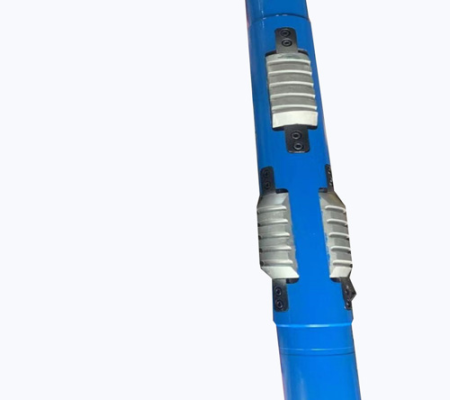
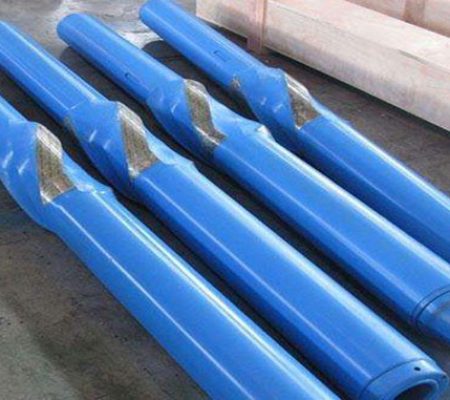
An integrated centering unit is used in cementing operations to ensure casing centering. Its installation quality directly affects the uniformity of the cement sheath and the wellbore sealing effect. The installation process may seem simple, but it involves many details such as positioning accuracy, fastening methods, and downhole compatibility. Improper installation can easily lead to eccentricity, slippage, or support failure; therefore, it is necessary to operate according to the standard procedures.

Pre-installation Inspection and Preparation
Before installation, a comprehensive inspection of the centering unit and casing is required to ensure that all components are in normal condition. The casing surface should be clean, free of oil, mud residue, or obvious deformation. The centering unit body needs to be confirmed to be free of cracks, with an intact elastic structure, and dimensions meeting design requirements. At the same time, check that the installation tools are complete to avoid interruptions in on-site operations. Adequate preparation can reduce unnecessary errors during installation.
Casing Positioning and Installation Location Determination
The selection of the installation location directly affects the centering effect and usually needs to be arranged according to the well depth design and cementing plan. The centering units should be evenly distributed at different locations on the casing to ensure overall stress balance. In critical well sections, such as deviated or horizontal sections, the installation density needs to be appropriately increased to enhance centering capability. Once the position is determined, it should be marked to ensure no misalignment occurs during installation.
Fixing Method and Installation Steps
Integral centering devices are typically fixed to the casing using snap-fit or press-fit methods. During installation, it is necessary to ensure uniform force distribution and avoid localized deformation.
- Push the centering device along the casing axis to the predetermined position.
- Check if the elastic structure is fully deployed.
- Confirm that the snap-fit or fixing structure is securely locked.
- Avoid excessive external force that could damage the structure.
- Verify the position after installation.
During installation, maintain smooth movement and avoid impactful operations.
Installation Quality Inspection and Adjustment
After installation, the position and fixing status of the centering device need to be checked to ensure it is evenly distributed on the casing and free from loosening. The spacing can be confirmed visually or by measurement to ensure it meets design requirements. If misalignment or insecure installation is found, adjustments or reinstallation should be made promptly. The inspection process helps reduce risks in subsequent downhole operations and improves overall construction stability.
Status Monitoring During Running-in
During the casing running into the wellbore, the centering device is affected by wellbore friction and fluid impact, therefore its operating status needs to be monitored. If jamming or abnormal resistance occurs, operations should be suspended for inspection to avoid forced running that could cause structural damage. After successful running-in, the centering device should maintain good elastic support to keep the casing centered in the wellbore, thus providing a stable foundation for subsequent cementing operations.