Desander cleaning agents play a crucial role in drilling fluid circulation systems and industrial solids control. Their primary task is to rapidly separate sand particles, rock cuttings, and other solid impurities from the drilling mud, thereby maintaining mud stability. Equipment operating efficiency directly affects drilling speed and mechanical wear; therefore, understanding the working principle of desander cleaning agents helps improve construction efficiency and reduce equipment failure rates.

Centrifugal Separation is the Core Principle
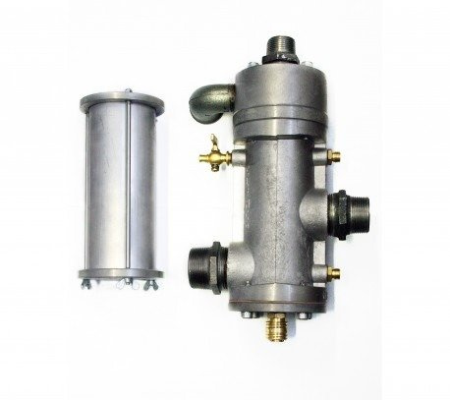
The core working method of desander cleaning agents is to utilize centrifugal force to achieve solid-liquid separation. When the mud enters the hydrocyclone at high speed, it forms a high-speed rotating flow inside. Under the action of centrifugal force, denser sand particles and solid particles are thrown towards the outer wall of the hydrocyclone and move downwards along the cone for discharge, while the lighter liquid flows out from the central area. In this way, the equipment can continuously separate impurities from the mud, thereby reducing the solid particle content. Centrifugal separation is fast and has a large processing capacity, therefore it is widely used in drilling fluid circulation systems.
Vibrating Screen Assists in Filtering Impurities
A sand removal system typically works in conjunction with a vibrating screen. The screen pre-treats larger solid particles, thereby improving overall sand removal efficiency.
- The vibrating screen can filter larger rock debris particles.
- The screen mesh size determines the filtration accuracy.
- High-frequency vibration helps the slurry pass through the screen surface quickly.
- It can reduce the workload of the subsequent hydrocyclone.
- It prevents large particles from clogging the pipeline system.
When the vibrating screen and hydrocyclone work together, the overall filtration capacity is improved, and system clogging problems are reduced.
Pump Provides Stable Delivery Power
During operation, the sand removal cleaning agent relies on a pump to continuously deliver the slurry, maintaining a stable system pressure. The pump allows the slurry to enter the hydrocyclone at a certain speed, thus generating sufficient centrifugal force to complete particle separation. If the delivery pressure is insufficient, the slurry rotation speed will decrease, and particles cannot settle effectively; if the pressure is too high, it may increase equipment wear and affect system stability. Therefore, in actual use, it is necessary to adjust the pressure and flow rate according to the slurry density and particle content to ensure that the equipment always maintains a stable working state.
Different Particle Sizes Discharged Through Grading
The desander can grade particles according to size and density, allowing impurities of different sizes to be discharged separately.
- Larger particles are preferentially intercepted by a vibrating screen.
- Medium-sized particles are separated by centrifugal separation using a hydrocyclone.
- Fine particles continue to circulate with the mud.
- High-density particles settle more easily and are discharged.
- Grading improves overall purification efficiency.
This grading method reduces solid accumulation in the mud and lowers the risk of wear on subsequent equipment.
System Circulation Maintains Stable Mud Performance
The desander not only separates impurities but also affects the operating status of the entire mud circulation system. The treated mud re-enters the circulation process, maintaining appropriate density and rheological properties. Long-term accumulation of solid particles in the mud can lead to increased viscosity, increased circulation resistance, and accelerated wear on the drill bit and pump. Through continuous circulation and separation, the desander system improves mud purification, reduces equipment failures, and enhances drilling efficiency. In high-sand formations and complex well conditions, stable desanding capacity can also reduce problems such as stuck pipe and wellbore instability.