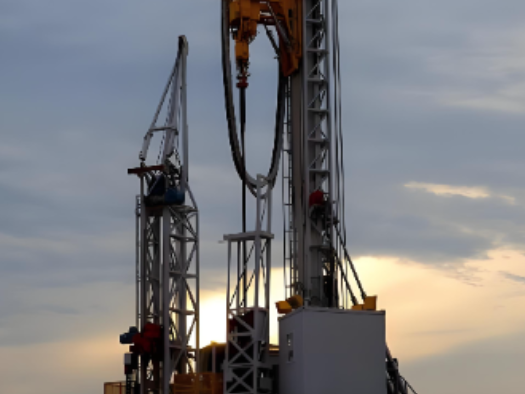
In the complex engineering of oil and gas exploration and development, drilling operations are like ‘threading a needle underground,’ requiring precise penetration of thousands of meters of formation while constantly dealing with the challenges of formation pressure. Well Control technology acts as a ‘safety shield’ in this underground struggle. It scientifically controls the pressure balance within the well, preventing uncontrolled influx of formation fluids into the wellbore, ensuring safe, efficient, and environmentally friendly drilling operations.
Core Objectives of Well Control
The essence of well control is to balance the pore pressure of the formation with the pressure within the wellbore. When the drill bit penetrates the formation, if the formation pressure is higher than the fluid column pressure in the wellbore, fluids such as oil, gas, and water may infiltrate the well, causing well invasion, overflow, well kick, or even blowout accidents. Well control technology achieves pressure balance through three lines of defense:
Primary Well Control: By optimizing the drilling fluid density, it directly balances the formation pressure using the fluid column pressure, ensuring no formation fluid intrusion. For example, in high-pressure gas wells in the Sichuan Basin, engineers need to accurately calculate the formation pressure gradient and configure drilling fluid of appropriate density to form a ‘liquid barrier.’
Secondary well control: When formation fluid breaches the primary defense line, the blowout preventer (BOP) assembly is immediately shut down. Back pressure at the wellhead is regulated through the choke manifold, combined with weighted drilling fluid circulation for well control, to restore pressure balance. This process is like ‘using pressure against pressure,’ requiring precise control of the kill fluid density and flow rate to avoid secondary accidents caused by wellbore pressure fluctuations.
Third-level well control (emergency well control): If secondary well control fails, leading to a blowout, an emergency plan must be activated. This involves drilling rescue wells, dynamic well control, and firefighting to regain control of the wellhead. For example, after the Deepwater Horizon accident in the Gulf of Mexico in 2010, the industry developed dual-gate redundant BOPs and sonic pressure-controlled drilling technology, significantly improving the reliability of deepwater well control.
Four Core Functions of Well Control Technology
Safety Protection: Preventing Chain Reactions of Disasters
Well control devices are the ‘last line of defense’ in drilling operations. A wellhead sealing system centered on annular blowout preventers (BOPs) and gate blowout preventers (BOPs) can close the wellhead within 0.5 seconds, preventing high-pressure fluid ejection. During the dismantling of the Brent Spar platform in the North Sea in 2018, well control technology successfully sealed the abandoned wellbore, preventing an environmental disaster caused by oil and gas leaks.
Resource Protection: Safeguarding Underground ‘Black Gold’
Pressure imbalance can lead to fracturing or water intrusion in oil and gas reservoirs, reducing recovery rates. Well control technology, through the flexible application of near-balanced drilling (drilling fluid pressure close to formation pressure) and underbalanced drilling (drilling fluid pressure lower than formation pressure), minimizes damage to the reservoir. For example, in shale gas horizontal wells, using low-damage drilling fluids and precise pressure control can increase single-well production by more than 30%.
Environmental Protection: Cutting Off Pollution Sources
Uncontrolled well blowouts release large amounts of methane (25 times the greenhouse effect of carbon dioxide) and toxic gases such as hydrogen sulfide. Well control technology, through real-time monitoring and rapid response, controls accidents in their early stages. For example, the Tarim Oilfield in China has promoted an ‘intelligent well control system,’ which uses IoT sensors to upload downhole pressure data in real time, enabling overflow warnings and automatic well shut-in, reducing unplanned well shut-ins by 60%.
Efficiency Improvement: Shortening Non-Productive Time
Advances in well control technology directly drive a revolution in drilling efficiency. Sonic controlled pressure drilling (MPD) technology, by dynamically adjusting wellhead pressure, allows for lower drilling fluid densities, significantly increasing the rate of penetration. In deepwater drilling in the Gulf of Mexico, MPD technology has shortened drilling cycles by 40% and reduced single-well costs by $20 million.
The Future of Well Control Technology
As oil and gas exploration moves into deeper and more complex formations, well control technology is undergoing two major transformations: Intelligent Upgrades: Digital twin technology can construct virtual well control models to simulate well control strategies; laser-cut BOPs (blowout preventers) enable instantaneous tubing string melting, improving emergency response speed; nano-intelligent plugging materials can automatically identify fracture locations and quickly seal them, solving the problem of lost circulation well control.
Green Transition: To address carbon neutrality goals, well control technologies focus on reducing methane leaks and drilling fluid pollution. For example, developing biodegradable drilling fluids and low-emission well control processes can reduce carbon emissions per well by 15%; promoting ‘zero-combustion’ well control technologies, using mechanical seals and liquid nitrogen freezing to replace traditional ignition and blowout prevention, avoids air pollution.
From the manually operated ‘Christmas tree’ wellhead devices of the 19th century to today’s intelligent well control systems integrating the Internet of Things and artificial intelligence, the struggle between humanity and formation pressure has never ceased. Well control technology is not only the ‘lifeline’ of drilling operations but also the cornerstone of sustainable development in the oil and gas industry. Against the backdrop of energy transition, the new generation of well control technologies is supporting humanity’s exploration of deeper underground environments with a safer, more efficient, and more environmentally friendly approach.