In oil and gas drilling operations, the formations thousands of meters underground act like a pressure cooker, storing enormous energy. When the drill bit penetrates the formation, if the pressure inside the well cannot be precisely controlled, high-pressure fluids may erupt instantly, causing catastrophic consequences. Well control technology, through a sophisticated set of physical and engineering mechanisms, becomes the ‘key’ to balancing formation pressure. How exactly does it achieve this goal?
Pressure Balance Principle
The core of well control lies in establishing a dynamic balance between the fluid column pressure inside the wellbore and the formation pore pressure. Its principle can be summarized in two points:
Physical Support for Fluid Column Pressure
The pressure of the fluid column formed by drilling fluid (mud) in the wellbore is determined by the height and density of the fluid column (formula: P=ρgh). By adjusting the drilling fluid density, engineers can precisely match the pressure gradient of the target formation. For example, in high-pressure gas wells, high-density weighting agents (such as barite) are used to increase the drilling fluid density, making the fluid column pressure slightly higher than the formation pressure, forming a ‘pressure barrier’ to prevent fluid intrusion.
Dynamically Adjustable ‘Pressure Buffer Zone’
When formation pressure fluctuates, the well control system adjusts the wellhead back pressure in real time through devices such as choke manifolds and kill manifolds. For example, when a blowout is detected, closing the blowout preventer and gradually increasing the wellhead pressure can compensate for insufficient fluid column pressure and re-establish balance. This process is like ‘using pressure to fight pressure,’ preventing the pressure imbalance from escalating through precise calculations and rapid response.
Hardware Support
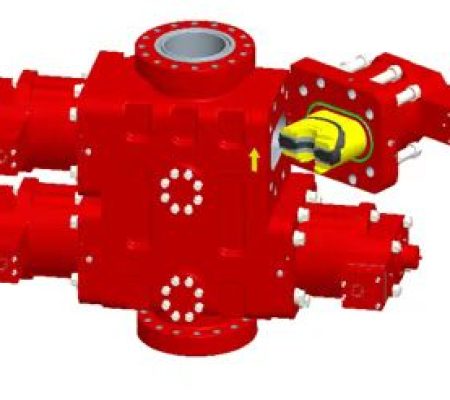
The hardware foundation of well control is the blowout preventer assembly (BOP), which consists of multiple layers of sealing devices. It can cut off the wellbore passage within milliseconds. Its design logic includes three levels:
Annular BOP: The ‘First Gate’ of Flexible Sealing
The annular blowout preventer, through the radial expansion of its rubber core, can seal drill strings of different sizes (such as drill pipe and casing), and even achieve a complete wellhead seal when no drill string is present. Its flexible design allows for tripping in and out of the well under pressure, ensuring operational continuity. For example, in drilling in the North Sea oilfield, annular blowout preventers (BOPs) have successfully plugged 30-centimeter diameter drill pipe, preventing high-pressure natural gas eruptions.
Gate BOPs: The ‘Ultimate Insurance’ for Rigid Seals
Gate BOPs are equipped with metal gates that completely shut off the wellbore passage. Their redundant design (usually with dual gates) ensures that even if one gate fails, the other can still seal the well. Following the Deepwater Horizon incident in the Gulf of Mexico in 2010, the industry upgraded the shearing function of gate BOPs, enabling them to instantly cut off the drill pipe, buying time for subsequent well control.
Well Control Manifolds: The ‘Neural Network’ of Pressure Regulation
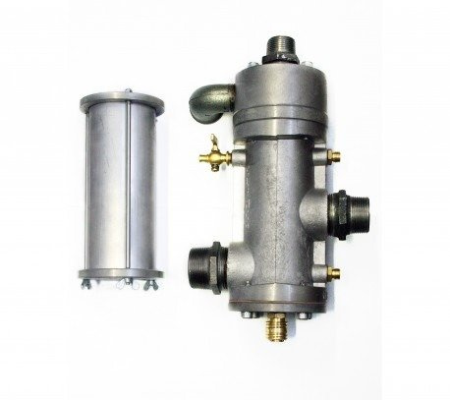
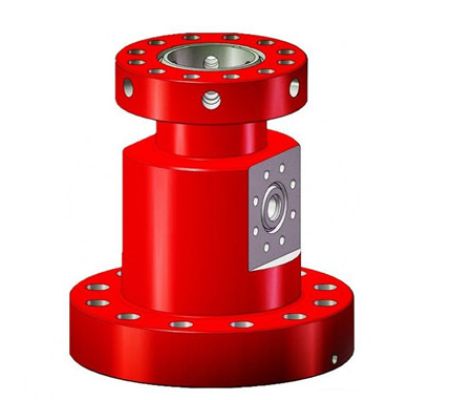
The choke manifold, kill manifold, and BOP assembly work in tandem, controlling wellhead back pressure by adjusting valve openings. For example, the choke valve can finely adjust the fluid flow rate like a ‘faucet,’ preventing sudden pressure changes; the kill manifold is used to circulate and weight the drilling fluid, gradually restoring pressure balance.
Software Intelligence
Modern well control has shifted from ‘passive response’ to ‘proactive prevention,’ with its intelligence manifested in three dimensions:
Real-time Monitoring: A ‘X-ray Vision’ for Underground Pressure
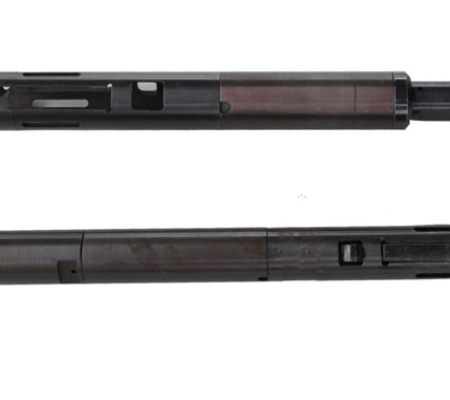
Through technologies such as logging while drilling (LWD) and measurement while drilling (MWD), engineers can acquire real-time data on downhole pressure, temperature, and fluid properties. For example, sonic logging tools can detect formation pore pressure and provide early warnings of high-pressure zones; flow meters can monitor drilling fluid return and detect signs of overflow.
Digital Twin: A ‘Pressure Sandbox’ for the Virtual Wellbore
Digital twin technology can construct a virtual model of the wellbore, simulating pressure changes under different operating conditions. For example, in deepwater drilling, by inputting formation parameters and drilling fluid properties, the model can predict well kick risk and generate the optimal well control plan, reducing decision-making time from hours to minutes.
Automatic Control: The Machine’s ‘Rapid Response’
Intelligent well control systems integrate sensors, actuators, and algorithms to automatically perform operations such as well shut-in and well control. For example, when a blowout is detected, the system can shut down the blowout preventer (BOP) and initiate a well control procedure within 0.5 seconds, more than 10 times faster than manual operation, significantly reducing the risk of accidents.
Engineering Experience
The maturity of well control technology is inseparable from the industry’s profound reflection on historical accidents. Its engineering experience is condensed into three principles:
‘Minimum overflow’ principle
Any blowout must be dealt with immediately, as even a small amount of fluid intrusion can trigger a chain reaction. For example, in the 1979 Gulf of Mexico Ixtoc I blowout, the initial blowout was only a few cubic meters, but delays in handling ultimately led to the leakage of 3 million barrels of crude oil.
Balance of the Three Elements of Well Control
The key to successful well control lies in coordinating drilling fluid density, flow rate, and wellhead pressure. Excessive density may lead to wellbore leakage, while insufficient density cannot balance formation pressure; the flow rate must match the formation’s absorption capacity to avoid pressure fluctuations.
‘Redundant Design’ Mindset
From the BOP to the control system, well control equipment employs redundant configurations. For example, deepwater drilling vessels are typically equipped with two independent blowout preventer (BOP) units, one operational and one as a backup, ensuring well sealing even in extreme circumstances.
Well control technology’s ability to manage downhole pressure stems from its precise application of physical principles, reliable hardware design, deep integration of intelligent software, and continuous accumulation of engineering experience. From the manual ‘mechanical era’ to the digitally driven ‘intelligent era,’ well control has always been the ‘safety gene’ of drilling operations.