In the energy extraction sector, the efficiency of drilling equipment scheduling and management directly determines project costs, schedule control, and resource utilization. Traditional scheduling methods rely on manual experience and fixed schedules. When faced with complex geological conditions, sudden equipment failures, and multi-well collaborative operations, problems such as equipment idleness, transportation delays, and operational gaps often occur, leading to a 15%-30% increase in single-well costs. With the integration of IoT, big data, and AI technologies, drilling equipment scheduling and management is transforming from “experience-driven” to “data-driven intelligence.” Through dynamic optimization algorithms, real-time status monitoring, and global resource coordination, the dual goals of maximizing equipment utilization and minimizing operating costs can be achieved.
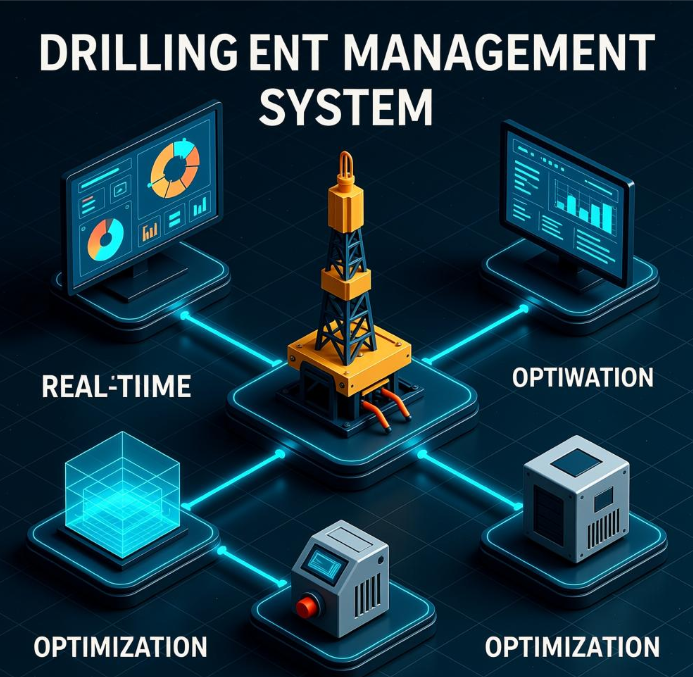
The core challenge of drilling equipment scheduling stems from the dynamic nature of the operating environment and the complexity of resource constraints. On the one hand, drilling sites involve dozens of types of specialized equipment, such as drilling rigs, mud pumps, top drives, and solids control equipment. Each type of equipment has significantly different operating cycles, energy consumption characteristics, and maintenance requirements. For example, drilling rig relocation requires supporting transport vehicles, hoisting equipment, and auxiliary tools. Improper scheduling can extend single-well operations by 2-3 days simply due to equipment waiting time. On the other hand, the uncertainty of geological conditions further exacerbates the difficulty of scheduling—within the same block, the rock hardness, well depth design, and drilling speed of different well locations can vary by more than 50%. Traditional fixed scheduling cannot adapt to real-time changes, easily leading to contradictions such as “equipment waiting for wells” or “wells waiting for equipment.” Survey data from an oilfield shows that the equipment idle rate due to unreasonable scheduling has long remained above 25%, resulting in annual losses of tens of millions of yuan.
Technological integration provides a breakthrough for scheduling optimization. Real-time data acquisition systems based on the Internet of Things (IoT) can monitor more than 200 parameters in real time, such as rotational speed, torque, temperature, and vibration, by deploying sensors at key parts of the equipment. Combined with GPS positioning and RFID tags, a three-dimensional data model of “equipment-well location-personnel” is constructed. For example, an intelligent scheduling platform deployed by an international oilfield service company updates the equipment status every 5 minutes. When abnormal temperature of the drilling rig’s main motor is detected, the system automatically triggers an early warning and adjusts subsequent work plans, reducing downtime caused by equipment failure from an average of 8 hours to within 2 hours. Meanwhile, big data analytics can deeply mine historical operational data, identifying correlations between equipment utilization, operational efficiency, and energy consumption levels, providing quantitative basis for scheduling strategies. A domestic oilfield, by analyzing three years of drilling data, discovered that the optimal operating time for mud pumps under specific rock formation conditions is 12 hours/day. Adjusting the scheduling accordingly improved overall equipment efficiency by 18%.
The application of artificial intelligence algorithms has driven the intelligentization of scheduling decisions. Reinforcement learning algorithms can automatically generate optimal scheduling schemes by simulating the costs and efficiencies under different scheduling strategies. For example, in multi-well collaborative operation scenarios, the algorithm comprehensively considers factors such as equipment transportation distance, operation preparation time, and inter-well dependencies, dynamically adjusting the equipment allocation order to shorten the total operation time by more than 30%. In a deepwater drilling project, after optimizing equipment scheduling using a genetic algorithm, the number of drilling rig relocations decreased by 40%, and the cost per well decreased by 22%. Furthermore, digital twin technology, by constructing virtual drilling scenarios, can simulate the actual effects of equipment scheduling schemes in advance, avoiding potential conflicts. A shale gas development project utilized a digital twin platform to verify its scheduling plan 72 hours before operations, reducing the number of on-site adjustments from an average of 5 times per well to 1 time per well.
From traditional experience to data intelligence, the optimization of drilling equipment scheduling management is not only a technological upgrade but also a revolution in industry efficiency. By achieving transparency of equipment status through the Internet of Things, leveraging big data to uncover operational patterns, and relying on artificial intelligence to generate dynamic strategies, drilling companies are gradually building a closed-loop management system of “perception-analysis-decision-execution.” Application practices at an international energy group show that the optimized scheduling system increased equipment utilization from 68% to 85%, saving over $120 million in annual operating costs. In the future, with the widespread adoption of technologies such as 5G communication and edge computing, drilling equipment scheduling will move towards “real-time autonomous optimization,” providing stronger support for cost reduction and efficiency improvement in energy extraction and continuously driving the industry towards intelligent and refined development.