In downhole operations, accurately understanding the internal condition of the wellbore is crucial for ensuring construction safety and operational efficiency. Especially when encountering obstructions to downhole tools, structural anomalies, or changes in the access path, relying solely on experience often presents uncertainties. Lead stamp modules are specialized downhole tools widely used in this context. Their simple structure and intuitive information make them irreplaceable in downhole detection and assessment.

Basic Definition and Function of Lead Stamp Modules
A lead stamp module is a detection component that utilizes the properties of soft metal materials to physically record contact with downhole structures. Its core principle lies in the excellent ductility and plasticity of lead. When the lead stamp module comes into contact with the surface of an object downhole, it forms a clear indentation or outline mark on its surface. By analyzing the morphology of the imprint, the actual condition of foreign objects, deformed areas, or tool contact surfaces can be intuitively understood, providing important information for subsequent operations.
Structural Characteristics of Lead Stamp Modules
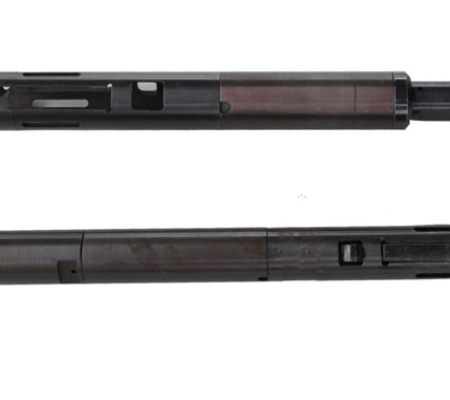
A lead stamp module typically consists of a lead stamp body, connecting structures, and protective components. The lead stamp module is responsible for recording downhole contact information, and its material and hardness directly affect the clarity of the imprint. The connection structure is used for assembly with downhole tools to ensure stability during the downhole process. A reasonable structural design ensures that the lead stamp module maintains its integrity under complex well conditions, making the acquired information more accurate and reliable.
In the downhole operating environment, the lead stamp module often needs to withstand pressure, friction, and impact, thus requiring high manufacturing processes and assembly precision.
Application Value of Lead Stamp Modules in Downhole Operations
The lead stamp module can visually reflect downhole contact conditions, providing important reference for operational decisions. By analyzing the indentation morphology on the lead stamp surface, it is possible to determine whether there is deformation, obstruction, or structural anomaly in the downhole channel. This information acquisition method does not rely on complex electronic equipment and maintains stable performance under high temperature and high pressure conditions.
During the coordinated use of downhole tools, the lead stamp module can also assist in verifying the tool’s operating status, improving the overall controllability and safety of the operation.
The Importance of Lead Stamp Modules for Downhole Tool Synergy
The lead stamp module is not used independently but rather in synergy with various downhole oil tools. The appropriate selection of lead-stamp modules, and their coordination with clamps, fishing tools, and other equipment, helps improve the efficiency of information acquisition in downhole operations. As downhole conditions become increasingly complex, the requirements for the accuracy and stability of lead-stamp modules are constantly increasing, which is also driving the development of related downhole tools towards greater specialization.
Conclusion
A clear understanding of what lead-stamp modules are is a crucial foundation for scientifically conducting downhole inspections and operational judgments. With its intuitive and reliable physical recording method, lead-stamp modules continue to play a key role in downhole operations. Relying on mature manufacturing processes and standardized application procedures, lead-stamp modules have become an indispensable part of the downhole petroleum tool system. In-depth cooperation on lead-stamp modules and related downhole petroleum tools helps improve operational safety and construction efficiency, and also provides more robust technical support for engineering implementation under complex well conditions.