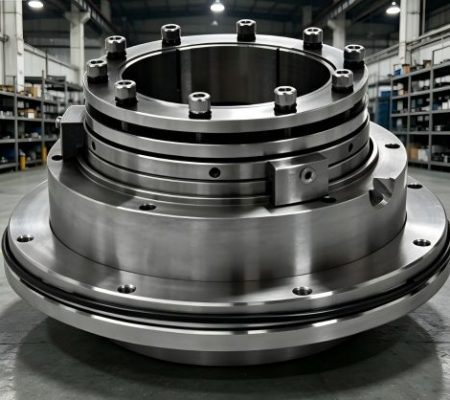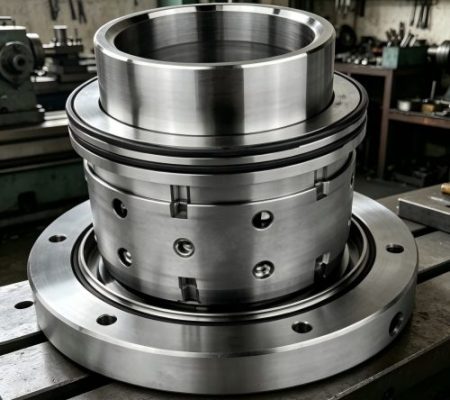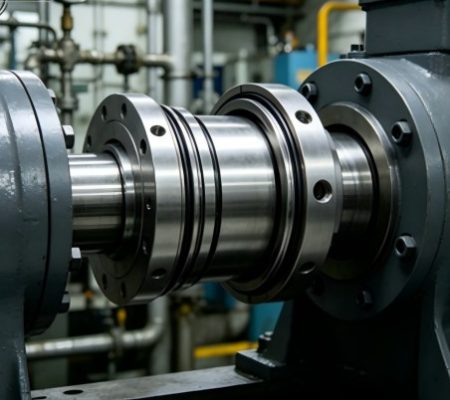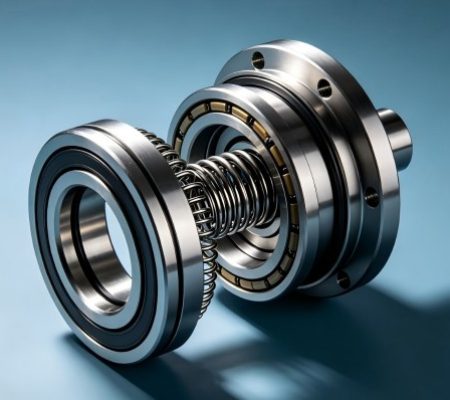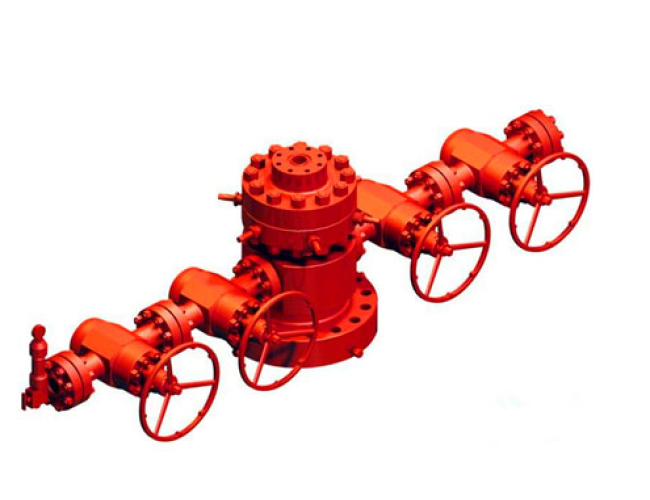
The tubing head is a crucial “pillar” in oil and gas wellhead systems, serving as a critical pressure-bearing component. It firmly supports the tubing string, ensuring its stability in complex downhole environments. Simultaneously, it provides a tight seal between the tubing and casing annulus, preventing fluid leakage and guaranteeing production safety. Furthermore, it provides a solid and stable foundation for the installation of subsequent wellhead equipment such as the production tree. Located above the casing head, the tubing head plays a vital transitional role in the wellhead assembly, making it an indispensable link for successful oil and gas extraction.
Structural Composition:
Structurally, the tubing head consists of key components such as a forged body, a tubing hanger sealing system, a side outlet, and connecting flanges. The forged body is typically manufactured using high-strength alloy steel, a material that endows the tubing head with superior performance, enabling it to withstand harsh environments of high pressure and high temperature, as well as the challenges of long-term exposure to corrosive well fluids. Its internal contours are precision-machined to perfectly accommodate the tubing hanger, ensuring the entire weight of the tubing string is safely and stably transferred to the casing head and bottom of the well, providing reliable support for the tubing.
Core Functions:
One of the main functions of the tubing head is to provide reliable sealing. By employing advanced sealing technologies such as metal-to-metal seals, elastomeric seals, or composite sealing systems, it acts as a robust barrier, effectively isolating the tubing fluid from the tubing-casing annulus, preventing wellhead leakage and significantly improving operational safety. The side outlet design fully considers the diverse needs of actual operations, typically used for pressure monitoring, fluid injection, venting, or pressure testing, providing operators with flexible and convenient access at different stages of drilling, completion, and production.
Selection Basis:
In practical applications, the selection of the tubing head is not arbitrary but requires comprehensive consideration of specific well conditions. The working well pressure, temperature range, fluid characteristics, and wellhead connection standards are all key factors influencing the selection of the tubing head. Depending on the operating environment, tubing heads may also require special properties such as resistance to hydrogen sulfide (H₂S) corrosion and high-temperature resistance, or must be adaptable to the operating conditions of deep and ultra-deep wells. Their design and manufacturing processes strictly adhere to international standards, such as API specifications, ensuring that each tubing head possesses superior quality and reliable performance.
System Importance:
From the perspective of the entire oil and gas wellhead system, the tubing head plays a crucial role. It not only provides structural support and sealing for the tubing but also directly affects the installation accuracy and maintenance efficiency of the Christmas tree. Correct selection, careful design, and proper installation of tubing heads can effectively extend the service life of wellhead equipment, reduce operational risks, and provide strong guarantees for the safe, stable, and continuous operation of oil and gas production.