In industrial fields such as oil drilling and geological exploration, drill pipe, as a core component connecting the drill bit and drilling rig, directly impacts operational safety and efficiency due to the reliability of its threaded connection. Drill pipe thread gauges, as specialized measuring tools for inspecting thread dimensional accuracy, directly determine the accuracy of thread inspection results through standardized operation and proper maintenance. From downhole accidents caused by drill pipe joint thread failure in the Bohai Oilfield to drill string detachment due to negligence in thread inspection in the Sichuan-West Gas Field, numerous cases demonstrate that the standardized use of thread gauges is the first line of defense in ensuring drill pipe connection quality.
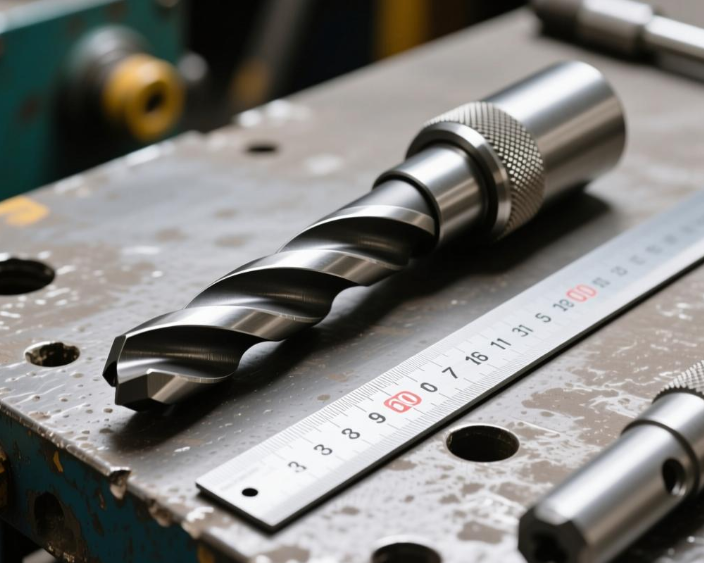
The classification and functional design of drill pipe thread gauges closely align with actual working conditions. Classified by thread type, they can be divided into API standard thread gauges (such as NC26, NC38, and other NC series coarse threads) and non-standard thread gauges; classified by the object being inspected, they encompass external thread ring gauges and internal thread plug gauges. Taking the NC38 drill pipe joint as an example, its thread gauge must strictly match the parameters of a 3.8-inch pitch circle diameter and a 1:6 taper. The GO gauge verifies the effective pitch diameter by simulating the minimum material condition (MMC), while the NO-GO gauge simulates the maximum material condition (LMC) to control a single pitch diameter, ensuring reliable interchangeability of the threads within the tolerance zone. This design principle originates from Taylor’s principle, which states that the GO gauge must have a complete tooth profile to inspect the overall dimensions, while the NO-GO gauge uses a truncated tooth profile to control only key parameters, avoiding batch scrap due to local deviations.
The standardization of the operating procedure is the core guarantee of the reliability of thread inspection results. Triple verification is required before use: first, check if the calibration label of the thread gauge is within its validity period; second, test the GO and NO-GO functions with a standard calibration gauge; and finally, confirm that the gauge body is free of cracks, corrosion, or tooth wear. The drill pipe joint being tested must undergo strict pretreatment, including deburring with an oilstone, machining a 20° guide chamfer at the inlet, and removing chips and coolant with compressed air. During inspection, the ambient temperature must be controlled at 20±1℃ to avoid measurement errors caused by the difference in thermal expansion coefficients (0.011mm/℃/100mm) between steel thread gauges and aluminum alloy drill rods. In terms of operation, the GO gauge should be able to freely screw into the full length of the thread, and the NO-GO gauge should not be screwed in to a depth exceeding two thread pitches. The screwing force should be controlled within a range of slight resistance; it is strictly forbidden to use a wrench to force screwing in, to prevent misjudgment due to elastic deformation.
The level of detail in maintenance directly affects the service life and measurement accuracy of the thread gauge. After daily use, wipe the gauge body with a non-woven cloth dampened with alcohol, apply a thin layer of anti-rust oil to protect the thread working surfaces, and apply a drop of special lubricant to moving parts (such as the chucks of adjustable thread gauges). Perform functional verification monthly using a calibration plug gauge. If the NO-GO gauge is found to have excessive screwing depth or the GO gauge is stuck, it must be immediately sent to the metrology department for calibration. For thread gauges that are not in use for a long period, they should be vacuum-packed and stored in a constant temperature and humidity cabinet to avoid oxidation and corrosion caused by ambient humidity exceeding 60%. In its practice at Sichuan Petroleum Drilling Co., Ltd., the establishment of a thread gauge full lifecycle management system has reduced equipment failure rates by 67%, saving over one million yuan annually in calibration costs.
From deep-sea drilling platforms to onshore shale gas fields, the standardized use of drill pipe thread gauges has become an invisible line of defense ensuring drilling operation safety. By strictly implementing the “three inspections, two protections, and one record” system (i.e., pre-use inspection, in-use inspection, post-use inspection, daily protection and regular maintenance, and complete recording of measurement data), not only can the risk of threaded connection failure be reduced by more than 80%, but reliable data support can also be provided for the full lifecycle management of drill pipes. Against the backdrop of energy exploration moving towards deeper earth and deep sea areas, this extreme pursuit of detail is a key force driving high-quality development in the industry.