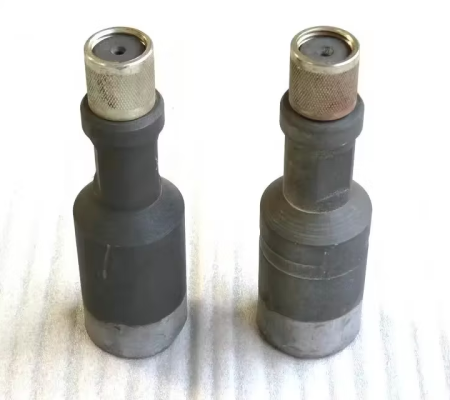
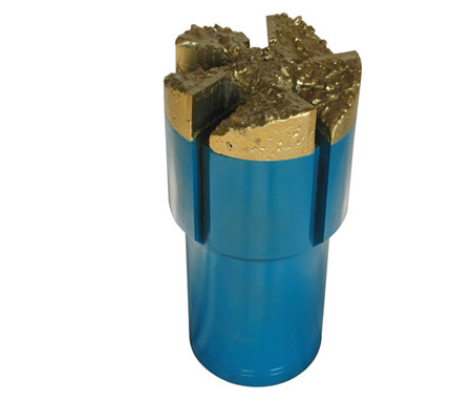
Cementing quality directly affects the safe operation and long-term production of oil and gas wells. During downhole inspection, accurately reproducing the cement distribution and bonding state outside the casing is a key focus for field technicians. Lead-printed modules, as one of the commonly used downhole oil tools, provide important evidence for cementing evaluation through their intuitive and reliable physical contact recording method, demonstrating stable application value under various operating conditions.

The ability of lead-printed modules to reflect downhole geometry
Casing-Cement Contact Condition: Lead-printed modules leave clear imprints on the surface of the wellbore or casing cement layer through direct contact. These imprints reflect whether the cement has formed an effective bond with the casing, providing intuitive information for judging the integrity of the bonding.
Wellbore Morphology Changes: Wellbore ellipticity, diameter reduction, or local irregularities will leave corresponding traces on the surface of the lead-printed module. This type of information helps to understand the downhole spatial condition and provides a reference for subsequent construction decisions.
The Reflection of Cementing Quality Details by Lead-Printed Logging Modules
Cement Distribution Uniformity: The continuity and depth variation of the lead-printed marks reflect the distribution of cement around the casing. Uniform marks usually indicate a relatively complete cement sheath, contributing to a stable seal.
Potential Channels and Defect Indicators: Abnormal or missing marks in certain areas often indicate voids or insufficient cement coverage in that area. This information is practically significant for identifying potential channeling risks.
The Value of Lead-Printed Logging Modules in Downhole Tool Systems
Complementary to Other Detection Methods: Lead-printed logging modules are direct-contact tools, recording clearly visible results. They are suitable for use in conjunction with acoustic and imaging logging data, enhancing the completeness of cementing assessments.
Reliable Structure Adaptable to Complex Well Conditions: As a mature downhole oil tool, lead-printed logging modules have a simple structure and high stability, maintaining good working condition in high-temperature, high-pressure, and other downhole environments.
Facilitates Rapid On-Site Assessment: The intuitive nature of lead-printed results helps on-site technicians quickly grasp key cementing conditions, improving operational efficiency and reducing the risk of repeated operations.
Conclusion
Accurate and visible information is crucial in cementing quality evaluation. The lead-printed module provides reliable support for downhole engineering by accurately reflecting the condition of casing, cement, and wellbore. As an important component of the downhole oil tool system, it plays a positive role in ensuring wellbore integrity and improving operational safety. For partners focused on cementing quality and downhole safety, the lead-printed module offers value for continued application and in-depth cooperation.