In the oil and gas exploration and development sector, transportation costs for drilling equipment often account for a significant proportion of total project expenditures. This is especially true in remote areas or multinational projects, where high logistics costs can even become a key constraint on project progress. With increasing global energy demand and more complex development scenarios, reducing transportation costs through scientific planning, technological upgrades, and resource integration has become a core issue for cost reduction and efficiency improvement in the industry. From modular equipment design to intelligent logistics systems, from optimized transportation routes to localized production layouts, a series of innovative practices are reshaping the cost structure of drilling equipment transportation.

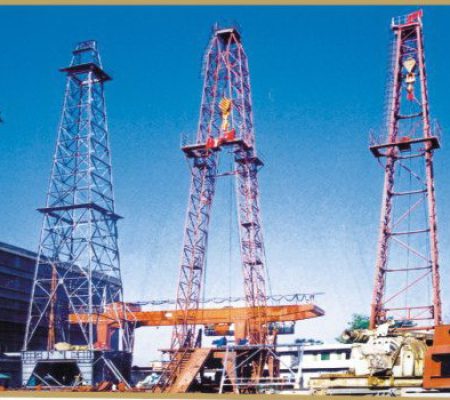
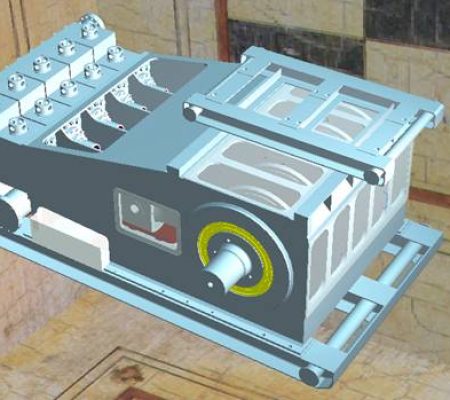
Modular design is a fundamental breakthrough in reducing transportation costs. Traditional drilling equipment often uses a monolithic structure, resulting in large volumes that are difficult to disassemble, leading to a utilization rate of less than half for each transport trip. Modern modular drilling rigs, by designing core components such as the drilling platform, mud pump, and power system as independent modules, reduce the maximum size of individual components by more than 40% and the weight by 30%. For example, a new type of modular land drilling rig can be disassembled into 20 standard containers, which can be transported by ordinary trucks, reducing the cost per trip by more than 60% compared to monolithic equipment. Standardized interfaces between modules reduce on-site assembly time from several days to just over ten hours, decreasing both the number of transport trips and the additional costs incurred due to equipment delays. The essence of modular design is to shift transportation costs from “volume-dependent” to “efficiency-first” through a “disassemble-reassemble” logic, providing a feasible solution for long-distance, large-scale transportation.
Intelligent matching of transport routes and vehicles is a key aspect of cost optimization. Leveraging big data analytics and AI algorithms, the industry is building a global logistics network model to compare the costs and timelines of sea, land, and air transport in real time. By inputting equipment dimensions, weight, destination, and project timelines, the system can automatically generate the optimal transportation plan. In one multinational project, the original “sea + land” combination was adjusted to “sea to a nearby port + short-distance land transport,” utilizing the more developed transportation network in the target area, reducing per-trip costs by hundreds of thousands of dollars and shortening the project timeline by over 10 days. Furthermore, the application of new specialized vehicles is also breaking through physical limitations. Extendable semi-trailers increase effective payload from 60 tons to 120 tons, and cryogenic transport containers eliminate the need for additional insulation in extreme environments. These technological innovations directly reduce the number of transport trips and additional costs, making them particularly suitable for transporting high-value, highly sensitive equipment.
Localized production and supply chain collaboration are core strategies for long-term cost reduction. For multinational projects, establishing assembly bases or component warehouses near target markets can significantly reduce tariffs, warehousing, and loss costs associated with cross-border transportation. By locally producing high-consumption components such as drill pipes and mud pumps, one project reduced transportation costs by nearly half. Adopting a “lease-to-carry” model, where customers lease equipment as needed instead of purchasing it entirely, reduces initial transportation investment and improves resource utilization through equipment reuse. Supply chain collaboration further amplifies the advantages of localization. By integrating logistics providers and port resources, companies can obtain priority loading and unloading, warehousing discounts, and other benefits. In one case, integrating multiple logistics providers reduced transportation costs by nearly 20%. This “asset-light, collaboration-heavy” model is becoming a new trend in cost reduction within the industry.
Lowering transportation costs is never a breakthrough in a single环节 (link/stage), but rather the result of collaborative efforts in design, technology, and management. From modular design to reconstruct transportation units, to intelligent algorithms optimizing route selection, and to localized production deepening supply chain integration, the industry is achieving a qualitative leap in cost structure through end-to-end innovation. In the future, with the penetration of technologies such as the Internet of Things and digital twins, the transportation process will upgrade from “passive management” to “proactive prediction,” further reducing hidden costs. For example, by embedding sensors in equipment, the transportation status can be monitored in real time, providing early warnings of risks such as bumps and abnormal temperatures, avoiding secondary transportation due to cargo damage. In this race to reduce costs and increase efficiency, whoever can tap into potential in the details and create value in the system will gain an advantage in the fierce market competition and provide more efficient and economical solutions for global energy development.