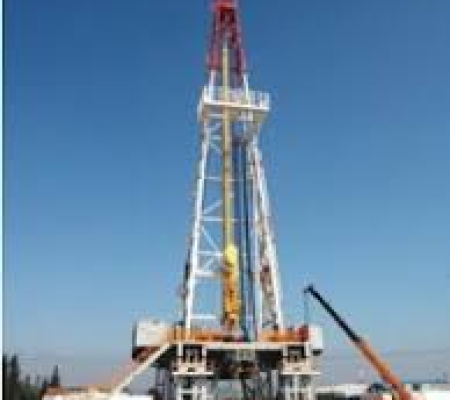
Drilling is a core component of oil and gas development, geological exploration, and underground resource utilization. Its equipment system encompasses multiple systems, including power transmission, drilling operations, mud circulation, cementing, and completion, requiring precise coordination to complete drilling tasks under complex geological conditions. From the surface to thousands of meters underground, each type of equipment performs a specific function, collectively building an efficient and safe drilling operation chain. With technological advancements, modern drilling equipment is evolving towards intelligence, integration, and environmental friendliness to adapt to the needs of deeper and more complex geological development.

The power transmission system is the “heart” of drilling operations, providing continuous and stable energy support for the entire process. Traditional drilling rigs often use diesel engine sets as the primary power source, distributing power to core equipment such as drilling pumps, rotary tables, and winches through mechanical or electric transmission systems. Modern drilling rigs incorporate natural gas engines, dual-fuel engines, and even new energy hybrid power systems to reduce fuel costs and carbon emissions. For example, electric drive drilling rigs achieve precise power distribution through frequency conversion control technology, improving efficiency by more than 15% compared to mechanical transmission while reducing mechanical wear. The stability of the power system directly affects drilling efficiency. High-end equipment is equipped with automatic start/stop and load balancing functions, dynamically adjusting output power according to formation hardness to avoid stuck drill bits or equipment damage due to insufficient power.
The drilling operation system is the “vanguard” that directly interacts with the formation. Its core components include the drill bit, drill pipe, rotary table, or top drive. Drill bits are classified according to formation type as roller cone bits, diamond bits, and hybrid bits. The former is suitable for soft to medium-hard formations, while the latter can efficiently break hard rock formations. Drill pipe, as the channel for power transmission and mud circulation, must possess high strength and corrosion resistance. Modern drill pipes are mostly made of high-strength alloy steel or composite materials, with single pipe lengths reaching up to 9 meters, forming drill strings thousands of meters long through threaded connections. The rotary table and top drive are key equipment for driving the drill bit rotation. The top drive device drives the drill pipe rotation from the top, offering more flexibility than traditional rotary drilling rigs, especially suitable for directional and horizontal well operations. Its built-in torque monitoring system can provide real-time feedback on drilling resistance, providing operators with decision-making information.
The mud circulation system is the “lifeline” of drilling operations, undertaking multiple functions such as cooling the drill bit, carrying cuttings, and balancing formation pressure. This system consists of equipment such as mud pumps, mud tanks, vibrating screens, and desanders, forming a closed-loop circulation. The mud pump is the core power source; its displacement and pressure must be matched to the drilling depth. In deep well operations, three-cylinder single-acting pumps are commonly used, with displacements reaching thousands of liters per minute. Mud materials are configured according to formation characteristics, from water-based to oil-based mud, and then to biodegradable and environmentally friendly mud, with continuous technological iterations reducing environmental impact. Vibrating screens and desanders use physical separation technology to remove cuttings from the mud, ensuring the purity of the circulating mud and preventing drill bit clogging or equipment damage.
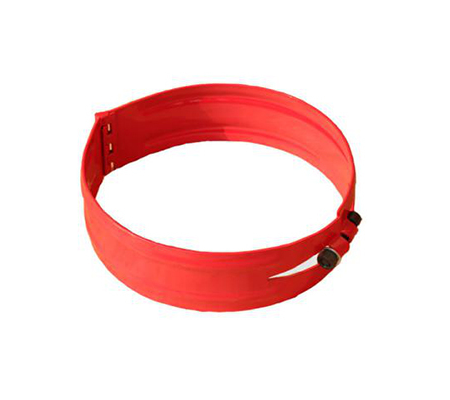
Cementing and completion equipment are crucial for ensuring the long-term stability of the wellbore. Cementing operations involve injecting cement slurry into the annular space between the wellbore and the drill pipe to seal off formation fluids and prevent blowouts or collapses. Modern cementing equipment integrates automated batching, high-pressure injection, and pressure monitoring functions, allowing for precise control of cement slurry density and rheological properties to adapt to varying temperature and pressure conditions. During the completion phase, casing, packers, and production tubing are deployed. High-end completion equipment supports intelligent completion technology, enabling remote monitoring and dynamic adjustments through the installation of downhole pressure and temperature sensors, thereby improving oil and gas recovery.
From power source to end-of-life operations, the drilling equipment system constitutes a highly collaborative and sophisticated system. The evolution of each type of equipment stems from the pursuit of efficiency, safety, and environmental protection: power systems strive for lower energy consumption and higher reliability; drilling systems move towards intelligence and precision; mud circulation systems emphasize environmental protection and recycling; and cementing and completion equipment prioritizes long-term stability and intelligent management. In the future, with the penetration of the Internet of Things and digital twin technologies, drilling equipment will achieve intelligent monitoring and autonomous optimization throughout its entire lifecycle, further driving the industry towards high efficiency, greenness, and safety. In this technological revolution, every upgrade of equipment redefines the boundaries of drilling engineering, opening up broader possibilities for humanity’s exploration of underground resources.