As a core sealing component of rotating machinery, the proper installation of mechanical seals directly determines the stability, safety, and service life of the equipment. A correct installation process not only fully utilizes the sealing performance of the mechanical seal, effectively preventing media leakage and reducing energy loss, but also avoids malfunctions such as sealing surface wear and component deformation caused by installation deviations, reducing unplanned downtime and maintenance costs. Conversely, if the installation process neglects operating condition compatibility, precision control, or detailed specifications, even high-performance sealing products may lead to problems such as leakage, vibration, and excessive temperature rise, and in severe cases, may even induce equipment damage, safety accidents, and environmental pollution risks.
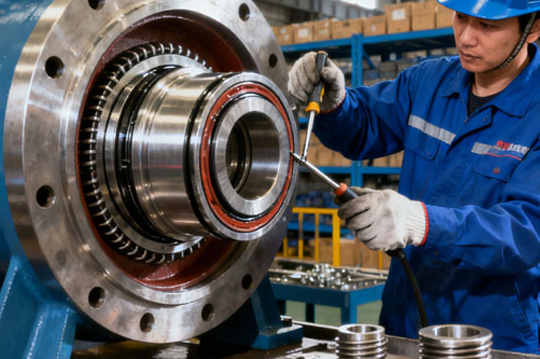
Therefore, strictly adhering to scientific installation standards and controlling key operational steps are the core prerequisites for ensuring the long-term reliable operation of mechanical seals and improving the overall equipment operation and maintenance efficiency. They are also an important foundation for achieving efficient, safe, and green operation in industrial production. Installation can be performed according to the following requirements:
Pre-installation Preparation
Tool and Material Verification
Special Tools: Installation calipers, torque wrench, sealing surface inspector, silicone rubber hammer, etc.
Spare Parts Inspection: Verify that the mechanical seal model, size, and material match the design. Pay particular attention to the rotating ring, stationary ring, spring, and O-rings for cracks, burrs, or deformation.
Lubricant Selection: It is recommended to use the grease specified by the equipment manufacturer. Avoid using lubricants containing graphite or molybdenum disulfide (which may contaminate the sealing surface).
Installation Environment Cleaning: Clean the pump body mounting surface and shaft end with a lint-free cloth dampened with isopropyl alcohol, ensuring no oil or metal filings remain.
Fill the sealing cavity with a clean medium (such as water or lubricating oil) to prevent dry friction.
Core Installation Steps
Stationary Ring Assembly Standard: Gently insert the stationary ring gland into the pump body sealing cavity, ensuring the perpendicularity error between the stationary ring end face and the shaft is ≤0.05mm.
Use a depth gauge to measure the stationary ring compression. Generally, it should be controlled within the range of 2-4mm. Excessive compression can lead to accelerated wear, while insufficient compression can cause seal failure.
Ring Assembly
Apply a thin layer of grease to the shaft and slowly push the ring in axially, ensuring the sealing surface of the ring faces the medium side (usually marked with an arrow).When installing the drive ring, ensure it engages tightly with the ring’s groove to prevent it from falling off during operation.
Spring Force Calibration
Use a spring compression tester to measure the spring preload; it should reach 90%-100% of the design value. For multi-spring structures, ensure each spring has consistent compression, with an error ≤0.1mm.
When adjusting the lock nut, use a diagonal tightening method, gradually increasing the force in 3-4 stages to avoid localized stress concentration.
Commissioning and Acceptance
Static Test
Manually rotate the ring to check for flexible rotation without jamming or abnormal noise.
Hydrostatic Pressure Test
Close the outlet valve and inject clean water into the sealing cavity to 1.5 times the working pressure, maintaining this for 30 minutes without leakage.
Dynamic Operation Monitoring
After starting the equipment, use an infrared thermometer to monitor the sealing surface temperature; the normal operating temperature rise should be ≤15℃.Observe the leakage through a sight glass. Normal micro-leakage should appear as water droplets, ≤5 drops per minute; continuous linear leakage requires immediate shutdown and repair.
Vibration Analysis: Use a vibration detector to collect axial and radial vibration data, ensuring vibration values comply with ISO 10816 standards to avoid resonance leading to seal failure.
Common Misconceptions and Solutions
Misconception 1: Over-reliance on experienced torque
Solution: Strictly refer to the torque values specified in the equipment manual and use a torque wrench to control bolt preload.
Misconception 2: Ignoring axial movement
Solution: Measure axial movement before installation. If it exceeds 0.3mm, install a bushing or adjust the bearing clearance.
Misconception 3: Insufficient lubrication of the sealing surface
Solution: Apply a special lubricant to the contact surfaces of the dynamic and static rings during assembly. Maintain low-speed startup during initial operation to promote break-in.
The installation of mechanical seals is both a technical and ethical task. Following the four-step principle of ‘cleaning, precision, calibration, and testing,’ combined with regular maintenance and intelligent monitoring, can significantly extend seal life to 5-8 years and reduce unplanned downtime losses. It is recommended that companies establish standardized installation operation manuals and conduct regular skills training to integrate installation quality control into the entire life cycle management of equipment.