Mechanical seals and packing seals are two commonly used sealing methods in industrial equipment. Both prevent liquid or gas leakage from the gap between the rotating shaft and the equipment housing, but their working principles, performance characteristics, and applicable scenarios differ significantly. Below is a simplified explanation of the differences between the two from five aspects.Basic Structure and Working Principle A mechanical seal is like a pair of ‘face-to-face dolls’: it consists of a rotating ring (rotating with the shaft) and a stationary ring (fixed to the equipment). The end faces of the two rings fit tightly together to form a sealing surface, and pressure is applied by components such as springs and bellows to maintain contact. It’s like two faces talking face-to-face, with lubricant applied in between to reduce friction. A packing seal, on the other hand, is more like ‘stuffing cotton’: soft materials such as graphite, PTFE, or hemp rope are wrapped around the shaft, and a gland is used to compact the packing, allowing it to expand and fill the gap, like plugging a leaking bottle with wet cotton.
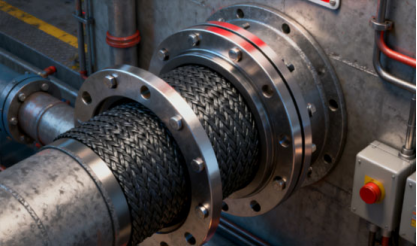
Differences in Sealing Performance The sealing effect of a mechanical seal can be described as ‘seamless.’ Because the dynamic and static rings are precision-machined, achieving a surface roughness down to the nanometer level, and combined with uniform spring pressure, leakage is extremely minimal, essentially achieving ‘no leaks,’ making it particularly suitable for toxic, flammable, and valuable media. Packing seals, on the other hand, are like ‘leaky balloons’: a tiny gap exists between the packing and the shaft, resulting in some leakage even when compressed. Regular packing replenishment or gland pressure adjustment is necessary, making them more suitable for ordinary water and oil applications where leakage control is less critical.
Service Life and Maintenance Costs
Mechanical Seals: The dynamic and static rings are often made of high-wear-resistant materials such as hard alloys, silicon carbide, and ceramics, with precision-ground surfaces achieving a roughness below 0.2 micrometers (equivalent to 1/500th the thickness of a human hair). Under ideal operating conditions, frictional wear on the sealing surface is minimal, with a typical service life of 1-3 years, and some high-end mechanical seals even lasting over 5 years. However, problems such as large shaft vibration, misalignment, and high-temperature coking can cause premature wear or thermal cracking of the sealing surface, significantly shortening its service life.
Packing Seals: Packing materials are mostly soft materials such as graphite, PTFE, and hemp fiber. They fill the gap between the shaft and the stuffing box by being deformed and compressed by the gland. As the shaft rotates, the packing wears down continuously, like a pencil lead that gets shorter with use. Generally, the packing needs to be replaced every 3-6 months. If the medium contains particulate impurities (such as sewage or slurry), the packing wears down even faster, possibly requiring replacement every 1-2 months.
The Hidden Costs of Maintenance
Mechanical Seals
High Initial Costs: A mechanical seal costs 5-10 times more than a packing seal (for example, a packing seal might cost tens of yuan, while a mechanical seal can cost hundreds or even thousands of yuan). However, when spread over the years, it is more cost-effective in the long run.
High Professional Maintenance Requirements: Replacement or repair requires specialized tools (such as seal disassembly and assembly tools, pressure testing instruments), and must be performed by professional personnel. If the sealing surface is damaged, it may need to be returned to the factory or repaired by a professional manufacturer, with a single repair costing hundreds of yuan.
Low hidden costs: Due to minimal leakage, media waste and environmental pollution control costs are reduced, as are the risks of equipment downtime and safety accidents caused by leaks.
Packaging seals
Low initial costs: The packing itself is inexpensive (a roll of graphite packing may cost tens of yuan), and accessories such as glands and bolts are readily available.
High maintenance frequency: Regular checks of packing tightness are required, and packing needs to be replaced every 3-6 months. Replacement requires shutdown, gland removal, cleaning of old packing, filling with new packing, and re-tightening, a process that can take half a day to a day, impacting production efficiency.
High hidden costs: Frequent packing replacement incurs labor costs, and packing leaks waste media (such as water and oil), increasing environmental treatment costs. Severe leaks can also lead to equipment corrosion and safety accidents.
Adaptability to Equipment and Operating Conditions
Mechanical seals are very sensitive to their operating environment: they are susceptible to vibration, shaft misalignment, and high temperatures and pressures. If the equipment vibrates significantly or the shaft is misaligned, the sealing surface is prone to wear and leakage, much like two people falling while dancing due to misstepping. Packing seals are like a ‘friendly old man’: they have high tolerance for shaft vibration and misalignment, and can adapt to high temperatures (above 300℃), low temperatures, and corrosive media, but are prone to leakage under high pressure (above 10MPa).
Environmental and Safety Impacts
Mechanical seals are virtually leak-free, environmentally friendly, and particularly suitable for industries with strict environmental requirements such as chemical and pharmaceutical manufacturing, reducing safety hazards caused by toxic media leaks. While packing seals have small leakage rates, long-term accumulation can still pollute the environment, and the graphite dust in the packing may affect worker health, much like a dripping old-fashioned faucet at home—not serious, but always a cause for concern.
Mechanical seals are like ‘precision locks,’ suitable for high-requirement, high-cost scenarios; packing seals are like ‘master keys,’ suitable for ordinary, low-maintenance scenarios. When choosing, factors such as media characteristics, equipment operating conditions, and cost budget must be comprehensively considered, just like choosing clothes that fit well or shoes that fit properly. There is no absolute good or bad, only suitability. Understanding their differences is crucial for ensuring ‘reliable sealing and safe operation’ of equipment.