In oil and gas wellhead operations, the Elevator Link is a critical auxiliary lifting component widely used for hoisting and positioning wellhead equipment such as Christmas trees, valves, manifolds, and other heavy assemblies. Although its structure appears simple, the load-bearing performance of an elevator link is directly related to lifting safety. Improper maintenance may not only reduce operational efficiency but also lead to serious lifting accidents. Therefore, proper maintenance of elevator links is essential in wellhead operations.
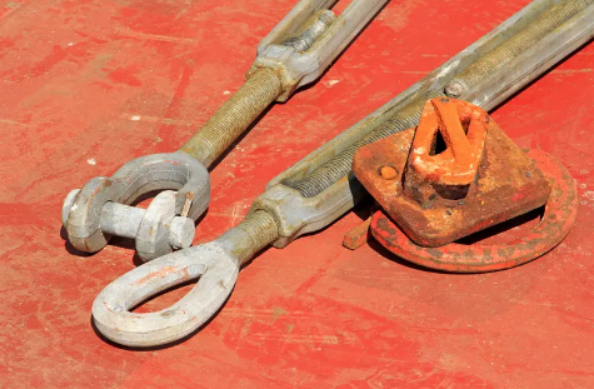
Closely Inspect Wear and Deformation at Load-Bearing Areas
During wellhead operations, elevator links are subjected to repeated tensile loads and impact forces. Areas such as threaded roots, curved load-bearing sections, and contact surfaces with lifting tools are particularly prone to wear and deformation.
During maintenance, special attention should be paid to the following issues:
Elongation or oval deformation of the elevator link
Visible dents, grooves, or surface damage
Thread wear, galling, or missing threads
If any deformation or excessive wear is detected beyond allowable limits, the elevator link must be removed from service immediately. Given the complex and high-risk environment of wellhead operations, using damaged elevator links is strictly prohibited.
Pay Attention to Corrosion and Rust Prevention
Wellhead environments are often characterized by high humidity, salt spray, or corrosive media such as H₂S. Elevator links exposed to such conditions for extended periods are susceptible to corrosion. Corrosion not only affects appearance but also reduces the effective load-bearing cross-section, compromising strength.
Proper maintenance measures include:
Cleaning dirt, drilling fluids, and oil residues after each operation
Applying anti-rust oil or protective coatings regularly
Using moisture-proof packaging during long-term storage
In offshore platforms or sour gas well environments, corrosion prevention should be treated as a routine inspection item for elevator links.
Regularly Check for Cracks and Internal Defects
Elevator links used in wellhead tools are typically made of high-strength alloy steel. Under long-term cyclic loading, fatigue cracks may develop internally. These defects are often difficult to detect visually but are a major cause of sudden fracture failures.
It is recommended to carry out regular non-destructive testing (NDT), such as:
Magnetic Particle Testing (MT) to detect surface and near-surface cracks
Ultrasonic Testing (UT) to identify internal defects
For elevator links with high usage frequency or long service life, inspection intervals should be shortened to ensure continued safe operation.
Standardize Usage and Storage to Avoid Human-Induced Damage
Many cases of elevator link damage are not caused by material defects, but by improper use or storage. Overloading, side loading, or mismatched lifting equipment can significantly shorten service life.
Key usage and storage practices include:
Strictly operating within the rated load capacity
Ensuring correct load direction during lifting operations
Avoiding impacts, drops, or mixed storage with hard objects
Good operational discipline is, in itself, one of the most effective maintenance measures.
Establish a Maintenance and Retirement Record System
For effective wellhead tool management, it is recommended to maintain individual records for elevator links, documenting usage cycles, inspection dates, and maintenance history. Once an elevator link reaches its designed service life or fails inspection, it should be promptly retired and replaced.
A complete maintenance record system not only enhances on-site safety management but also supports traceability and accountability.
Conclusion
As an important load-bearing component in wellhead tool systems, the maintenance quality of an elevator link directly affects the safety and stability of wellhead operations. By focusing on wear and deformation inspection, corrosion protection, non-destructive testing, and standardized usage, operators can significantly reduce lifting risks and extend the service life of elevator links, ensuring safer and more reliable wellhead operations.