In oil and gas wellhead operations, tubing running and pulling, and heavy-duty lifting scenarios, elevator links serve as critical load-bearing connection components. Whether the selection is appropriate has a direct impact on operational safety and construction efficiency. Compared with traditional welded elevator links, weldless elevator links feature an integral structure, stable load distribution, and higher reliability, making them increasingly common in wellhead tools and lifting systems. Based on practical applications, this article systematically introduces a fast selection method for weldless elevator links to help users make accurate decisions under complex operating conditions.
I. What Is a Weldless Elevator Link?
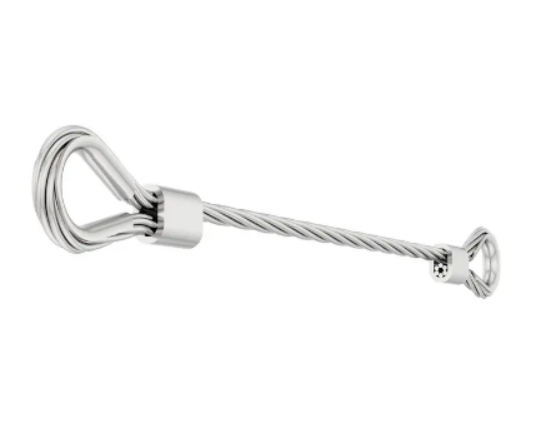
A weldless elevator link is a lifting and connecting component manufactured through integral forming or forging without the use of welding processes. Its structural integrity is high, with no weld seams that could cause stress concentration, resulting in more stable overall mechanical performance. In wellhead operations, this type of elevator link is commonly used together with elevators and lifting rods to ensure reliable load transfer, making it well suited for high-load, high-frequency tubing handling operations.
II. Main Advantages of Weldless Elevator Links
Before selection, understanding the characteristics of weldless elevator links helps determine their suitability for specific applications. First, the weldless structure eliminates safety risks associated with welding defects, making it especially suitable for high-impact and high-fatigue working conditions. Second, load distribution is more uniform, reducing the likelihood of localized fatigue cracks during long-term use. In addition, weldless elevator links offer good consistency and stable quality across batches, which facilitates standardized management and replacement.
III. Core Parameters for Fast Selection of Weldless Elevator Links
1. Rated Load Capacity
The first step in selection is to confirm the maximum lifting load required for the operation and apply an appropriate safety factor. The rated load capacity of a weldless elevator link must exceed the actual working load. Long-term operation near the limit load is strictly prohibited, as it may accelerate fatigue damage and increase failure risk.
2. Dimensional and Interface Compatibility
Parameters such as link length, opening size, and pin hole diameter must fully match the corresponding wellhead tools. Dimensional mismatch not only affects installation efficiency but may also lead to eccentric loading or loose connections, significantly increasing safety risks.
3. Material and Mechanical Properties
Weldless elevator links are typically manufactured from alloy steel or high-strength structural steel. During selection, attention should be paid to yield strength, tensile strength, and impact toughness to ensure stable performance under low temperatures, heavy loads, or complex operating conditions.
4. Operating Conditions
Wellsite conditions vary considerably, including the presence of corrosive media, high-temperature environments, or frequent impact loads. Selection should be based on actual operating conditions, choosing appropriate surface treatments or corrosion-resistant grades to extend service life.
IV. Common Misconceptions in Weldless Elevator Link Selection
In practice, some users focus solely on load capacity while overlooking connection compatibility and operating conditions. This approach may cause the elevator link to operate under non-ideal conditions, shortening its service life. In addition, ignoring consistency when using elevator links in pairs can result in excessive load on one side, increasing the risk of premature failure.
V. Inspection and Verification After Selection
After selection and installation, no-load inspection and trial load testing should be conducted to confirm load-bearing behavior and operational stability during lifting. A standardized verification process helps identify potential issues early and ensures the equipment is in a safe and controllable state before formal operation.
Conclusion
Thanks to their reliable structure and stable load-bearing performance, weldless elevator links offer clear advantages in wellhead tools and heavy lifting applications. By mastering key selection factors such as rated load, dimensional compatibility, material performance, and operating conditions, users can complete the selection process quickly and accurately, providing reliable support for on-site operations. Scientific and proper selection is not only the foundation for improving construction efficiency but also a critical prerequisite for ensuring safe operation.