In wellhead pipe handling operations, the safety of the lifting system has a direct impact on operational efficiency and personnel safety. As a critical load-bearing component within the hoisting assembly, the elevator link operates under sustained high loads and stress. Its design integrity and technical parameter selection play a decisive role in ensuring stable and reliable operations.
During field operations, the hook, elevator link, elevator, and pipe string work together to form a complete load transfer path, allowing the pipe string to be lifted and lowered smoothly. Within this system, the elevator link serves as a key transitional component, placing exceptionally high demands on structural strength and long-term reliability.
Load Characteristics in Wellhead Operations
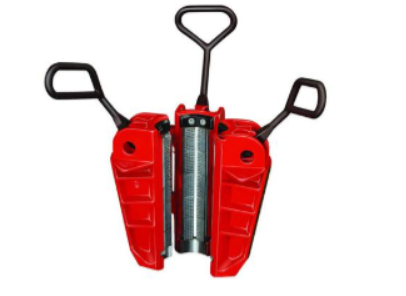
Pipe handling at the wellhead is not a static process. It involves dynamic conditions such as startup, braking, and minor oscillations. The weight of the pipe string is transferred from the elevator to the elevator link and then to the upper hoisting system, with loads constantly changing throughout the operation.
This requires the elevator link to provide not only sufficient tensile strength but also strong resistance to fatigue caused by repeated loading cycles. Uneven load distribution can lead to localized stress concentrations, reducing service life and increasing safety risks.
Core Design Considerations
The primary design objective of an elevator link is to ensure stable axial load transfer while minimizing eccentric and torsional loads. Symmetrical structures are commonly used to promote uniform stress distribution across the component.
Smooth transitions, rounded edges, and optimized cross-sectional geometry help reduce stress concentration and prevent crack initiation during repeated use. These structural details often distinguish high-quality elevator links from ordinary connecting components.
Material selection is another critical factor. High-strength alloy steel combined with forging processes improves internal material density, enhancing tensile strength, impact resistance, and overall structural stability under heavy loads.
Engineering Significance of Key Technical Parameters
Rated load capacity is the most critical parameter in elevator link selection, indicating the maximum load the component can safely carry under a specified safety factor. In practice, the total pipe string weight must always remain within this rated limit.
The safety factor reflects the component’s load margin under extreme or unpredictable operating conditions. Given the complexity of wellhead environments, elevator links are typically designed with higher safety factors than standard lifting hardware.
Dimensional parameters determine compatibility with hooks and elevators. Improper selection of length, pin diameter, or cross-sectional size may result in load misalignment, accelerating wear and increasing fatigue risk.
Material grade and heat treatment condition directly influence tensile strength, toughness, and fatigue resistance, serving as key indicators of suitability for high-intensity wellhead operations.
Compatibility Within the Hoisting System
Elevator links function as part of an integrated lifting system rather than as standalone components. The hook, elevator link, and elevator must be properly matched in both load capacity and geometry to ensure consistent load transfer.
If any component has a lower load rating than the others, it becomes a weak point in the system, compromising overall safety. For this reason, elevator links are commonly selected as part of matched equipment sets in engineering practice.
Risks Associated with Improper Design or Selection
When design assumptions or operating conditions are overlooked, elevator links may experience plastic deformation, fatigue cracking, or even fracture over time. Such defects often develop gradually and may not be immediately visible during early stages of use.
Under high-frequency pipe handling conditions, these risks accumulate and can eventually threaten operational safety and equipment integrity.
Conclusion: Technical Details Ensure Safe Elevator Link Performance
Overall, elevator links play a vital load-bearing and connecting role in wellhead pipe handling operations. Their design principles emphasize uniform load distribution, high strength, and long-term reliability. Technical parameters are not merely numerical specifications but fundamental safeguards for safe operation.
With proper design, correct parameter selection, and system-level compatibility, elevator links can operate in coordination with the hoisting system, improving efficiency while providing reliable protection for wellhead operations.