In wellhead pipe handling and heavy-duty operations, the elevator link is a critical load-bearing component. As operational loads increase and work environments become more complex, the performance of the elevator link under heavy-load conditions has become a key factor in ensuring both safety and efficiency. Analyzing its design principles, load characteristics, and selection criteria helps improve operational reliability and guides field handling and maintenance.
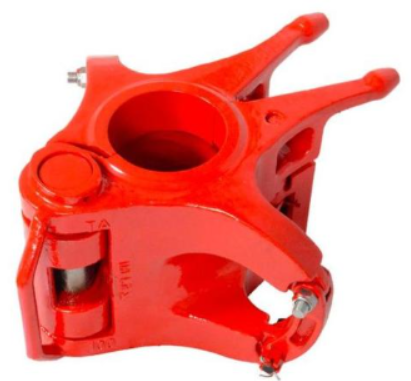
Challenges of Heavy-Load Environments
Under heavy-load conditions, the combined weight of the pipe string, frequent operations, and limited working space place the elevator link under sustained high loads and impact stresses. During lifting, lowering, and pipe positioning, the link must support peak loads while maintaining structural stability and even stress distribution.
Additionally, wellhead operations are often accompanied by vibration, wind loads, and operational deviations. These dynamic factors increase the uncertainty of stress on the elevator link. If the link is not designed or selected according to actual load requirements, stress concentration and fatigue cracks can accumulate quickly, increasing the risk of failure.
Design Features and Heavy-Load Adaptability
Elevator link design emphasizes high strength, symmetry, and uniform load distribution. Symmetrical structures help distribute axial loads evenly, reducing bending moments and torsion caused by off-center loading. Rounded transitions and optimized cross-sectional geometry effectively reduce stress concentration and improve fatigue life.
For materials, heavy-duty elevator links typically use high-strength alloy steel or forged steel, enhanced through heat treatment to improve tensile strength and toughness, ensuring stable deformation under heavy loads. Surface treatments can enhance wear resistance, slow down frictional damage, and improve long-term reliability.
Technical Parameters Ensuring Safe Operation
Under heavy-load conditions, rated load capacity, safety factor, and dimensional compatibility are critical. The rated load must exceed the actual pipe string weight with sufficient margin to handle peak and dynamic loads. A higher safety factor reduces risks under extreme operating conditions.
Dimensional parameters must ensure proper fit with elevators and hooks, avoiding off-center loading or localized over-stress. Material grade and heat treatment directly affect fatigue resistance under high loads, making them key indicators for heavy-load applications.
Collaborative Role in the Hoisting System
The elevator link works in coordination with the hook, elevator, and pipe string to form a complete load path. This collaboration ensures smooth lifting and lowering of the pipe string. In heavy-load operations, any weak point can destabilize the entire system, increasing the risk of drop or damage.
To address this, elevator links are usually selected as part of a matched set with corresponding hooks and elevators, ensuring structural strength, dimensional compatibility, and safe, efficient operations.
Usage and Maintenance Considerations
Regular inspection and maintenance of elevator links are critical in heavy-load conditions. Before operations, check for cracks, wear, or deformation, and verify that rated load and dimensions meet actual requirements. Avoid overloading and frequent impact during operations to prolong service life. Post-operation cleaning and rust prevention also help maintain material performance and structural stability.
Conclusion
In heavy-load pipe handling operations, elevator links play a core role in bearing loads. Their design, technical parameters, and compatibility with hooks and elevators directly influence safety and efficiency. Through scientific design, careful selection, and proper use, elevator links can provide stable performance under high loads and frequent operations, ensuring smooth pipe handling and reliable wellhead safety.