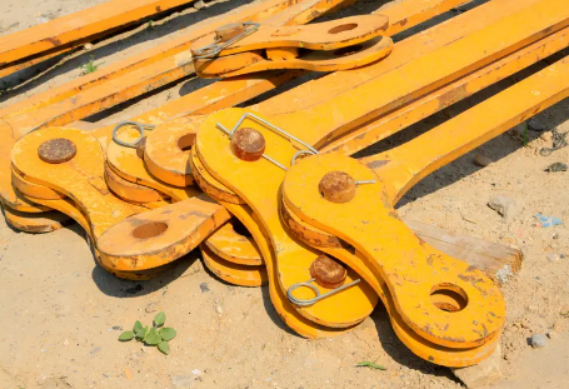
In oil and gas well operations, equipment installation, and heavy lifting activities, the Elevator Link, as a critical wellhead tool and load-bearing connection component, operates under high loads and complex working conditions. If potential hazards in an Elevator Link are not identified and addressed in time, they can easily lead to lifting failures, dropped loads, and serious safety incidents. Therefore, establishing a systematic safety hazard inspection process is essential to ensure operational safety.
Why Regular Elevator Link Safety Inspections Are Necessary
During long-term service, Elevator Links are subjected to repeated tensile forces, impact loads, and environmental corrosion. Even when the exterior appears intact, internal fatigue damage may already exist. Relying solely on post-incident inspections significantly increases operational risk.
Regular safety hazard inspections help to:
Identify potential risks before accidents occur
Prevent continued use of damaged or overaged Elevator Links
Provide clear technical evidence for maintenance, replacement, or retirement decisions
For high-risk lifting operations, safety inspections are a fundamental part of risk management.
Visual and Structural Hazard Inspection Points
Visual inspection is the first line of defense and one of the most critical steps in hazard identification. Inspectors should carefully examine the overall structure of the Elevator Link for abnormalities.
Special attention should be paid to cracks, deformation, elongation, or localized bulging, particularly in high-stress areas and connection points. Any visible cracks or permanent deformation require immediate removal from service.
In addition, the surface condition should be checked for excessive wear, corrosion, or coating damage. Surface defects often indicate deeper structural issues and must not be overlooked.
Risk Identification at Threads and Connection Areas
Threads and connection interfaces directly affect the load-bearing capacity of an Elevator Link and are key inspection areas.
Inspect threads to ensure they are complete, well-defined, and free from stripping, missing threads, or severe wear. Inadequate thread engagement can cause stress concentration during lifting operations, significantly increasing the risk of failure.
Inspectors should also confirm that the Elevator Link is properly installed, without looseness, misalignment, or side loading. Improper connections are a common cause of premature failure.
Operating Conditions and Improper Usage Hazards
Beyond the Elevator Link itself, improper operating practices are a major source of safety hazards.
Inspect whether overloading, angled lifting, or shock loading has occurred. Even a structurally sound Elevator Link can suffer rapid degradation if subjected to improper usage over time.
Operational records should be reviewed to verify load history, usage frequency, and whether the Elevator Link has experienced abnormal events such as sudden impacts or emergency stops.
Hidden Defects and Non-Destructive Testing
For Elevator Links with extended service time or those used in critical positions, visual inspection alone is insufficient. Non-destructive testing methods, such as magnetic particle testing or ultrasonic testing, should be applied to detect internal cracks and material fatigue.
Periodic non-destructive testing allows early detection of defects before they propagate to dangerous levels, significantly reducing the risk of sudden failure.
Actions and Management After Hazard Identification
Once a safety hazard is identified, the Elevator Link should be immediately removed from service. Depending on the severity, appropriate actions such as repair, replacement, or permanent retirement should be taken.
Elevator Links with unclear service history or inconclusive inspection results should not be returned to operation. Establishing comprehensive inspection and usage records is strongly recommended to support long-term safety management.
Conclusion: Systematic Inspections Are the Key to Risk Prevention
Elevator Link safety hazard inspection is not a one-time task but a continuous process throughout the product’s entire service life. Only through standardized inspection procedures, proper operational practices, and ongoing monitoring can lifting risks be effectively reduced and the safety of wellhead operations and personnel fully ensured.