Carbon ring seals, as a common non-contact or light-contact sealing structure in high-speed rotating equipment—especially aero-engines, gas turbines, and turbomachinery—are valuable due to their lightweight, high-temperature resistance, thermal shock resistance, low coefficient of friction, and ability to maintain stable sealing under extreme conditions. Because of their outstanding performance advantages, they are often considered representative of ‘highly reliable sealing components.’ However, carbon rings are not inherently reliable. If there are deviations in the design phase, even if assembly, materials, and operating conditions meet requirements, failure modes such as rapid wear, cracking, leakage, and increased vibration may still occur.
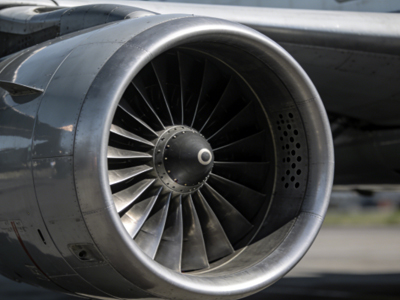
The working environment of carbon rings typically involves complex factors such as high-speed rotation, drastic temperature rise, large pressure gradients, frequent shaft runout, and high-speed airflow scouring. Therefore, any unreasonable design will be magnified many times over. Some seemingly minor design problems, such as clearance setting deviations, insufficient flow field analysis, uneven load, and cooling path design defects, can directly lead to carbon ring overheating, cracking, chipping, or instability.
What are the causes of carbon ring failure?
Gap Setting Failure
Carbon ring seals are extremely sensitive to radial and axial clearances. Improper clearance design is a major cause of failure.Insufficient clearance: Insufficient thermal expansion margin leads to friction with the bushing, resulting in burning, chipping, or jamming.Excessive clearance: Increased leakage, with the ring surface subjected to airflow erosion, causing vibration, runout, and accelerated edge wear.
Insufficient consideration of thermal expansion curves: Carbon graphite materials exhibit strong directional thermal expansion. If the design does not account for uneven temperature fields, stress concentration will occur locally, leading to ring cracking.A reasonable clearance is not merely a matter of size; it is the result of the coupling of material, temperature, pressure difference, rotational speed, and load. Simply ‘copying empirical values’ is a common design mistake.
Load Misdistribution
Carbon rings are typically supported by elastic elements, springs, or floating structures. Poor support design leads to uneven stress on the carbon ring, causing rapid failure.
Common problems include: Asymmetrical support point arrangement → causing ring bias and wedge-shaped wear.Insufficient elastic compensation → Unable to absorb shaft runout, forcing carbon rings into ‘hard contact’ at high speeds, resulting in localized ablation.Overly rigid or overly soft support structures → The former leads to impact fatigue, the latter causes vibration and sealing instability.
Load design must be combined with shaft dynamics, using finite element analysis to assess the stress and deformation of the ring body, not just relying on geometric intuition.
Material Mismatch
Although carbon graphite materials have natural advantages in wear resistance and heat resistance, their microstructure varies greatly depending on grade, resin impregnation content, density, flexural strength, etc.
Typical errors include:
Using low-density carbon materials at excessively high operating temperatures → Leading to rapid material oxidation and spalling.Not considering corrosive gas components (such as moisture, acidic vapors) → Initiating chemical corrosion, causing material pulverization failure.Not allowing for thermal shock margin → Causing cracking during rapid heating or cooling.
Material selection must be matched with temperature gradients, pressure differences, gas composition, rotational speed, and vibration amplitude; otherwise, lifespan will be significantly shortened.
Aerodynamic Design Errors
Carbon ring seals rely on a stable airflow pressure field to maintain sealing performance. Inadequate flow field design can lead to serious failures.
Typical errors include: Failure to perform flow field simulation, resulting in turbulent impact on the carbon ring surface → causing vibration, vibration, and edge damage.Unbalanced pressure gradient design → causing overturning moments in the carbon ring, leading to asymmetric wear.Improper placement of baffles and labyrinth structures → creating localized high-temperature zones, causing localized overheating and cracking of the carbon ring.
In aero-engines, high airflow velocity, large pressure differences, and rapid temperature rise make the amplification effect of flow field design errors particularly pronounced.
Thermal Mismanagement
While carbon rings are resistant to high temperatures, this does not mean they have ‘no upper limit,’ especially vulnerable to localized hot spots and temperature gradients.Common problems include: Overly simple cooling paths or excessive resistance → the ring body temperature cannot be dissipated in time, leading to thermal stress instability.Failure to consider temperature changes during startup and shutdown → Repeated thermal shocks lead to crack propagation.Insufficient thermal field prediction → Failure to identify critical ‘high-temperature edge zones’.
Thermal management is the most hidden yet most critical factor in the lifespan of carbon rings. Many failures are ‘thermal problems disguised as mechanical problems’.
Assembly-Induced Failure
If assembly error tolerance chains are not fully considered during design, the actual product may deviate significantly from the theoretical state.
Key risks include: Non-parallel or non-coaxial mating surfaces → Causing torsion and uneven wear of the ring body.
Improper control of press-fitting force → Leading to premature microcracks that propagate rapidly during operation.
Geometric errors of the sealing cavity not incorporated into the design → Actual clearance and mechanical state deviate from the design.
The failure of carbon ring seals is often not caused by a single factor, but is the result of the combined effects of design, materials, thermal field, load, assembly, and actual operating conditions. Neglect in any link can become a potential risk point, which can be amplified infinitely under extreme conditions of high speed, high temperature, and high pressure differential. For engineers, the fundamental way to avoid carbon ring failure is not to rely on ‘strengthening materials’ or ‘improving wear resistance,’ but rather to adopt a systems approach and identify all factors that may cause stress concentration, abnormal temperatures, or unstable flow fields during the design phase. The reliability of carbon ring seals depends on whether the clearance design is reasonable, whether the load is balanced, whether thermal expansion is controllable, whether the material selection is appropriate, whether the airflow path is stable, and whether assembly errors are fully considered. Only after all these fundamental issues are resolved can carbon rings demonstrate their advantages of being lightweight, highly reliable, and stable at high temperatures in harsh environments such as aero-engines.