As the most critical sealing component in rotating equipment, the operational stability of mechanical seals directly affects the safety and continuity of the entire system. However, in actual industrial settings, due to complex media, frequent changes in operating conditions, and inevitable equipment wear, leaks, temperature rises, and abnormal vibrations in mechanical seals are not uncommon. Faced with these problems, maintenance personnel must not only address them promptly but also adhere to correct maintenance principles to reduce the risk of recurring failures and prevent minor issues from escalating into equipment downtime or major damage.
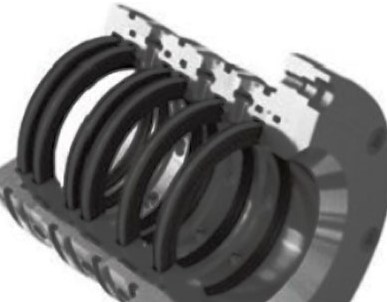
Mechanical seals are high-precision components, and their maintenance is not a simple ‘disassembly and assembly’ process, but a systematic engineering project involving testing, analysis, calibration, cleaning, and configuration. Improper maintenance procedures often lead to a significant reduction in seal life, unstable end-face contact, or even instantaneous failure during startup. Many recurring mechanical seal problems in the field are not product quality issues but rather stem from neglecting basic maintenance principles.
Avoid Blind Disassembly
The first principle of mechanical seal maintenance is to identify the true cause of the leak or abnormality before disassembly. Leaks are not necessarily a problem with the seal itself; they could also be caused by external factors such as loose bearings, excessive vibration, blocked cooling systems, or pipeline fluctuations. Disassembly before fully understanding the cause may lead to secondary damage or miss crucial evidence of the fault, and cannot guarantee long-term stability after repair.
Disassembly and Assembly Process
The mechanical seal’s end face, spring, auxiliary sealing ring, and other components are precision parts. Disassembly and assembly must be performed with care to avoid scratching the end face. Simultaneously, the entire process must be kept highly clean; tools and work surfaces must be free of oil, particles, iron filings, and other impurities. Otherwise, micro-particles may become lodged between the end faces after assembly, causing early leakage.
Rigorous Inspection of Key Components
The repair process must include a systematic inspection of the end face flatness, smoothness, spring tension, bushing wear, and O-ring elasticity. Any component that does not meet the requirements must not be used. Minor scratches or abrasions on the end face should be repaired or the component replaced; a lost spring will result in insufficient end face pressure; worn bushings may cause increased runout. These factors are all directly related to the seal’s lifespan.
Ensure Equipment Accuracy Meets Requirements
Even the best mechanical seal will struggle to operate stably if the equipment itself lacks sufficient accuracy. Therefore, maintenance must adhere to the following steps: check shaft runout and straightness within allowable limits; clean the sealing cavity and confirm the absence of corrosion and scale; ensure the end cover mounting surface is flat and free from deformation; and, if necessary, recalibrate the equipment’s concentricity. These are among the most easily overlooked but crucial steps in maintenance.
Inspect Auxiliary Systems
Maintaining a mechanical seal involves not only repairing the seal itself but also resetting the entire sealing system. The flow rates and pressures of flushing water, sealing fluid, cooling water, and shielding gas must be within standard ranges. If the auxiliary system is unstable, even a new seal will quickly fail. Therefore, maintenance must ensure unobstructed pipelines, intact valves, and a reliable pressure source, while preventing accidental valve closure, blockage, or pressure leakage.
Follow the Steps Directly
When installing the seal, the following principles must be followed: Even pressure application to avoid uneven load on the end face; lubricate the sealing ring to prevent shearing during assembly; tighten the bolts to the specified torque, avoiding overtightening or loosening; verify the installation dimensions item by item according to the instruction manual; any omission of steps may lead to leakage or accelerated wear after startup.
Pre-Startup Confirmation
Before restarting the equipment, it is necessary to confirm that: the shaft rotates easily without obstruction; flushing/cooling/shielding gas is supplied normally; the sealing cavity is filled with liquid; there is no abnormal vibration or noise. Pre-lubrication and cooling are crucial steps to ensure a smooth transition of the seal to stable operating conditions.
Mechanical seal maintenance is not simply ‘fixing and reinstalling,’ but a standardized and meticulous process. From identifying the cause of the fault, standardized disassembly and assembly, and precise testing, to checking equipment accuracy, restoring auxiliary systems, and strictly adhering to the installation process and startup confirmation, each step is directly related to the seal’s lifespan. Following these basic principles can significantly reduce recurring failures, improve equipment stability, and lower enterprise maintenance costs.
Especially in industrial settings, mechanical seal failure is often the result of multiple factors working together. Therefore, maintenance personnel should maintain a systematic approach, focusing not only on the seal itself but also on the overall condition of the shaft system, temperature, vibration, and auxiliary systems. Only when all conditions are met can the repaired seal achieve its design life or even longer operating cycles. By establishing standardized maintenance procedures, training professional personnel, and equipping necessary testing tools, companies can effectively improve the quality of mechanical seal maintenance and reduce downtime losses. Adhering to basic maintenance principles is not only a technical requirement but also a comprehensive guarantee for safety, cost, and equipment reliability.