Mechanical seals are one of the most critical sealing components in rotating equipment, and their operating condition directly affects the reliability and stability of pumps, compressors, agitators, and other equipment. Although mechanical seals are designed for long-term continuous operation, in real industrial environments, factors such as load fluctuations, media corrosion, temperature changes, and insufficient lubrication can all affect their lifespan. When a seal begins to malfunction or approaches its failure threshold, continued operation will not only exacerbate leakage but may also lead to more serious safety risks such as bearing burnout, motor overload, and media ejection. Therefore, clearly defining when shutdown is necessary is crucial for ensuring equipment safety and optimizing production and maintenance costs.
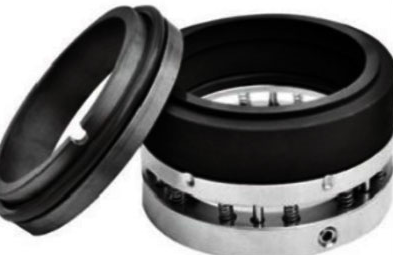
When developing a maintenance plan, multiple indicators are typically considered, including seal leakage, temperature rise, vibration levels, and operating noise. However, in emergency situations, operators often have to rely on the most obvious signs for quick decisions. Many equipment accidents are not caused by the initial seal malfunction but by the failure to shut down and repair in the early stages of the malfunction, leading to secondary or tertiary failures, or even causing the mechanical seal to rupture instantly.
Sudden Increase in Leakage
A change from seepage to dripping, or a significant increase in leakage within a short period, is the clearest indication that a mechanical seal must be shut down. Once the sealing surface experiences severe wear, warping, or scratches caused by particles entrained in the medium, the leakage will increase dramatically. Continuing operation under these conditions will cause rapid heat accumulation between the end faces, leading to face material ablation, spring failure, or even seal ring rupture. Therefore, immediate shutdown is necessary.
Abnormal Increase in Sealing Chamber Temperature
A rise in sealing chamber temperature usually indicates damage to the lubrication film, abnormal cooling system, or failure of the friction pair. When the temperature exceeds the normal operating range and continues to rise, it indicates that the friction is in a ‘dry’ or ‘semi-dry’ state, which can easily cause the sealing surface to burn out. If the temperature reaches the alarm value or significantly exceeds the range judged by experience, the machine should be shut down immediately; otherwise, the damage will spread to the bearings and bushings.
Abnormal Shaft Vibration or Noise
When equipment vibration suddenly increases or periodic impact sounds occur, it often indicates that the shaft’s operating condition is abnormal, possibly caused by misalignment, bearing wear, or rotor eccentricity. Mechanical seals are highly sensitive to axial and radial displacement. Once vibration exceeds the allowable range, the sealing face cannot maintain uniform contact, and leakage will rapidly expand. In such cases, if the vibration value remains abnormal, the machine should be shut down to prevent further failure.
Flushing and Cooling System Abnormalities
Double-end face seals and mechanical seals with flushing systems are highly dependent on external auxiliary systems. The machine must be shut down if any of the following occur: insufficient flushing water pressure or sudden loss of flow/cooling water interruption causing a continuous rise in seal temperature/shielding gas (e.g., nitrogen) pressure drops to the lower limit/isolating fluid leakage or rapid drop in level. If the auxiliary system fails, the seal will enter an extreme wear state in a short time; therefore, these are typical ‘immediate shutdown’ signals.
Changes in Medium
If the viscosity of the conveyed medium changes abruptly, the solids content surges, corrosivity intensifies, or crystallization accelerates, the mechanical seal will fail in a short time. For example: the slurry thickens, causing particle scratches on the end face/the medium temperature rises, causing flash evaporation/a sudden increase in corrosivity damages metal components. When the properties of the medium become incompatible with the selected mechanical seal, continued operation carries extremely high risks. The system should be shut down immediately for adjustments to operating conditions or a replacement of the sealing solution.
Abnormal Appearance of Sealing Components
If liquid sprays from the end cap, smoke emerges from the sealing cavity, or droplets continuously accumulate on the outside of the seal, it indicates that the seal has crossed the ‘controllable leakage range.’ These abnormalities represent early-stage failure that has progressed to a serious stage, posing an extremely high safety risk to the equipment. Immediate shutdown and repair are necessary.
The progression of a mechanical seal from a minor leak to a serious failure often involves a gradual deterioration process. For operators, the key is not to wait until the mechanical seal has completely failed, but to identify strong signals that necessitate a shutdown. Sudden increases in leakage, abnormal temperature, severe vibration, auxiliary system failure, abrupt changes in medium condition, and visible abnormal splashing are all typical shutdown conditions that cannot be delayed.
In actual operation and maintenance, timely shutdown is often more economically valuable than ‘operating with defects.’ This is because once a mechanical seal is completely damaged, it often affects critical components such as bearings, bushings, and impellers, causing repair costs to increase exponentially. Conversely, shutting down in the early stages of an anomaly can limit damage to the seal itself, preventing a larger cascading failure. Therefore, identifying these shutdown points is the best way to ensure long-term stable operation of equipment, reduce accidents, and extend the life of mechanical seals.