In the maintenance and operation of industrial equipment, mechanical seals are crucial components for preventing fluid leakage. Their selection and replacement directly impact the safety, stability, and lifespan of the equipment. In practical applications, companies often face the question of whether mechanical seals from different brands can be interchanged to save costs or address supply shortages. Superficially, mechanical seals from different brands may appear similar in model and function, but due to differences in design standards, material selection, processing precision, and performance parameters, arbitrary interchangeability carries certain risks.
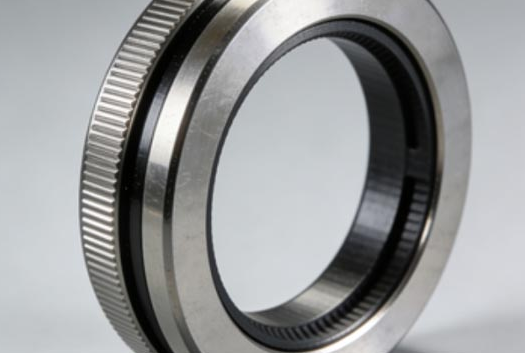
Basic Prerequisites for Mechanical Seal Interchangeability
Whether mechanical seals can be interchanged depends first on dimensional matching and installation method. Parameters such as end face diameter, shaft diameter, end clearance, spring structure, and mounting groove depth must be completely consistent with the original seal; otherwise, even if installation is successful, it may lead to uneven end face contact, leakage, or increased vibration. Secondly, compatibility with operating conditions is also crucial. Seals from different brands may differ in temperature resistance, pressure resistance, and corrosion resistance. If the new seal’s capacity is lower than the original design requirements, it is prone to premature failure under high temperature, high pressure, or corrosive media. Material and frictional characteristics are also important considerations for interchangeability. The end-face material, spring material, and O-ring material directly affect the frictional heat generation, thermal expansion matching, and lifespan of the seal. Slight differences may exist between different brands, and these differences can be amplified under high-speed pumps or special media conditions.
Potential Risks of Interchanging Mechanical Seals from Different Brands
Degraded Sealing Performance
Even with matching dimensions, differences in end-face flatness, contact pressure distribution, and spring preload between different brands can easily lead to localized leakage or accelerated wear, affecting equipment operational stability.
Uncertain Lifespan
Different brands may have different coefficients of thermal expansion, wear resistance, and chemical resistance. Under high temperature, high speed, or corrosive media, the actual lifespan of the new seal may be far lower than the original design expectation, increasing maintenance frequency and downtime risk.
Increased Installation Difficulty
The seal structure design of different brands may vary slightly, such as spring type, rotating ring fit, and auxiliary seal dimensions. Even with the same model, problems such as jamming, end-face misalignment, or insufficient spring compression may occur during installation.
Impact on Pumps or Systems
Mismatched sealing performance not only affects leakage but can also trigger pump shaft vibration, bearing overload, or media contamination, creating a chain reaction that can lead to complete machine failure or safety accidents in severe cases.
Feasibility Conditions for Interchangeable Mechanical Seals from Different Brands
Despite the risks, mechanical seals from different brands can be interchanged under certain conditions:
Strict Comparison of Technical Parameters
Before interchange, the seal model, end face diameter, shaft diameter, end clearance, spring preload, pressure rating, temperature rating, and media adaptability must be verified to ensure that the technical specifications of the new seal are not lower than those of the original seal.
Selection of Compatible Design
Prioritize selecting alternative seals with design standards similar to the original brand, such as internationally standardized dimensions or industry-recognized common structural types, to minimize the risk of interchange.
Installation Adaptation Testing
Before interchange, observe end face wear, leakage, and temperature rise under non-critical operating conditions or trial operation conditions to ensure that the seal can adapt to the actual operating conditions of the pump.
Establish Maintenance and Monitoring Measures
After interchangement, monitoring of the seal operation should be strengthened, including leakage, end face temperature, vibration, and pressure changes, to promptly detect abnormalities and prevent potential problems from escalating.
Management Recommendations for Interchangeability
Establish Interchangeability Access Standards
Enterprises should establish a mechanical seal interchangeability access system, clearly defining the range of replaceable brands and models to prevent arbitrary replacements and ensure equipment safety.
Train Maintenance Personnel
Improve operators’ understanding of sealing performance, installation requirements, and operational monitoring to ensure scientific and standardized interchangeability operations.
Establish Spare Parts Inventory
Maintain an inventory of original or standard-compatible seals for critical equipment to reduce the risk of equipment downtime due to brand differences.
Interchangeability between different brands of mechanical seals is not a simple model replacement, but a systemic issue involving size matching, material properties, operating condition adaptability, and installation accuracy. Arbitrary interchangeability may lead to decreased sealing performance, shortened lifespan, installation difficulties, and even pump system failure. However, interchangeability is feasible under the premise of strictly verifying technical parameters, selecting compatible designs, conducting trial runs, and strengthening monitoring. Mechanical seal interchangeability requires not only technical judgment but also institutional norms and management safeguards. Only by scientifically and rationally handling interchangeability issues can we balance cost control and equipment operation safety, and achieve long-term reliable operation of high-speed pumps and other industrial equipment.