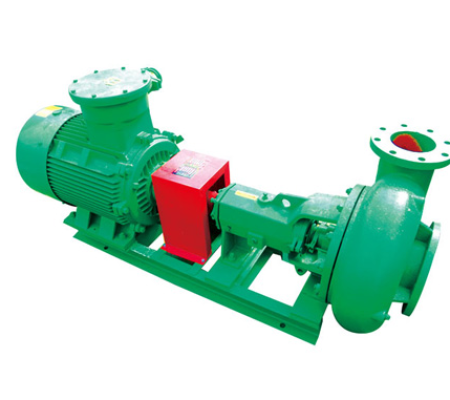
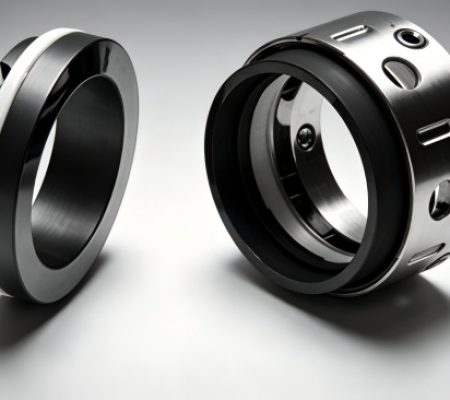
In modern industrial equipment, sealing structures not only fulfill the basic function of preventing media leakage but also directly relate to the safety, stability, and environmental and personnel protection levels of the equipment. With the continuous development of industries such as chemical, energy, pharmaceutical, and fine materials, equipment operating conditions exhibit multiple overlapping characteristics, including high pressure, high temperature, high speed, and strong corrosion and toxicity. Traditional single-stage sealing structures are often insufficient to meet the requirements for long-term, safe, and stable operation in many scenarios. Against this backdrop, multi-stage sealing structures have gradually become an important choice for demanding operating conditions. Multi-stage sealing is not simply about ‘increasing the number of seals,’ but rather about rationally dispersing the pressure, temperature, and risks originally concentrated at a single sealing interface through a design approach of graded pressure bearing, segmented isolation, and step-by-step buffering, thereby significantly improving the overall safety and reliability of the system.
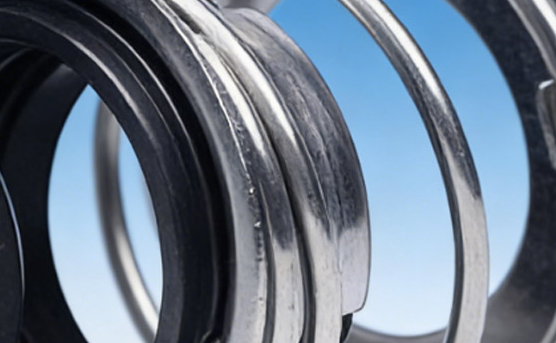
High-Pressure and Ultra-High-Pressure Conditions Require Multi-Stage Sealing
Under high-pressure and even ultra-high-pressure conditions, the axial and radial loads exerted by the medium on the sealing structure increase significantly. Single-stage seals often need to independently withstand the entire system pressure. This concentrated stress pattern easily leads to excessively high specific pressure at the sealing end face, increased frictional power consumption, and accelerated material fatigue, resulting in rapid wear or sudden failure. Multi-stage sealing structures decompose the overall pressure into multiple pressure gradients, allowing each seal to bear only a portion of the pressure load. This not only reduces the stress level at individual sealing interfaces but also significantly improves end-face lubrication and thermal balance conditions. In systems operating under continuous high pressure or with frequent pressure fluctuations, multi-stage sealing effectively avoids the catastrophic consequences of single-point failure, thus possessing a ‘rigid requirement’ attribute in such conditions.
An Inevitable Choice for High-Risk Media and Toxic/Hazardous Conditions
When the medium transported or sealed by equipment is toxic, flammable, explosive, or highly sensitive to the environment, the risk of leakage itself is considered a major safety hazard. In such conditions, the goal of the sealing system is not only to ‘reduce leakage’ but also to ‘achieve zero leakage or controllable leakage as much as possible.’ Multi-stage sealing forms multiple barriers by setting up a main seal, secondary seals, and isolation stages. Once the first-stage seal malfunctions, subsequent seals can still effectively intercept the leakage, buying valuable time for system early warning, interlock shutdown, or emergency response. Compared to the ‘one-time failure equals total leakage’ of single-stage seals, multi-stage seals are clearly more in line with intrinsically safe design principles under high-risk media conditions, and have therefore become almost the industry standard.
Necessary Measures for High-Temperature and Large-Temperature-Difference Conditions
High-temperature conditions significantly affect the strength, elasticity, and dimensional stability of sealing materials, while large-temperature-difference environments easily lead to uneven thermal expansion and contraction, end-face warping, and auxiliary seal failure. In such complex thermal environments, single-stage seals often struggle to simultaneously maintain sealing performance and structural stability. Multi-stage seal structures, through graded arrangement, place different sealing stages within relatively mild or controllable temperature ranges, reducing thermal stress concentration. Simultaneously, with the aid of intermediate buffer chambers or cooling and isolation media, multi-stage seals can effectively reduce the direct impact of high temperatures on the core sealing interface. Therefore, in high-temperature or frequently alternating hot and cold conditions, multi-stage seals are often a key technical means to ensure long-term reliable operation.
The Inevitable Need for High-Speed, High-Power Rotating Equipment
In high-speed, high-power rotating equipment, shaft vibration, runout, and transient load changes are more pronounced, placing higher demands on the dynamic adaptability of the sealing system. Single-stage seals, bearing the full dynamic load, are prone to end-face opening or abnormal wear due to transient instability. Multi-stage sealing structures, by distributing loads and optimizing force paths, allow each stage of the seal to operate under relatively mild conditions, thereby improving the overall system’s dynamic stability. Especially in equipment with high-speed start-stop cycles and frequent changes in operating conditions, multi-stage seals not only help reduce the risk of instantaneous leakage but also extend the service life of the sealing components.
Operating Conditions with Extremely High Requirements for Continuous Operation Reliability
In some critical production facilities or public service systems, equipment shutdown can cause severe economic losses and even social impact. These operating conditions place extremely high demands on the continuous operation capability and fault tolerance of the sealing structure. Multi-stage seals, through redundant design, allow the system to maintain basic sealing function even when the performance of a certain stage of the seal deteriorates, avoiding forced shutdowns due to single-point failures. From a systems engineering perspective, this design concept of ‘graded protection and progressive failure’ is a crucial foundation for ensuring high-reliability continuous operation. Therefore, in operating conditions with extremely high requirements for operational continuity, multi-stage sealing is often an indispensable configuration.
Application Environments with Strict Environmental and Regulatory Requirements
With increasingly stringent environmental regulations, many industries are continuously reducing their tolerance for media leakage, even requiring full-process monitoring and recovery. Under such regulatory environments, single-stage seals are insufficient to meet the long-term stability requirements for leakage control.Multi-stage seals, by incorporating monitoring chambers, isolation chambers, and recovery channels, ensure that minute leaks are under control and detectable, meeting modern environmental and compliance requirements. Therefore, in application environments with strong regulatory constraints and high public attention, multi-stage sealing has transformed from an ‘optional solution’ to a ‘necessary condition.’
While multi-stage sealing structures are not the inevitable choice for all operating conditions, their importance is irreplaceable in high-pressure, high-temperature, high-speed, high-risk media, and operating conditions with extremely high requirements for safety, environmental protection, and continuous operation. Compared to single-stage seals, multi-stage seals, through graded pressure bearing, layer-by-layer isolation, and redundant protection, effectively reduce the risk of single-point failure and significantly improve the overall safety margin and operational reliability of the system. The core criterion for ‘mandatory multi-stage sealing’ lies in whether single-stage seals can no longer meet the operating conditions in terms of safety, lifespan, or compliance. When leakage consequences are severe, operating parameters are complex, and downtime costs are high, multi-stage sealing is no longer just a technological upgrade, but an inevitable choice that aligns with the principles of inherent safety and long-term stable operation. Only by scientifically identifying these critical operating conditions and rationally configuring multi-stage sealing structures can a balance between safety, economy, and reliability be achieved in complex industrial environments.