In the field of rotating equipment, mechanical seals are key components for controlling media leakage and ensuring the safe and stable operation of equipment. The degree to which their structural form matches the operating conditions directly affects the service life and operational reliability of the equipment. With the development of industries such as chemical, energy, and metallurgy towards higher parameters, high-speed and high-pressure conditions are gradually becoming the norm, placing higher demands on the performance of mechanical seals. Among many mechanical seal designs, ‘unbalanced seals’ are widely used in low-to-medium load scenarios due to their relatively simple structure, lower cost, and convenient assembly. However, whether they are still suitable for high-speed, high-pressure conditions has always been a focus of attention and debate among engineering technicians. The core difference between unbalanced and balanced seals lies in the magnitude and distribution of the medium pressure borne by the sealing end face. This difference not only affects the end face specific pressure, frictional power consumption, and heat generation level, but also directly relates to the stability and reliability of the seal under extreme operating conditions.
Principle and Characteristics of Unbalanced Seals
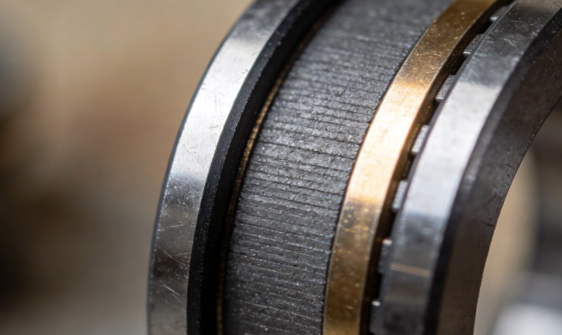
An unbalanced seal refers to a seal where the medium pressure borne by the sealing end face is essentially equal to the working pressure inside the cavity, without effective reduction of axial hydraulic pressure through structural design. Its core characteristic lies in the fact that the medium pressure acts almost entirely on the end faces of the dynamic and static rings, resulting in a high end-face specific pressure. Unbalanced seals typically consist of basic components such as a dynamic ring, static ring, spring, and auxiliary sealing ring, resulting in a compact structure and a relatively small number of parts. Due to the lack of a balancing chamber or pressure-reducing structure, their manufacturing and design are relatively simple, and assembly and maintenance are also relatively straightforward. Under low to medium pressure and low to medium speed conditions, the higher end-face specific pressure is actually beneficial for forming a stable sealing interface and improving leakage resistance, which is one of the important reasons why unbalanced seals have been widely used for a long time. However, this ‘high specific pressure’ characteristic may also translate into potential risks after the operating conditions are upgraded.
Core Requirements of Mechanical Seals under High-Speed and High-Pressure Conditions
The requirements for mechanical seals under high-speed and high-pressure conditions go far beyond simply ‘no leakage.’ These requirements are mainly reflected in the following aspects: Under high-speed conditions, the end-face linear velocity increases significantly, and frictional power consumption increases exponentially; under high-pressure conditions, the end-face specific pressure further increases, and the combination of these two factors easily leads to severe heating of the sealing end face. If heat dissipation is insufficient, it can easily cause thermal deformation, thermal cracking, or even end-face ablation. High-speed rotation amplifies radial runout, vibration, and misalignment of the shaft, while high-pressure media exacerbate fluid disturbances, creating unstable loads on the sealing face. Mechanical seals need excellent tracking and vibration resistance; otherwise, instantaneous opening or abnormal wear of the face can easily occur. High-speed, high-pressure conditions are often accompanied by high-temperature or corrosive media, placing higher demands on the strength, wear resistance, and thermal stability of the sealing materials, as well as imposing stricter requirements on flushing, cooling, and lubrication conditions.
Can Unbalanced Seals Withstand High-SpeedConditions?
Due to the higher face pressure, frictional power consumption increases significantly during high-speed rotation, leading to a faster temperature rise on the face. This temperature rise not only accelerates the wear of the sealing materials but may also cause thermal deformation of the sealing ring, deteriorating the face contact condition. Furthermore, high-speed conditions place high demands on the dynamic performance of the seal. Unbalanced seals typically rely on the combined action of spring force and media pressure to maintain face contact. As the rotational speed increases, their buffering capacity against axial and radial disturbances is limited, making them more susceptible to unstable operation due to transient changes in operating conditions. Therefore, unbalanced seals still have some application space in high-speed but low-pressure applications, but often require strict control of the upper speed limit and good cooling and lubrication conditions.
Are Unbalanced Seals Suitable for High-Pressure Conditions?
Under high-pressure conditions, the limitations of unbalanced seals become more apparent. Since almost all the medium pressure acts on the sealing face, the face pressure increases linearly with the system pressure. When the pressure reaches a certain level, the excessive contact load on the face leads to an increase in the friction coefficient, accelerated wear, and even the risk of ‘dry friction.’ At the same time, high-pressure media often have stronger permeability; once the face develops even minor defects due to wear or thermal deformation, the leakage tendency will rapidly amplify. Unbalanced seals lack a pressure reduction mechanism, resulting in a smaller safety margin under high pressure. Even with compensation through increased material strength or improved spring performance, it is difficult to fundamentally change their unfavorable structural characteristics under stress. Therefore, from a pressure perspective, unbalanced seals are more suitable for medium- and low-pressure environments, and their long-term reliability under high-pressure conditions is generally insufficient.
Comprehensive Risks Under Combined High-Speed and High-Pressure Conditions
When high-speed and high-pressure conditions are combined, the risks faced by unbalanced seals exhibit a cumulative and even amplified effect. High pressure increases the end-face specific pressure, while high speed increases frictional power consumption. The combined effect significantly increases end-face temperature rise and wear rate. Simultaneously, vibration at high speed and fluid disturbance at high pressure couple, making the seal’s operating state more complex and unstable. Under these conditions, unbalanced seals often require external cooling, flushing, or special materials to barely maintain operation, but this increases system complexity and maintenance costs, weakening their original advantages of ‘simple structure and low cost.’ From an engineering safety and long-term operation perspective, balanced or specially designed mechanical seals are generally preferred for these conditions.
The above analysis shows that unbalanced seals have certain advantages in terms of structure and cost, but their inherent characteristics determine that they are more suitable for conventional low-speed and low-pressure operating environments. Under high-speed and high-pressure conditions, due to excessive end-face specific pressure, concentrated frictional heat, and insufficient dynamic stability, the operational risks of unbalanced seals increase significantly, making it difficult to effectively guarantee reliability and service life. While unbalanced seals can be applied to some harsh environments under specific conditions by strictly limiting operating parameters, optimizing material selection, and configuring a robust cooling and flushing system, this is often a ‘passive adaptation’ and not the optimal choice. From a rational system design perspective, balanced seals or other seal types specifically designed for high-parameter conditions are more suitable for high-speed, high-pressure applications. Therefore, unbalanced seals are not entirely unsuitable for high-speed, high-pressure applications, but their applicability is limited and the risks are higher. In practical engineering selection, the characteristics of the operating conditions and operational requirements should be fully assessed to avoid seal failure and equipment malfunctions caused by improper structural selection, thus achieving a reasonable balance between safety, economy, and reliability.