In downhole oil drilling operations, stabilizers are critical components of the drill string. Installation quality directly affects wellbore stability, drilling efficiency, and drill string service life. Standardized installation procedures and effective on-site risk control are essential for ensuring safe and efficient drilling operations. Proper operational discipline and management help reduce equipment damage, lower the probability of downhole incidents, and improve overall operational quality.
Pre-Installation Preparation
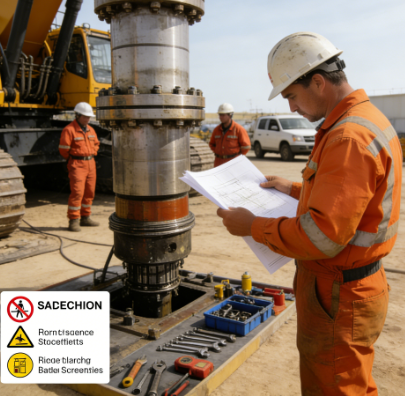
Before installation, stabilizers and related drill string components must undergo comprehensive inspection. Inspection focuses on structural integrity, blade wear condition, connection threads, and wear-resistant surfaces. Ensuring all components meet technical specifications and design requirements is the foundation for preventing downhole risks.
- Inspect blade surfaces for cracks, peeling, or excessive wear
- Verify threads are intact and free from damage or deformation
- Measure critical dimensions and compare them with design parameters
- Confirm wear-resistant coatings or surface treatments remain intact
After inspections, the worksite should be cleaned and organized to prevent debris from interfering with installation operations.
Drill String Assembly and Stabilizer Installation Steps
During drill string assembly, the installation sequence, position, and tightening requirements of stabilizers must strictly follow the design plan. Connections should be properly aligned and torqued, and mechanical impact to blades must be avoided.
- Install stabilizers at designated positions on drill collars or downhole tools
- Use dedicated tools to tighten threaded connections
- Check blade-to-wellbore clearance against design specifications
- For replaceable sleeve stabilizers, confirm sleeves are fully seated and secured
After assembly, the entire drill string should be re-inspected to ensure correct stabilizer placement and secure connections.
On-Site Risk Control Measures
Downhole operations involve complex environments, and stabilizer installation carries inherent risks. Field personnel must strictly comply with safety procedures, apply protective measures, and monitor operational conditions throughout the process.
- Wear appropriate personal protective equipment such as gloves, goggles, and protective clothing
- Control lifting and handling operations to prevent blade impact or deformation
- Ensure installation personnel receive proper operational training
- Conduct pre-run inspections to prevent hidden risks from entering the well
Risk control extends beyond installation to include environmental management and workflow supervision, reducing both human and mechanical hazards.
Final Verification and Data Recording Before Running In Hole
Once installation is complete, key parameters must be verified and documented. Records typically include installation location, tightening torque, blade clearance, and dimensional measurements. These records support pre-run verification and provide references for future maintenance and wear assessment.
- Confirm installation positions match the design plan
- Check that tightening torque complies with specifications
- Measure blade outer diameter and clearance, recording any deviations
- Preserve installation and inspection records for traceability
Verification can be performed using standard measuring tools, laser measurement devices, or calibrated inspection instruments to ensure data accuracy.
Risk Monitoring During Drilling Operations
After running in hole, stabilizer performance should be monitored through drilling parameters. Abnormal changes in vibration, torque, or pump pressure may indicate stabilizer wear or positional issues. Real-time data analysis allows corrective actions to be taken early, preventing further damage or downhole incidents.
- Investigate excessive vibration by suspending drilling when limits are exceeded
- Analyze abnormal pump pressure fluctuations for blade contact issues or blockage
- Evaluate significant torque changes related to drill string bending stress
Maintain inspection and monitoring logs for continuous tracking
Safe Removal and Post-Use Handling
After tripping out, stabilizers should be removed and inspected using standard procedures. Dedicated tools should be used to protect threads, blades, and wear-resistant surfaces during disassembly.
- Assess blade wear against acceptable operating limits
- Repair or replace damaged threads
- Recondition or scrap stabilizers with severely worn coatings
- Document removal and inspection results for future reference
Proper removal and post-use handling help extend stabilizer service life and support safe subsequent operations.
Industry-Recommended Management Practices
Oil drilling operations increasingly adopt standardized stabilizer management systems that define installation procedures, personnel training, inspection criteria, and usage records. Unified management practices reduce installation variability, mitigate operational risks, and enhance overall downhole safety and efficiency.