In industrial production, equipment sealing performance directly impacts operational efficiency and safety. As a critical component of sealing systems, auxiliary seals are increasingly becoming a focal point for enterprises due to their interchangeability. Interchangeability refers to the ability of different specifications or models of auxiliary seals to be used interchangeably without requiring adjustments to other equipment structures. While this feature may seem simple, it offers significant practical value across multiple aspects.
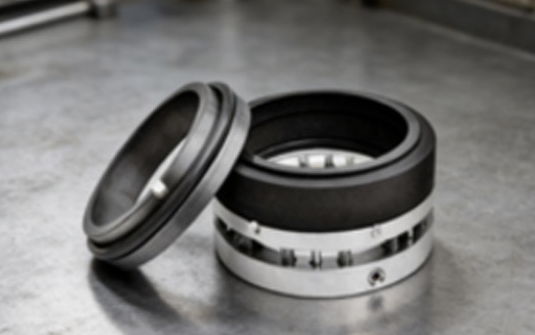
The core advantage of interchangeability
Reduce operating costs
Interchangeable auxiliary seals can directly reduce inventory pressure. Under traditional models, companies need to stock multiple specifications of seals for different equipment, resulting in high inventory costs and waste. The interchangeable design allows enterprises to adopt standardized seals, enabling unified procurement, storage, and management, thereby lowering inventory costs. Additionally, replacing seals eliminates the need for customization or adjustments, shortens downtime, and indirectly reduces production losses.
Enhance maintenance efficiency
The interchangeability feature enhances maintenance flexibility. Technicians can replace components with standardized parts instead of searching for specific seals, streamlining the process. This “plug-and-play” approach reduces preparation time and accelerates response. In emergency repairs, quick seal replacements prevent prolonged equipment downtime, ensuring uninterrupted production.
Extend device lifespan
Standardized seals typically undergo stricter quality control, with more uniform materials and manufacturing processes. The interchangeable design encourages enterprises to adopt high-quality universal seals, replacing potentially inferior or outdated components. Long-term use of high-quality seals reduces equipment wear, extends overall service life, and minimizes the need for frequent equipment replacements.
Interchangeability directly reduces operational costs for enterprises. Traditional seals require specialized components for each equipment due to their diverse specifications, leading to high capital investment in inventory and complex management. The interchangeable design standardizes seals, enabling companies to meet equipment needs with fewer stockpiles. Uniform specifications during procurement also secure bulk pricing advantages, further reducing procurement costs. The “plug-and-play” feature during replacement minimizes downtime, avoiding production delays caused by seal shortages or customization, thereby indirectly reducing production losses. These cost savings are not short-term benefits but long-term accumulated stable returns. Maintenance efficiency is improved to some extent, as technicians no longer need to memorize specific seal models for each equipment—mastering general specifications suffices for replacements. This simplification makes maintenance easier to handle, allowing new employees to adapt quickly and reducing reliance on skilled workers. In emergency repair scenarios, interchangeable seals enable rapid replacements, preventing prolonged equipment downtime due to sealing issues and ensuring production continuity. This efficiency improvement not only reduces maintenance time but also lowers error risks caused by complex operations. Simultaneously, it extends overall equipment lifespan. Standardized seals typically undergo stricter quality control, with uniform materials and processes, resulting in less wear over long-term use and reduced additional losses from seal failures. Enterprises no longer need to frequently replace equipment or components, reducing the frequency and cost of equipment updates. This extended lifespan represents not just optimization of individual parts but an enhancement of the entire equipment system’s stability.
The core advantage of interchangeable auxiliary seals lies in enabling enterprises to achieve more efficient operations through simplified solutions. This design requires no advanced technology or additional burdens, merely adjusting existing selection strategies. For businesses prioritizing stable production and operational risk reduction, it provides a practical and feasible solution. Through interchangeability, companies gain tangible benefits in three key areas: cost control, efficiency improvement, and extended service life. These advantages are directly demonstrated through practical application without complex verification. This straightforward value proposition constitutes the fundamental strength of the interchangeable auxiliary seal design.