In drilling operations, drilling fluid is considered the ‘blood’ of the drilling project, and its stability directly affects drilling efficiency, quality, and safety. Among these factors, the pH value of the drilling fluid is a key indicator, significantly influencing its rheology, filtration properties, lubricity, and wellbore stability. A suitable pH value can effectively inhibit clay hydration and swelling in the formation, preventing wellbore collapse, and can also extend the lifespan of drilling fluid treatment agents, reducing drilling costs.
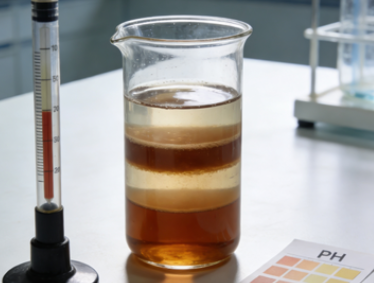
Accurately Measuring Drilling Fluid pH
The first step in adjusting the pH value of the drilling fluid is to accurately measure its current value. There are two commonly used methods on-site: one is using pH test strips, which is simple and quick to operate, but has relatively low accuracy, only providing an approximate pH range; the other is using a pH meter, which provides precise values and is the primary tool for on-site pH measurement. Before using a pH meter, it must be calibrated with a standard buffer solution to ensure the accuracy of the measurement results. During measurement, the drilling fluid is thoroughly stirred before sampling. The pH meter electrode is inserted into the sample, and the pH value is recorded after the reading stabilizes. Accurate measurement is crucial to determining the difference between the drilling fluid pH value and the target value, providing a basis for subsequent adjustments.
Determining the Target pH Value Based on Formation and Drilling Fluid Type
Different formations have different requirements for drilling fluid pH values. For example, in sandstone formations, the drilling fluid pH value is generally controlled between 7.5 and 9.5, which effectively inhibits clay hydration and reduces erosion of sandstone. In shale formations, due to the high clay mineral content, shale is prone to hydration and swelling; therefore, the pH value needs to be controlled between 9 and 11 to enhance the drilling fluid’s inhibitory properties and prevent wellbore collapse. Furthermore, the type of drilling fluid also affects the determination of the target pH value. For example, polymer drilling fluids typically maintain a pH of 8-9 to ensure the stability of the polymer’s performance; while lime drilling fluids require a pH above 11 to maintain the dissolution of lime and the stability of the drilling fluid. Therefore, before adjusting the pH, it is necessary to comprehensively consider the formation characteristics and the type of drilling fluid to determine a reasonable target value.
Selecting Appropriate Adjusters
Commonly used adjusters for drilling fluid pH include acids and alkalis. When the drilling fluid pH is too high, acidic adjusters need to be added to lower it. Commonly used acidic adjusters include inorganic acids such as hydrochloric acid and sulfuric acid, and organic acids such as formic acid and acetic acid. Inorganic acids adjust quickly but are highly corrosive, and their usage must be strictly controlled to avoid damage to drilling equipment and the wellbore; organic acids are relatively less corrosive but more expensive, and are suitable for applications requiring high corrosivity. When the drilling fluid pH is too low, alkali adjusters need to be added to raise it. Commonly used alkali adjusters include sodium hydroxide, potassium hydroxide, and sodium carbonate. Sodium hydroxide and potassium hydroxide are effective at adjusting the pH of drilling fluid, but they are highly alkaline, requiring careful safety precautions during use. Sodium carbonate is relatively less alkaline and has a buffering effect, helping to maintain a relatively stable pH level.
Proper Control of the Amount and Method of Adding Adjusters
The amount of adjuster added directly affects the pH adjustment effect. Insufficient addition will fail to adjust the pH to the target value; excessive addition may result in an excessively high or low pH, causing new problems. Therefore, before adding the adjuster, the amount should be calculated based on the drilling fluid volume, current pH, and target pH. The method of addition is also crucial. Generally, the adjuster should be prepared as a solution of a certain concentration and then slowly and evenly added to the drilling fluid while continuously stirring to ensure thorough mixing and prevent localized high or low concentrations, ensuring a uniform pH adjustment.
Post-Adjustment Monitoring and Readjustment
After adding the adjuster and stirring thoroughly, the pH value of the drilling fluid must be measured again to check if it has reached the target value. If the target value is not reached, the cause needs to be analyzed based on the actual situation, whether it is due to insufficient adjuster dosage or other factors, and then readjustment should be performed. Meanwhile, during drilling, the pH value of the drilling fluid may change due to factors such as formation lithology and drilling fluid circulation. Therefore, the pH value of the drilling fluid needs to be monitored regularly, and adjustments should be made promptly based on the monitoring results to ensure that the pH value of the drilling fluid is always maintained within a suitable range.
Adjusting the pH value of drilling fluid at the drilling site is a systematic and meticulous task, involving multiple stages such as measurement, determining the target value, selecting the adjuster, controlling the dosage and method of addition, and post-adjustment monitoring and readjustment. Only by strictly following scientific methods and procedures can the pH value of the drilling fluid be kept stable within a suitable range, providing a strong guarantee for the smooth progress of drilling operations.